Showing posts with label MaddAddam. Show all posts

Thursday, June 8, 2017

World Building, Observation and Crackers

I'm eating crackers tonight. Crackers I purchased yesterday from Walmart because I'm classy like that. To be precise, I am eating Stoned Wheat Thins which I would lovingly describe as the very best boring cracker out there. They're like the big sister of soda crackers - a little wider, a little heftier and substantially more crunchy. When I want to eat some cheese or a spread but I don't have the time or resources to properly pair toppings and cracker, I shrug my shoulders and say, "well, a Stoned Wheat Thin won't taste WRONG with that" and off I go. A well-paired Triscuit might taste superior to a stoned wheat thin, but you can get a Triscuit wrong. That's a lot of pressure.

Stoned Wheat Thins also happen to be my personal favorite metaphor for perspective shifting, which I think is one of the most underrated skills when it comes to world-building.

The Pittsburgh Cracker Caper

Image result for stoned wheat thins

It all comes down to a night where I was in a Giant Eagle grocery store in Pittsburgh, Pennsylvannia. I had some fancy goat cheese I'd never tried before and needed a good, solid cracker to pair it with. The problem was, I wasn't confident I knew what that cheese tasted like well enough to pick out a truly sophisticated cracker. Plus, I'd already blown my wad on the cheese. (Like most MFA students, my desire to eat overpriced, fancy food was not proportional to my ability to purchase it).

But no matter. I knew that in a pinch, a box of Stoned Wheat Thins would do the trick, plus they would go fine with hummus and whatever else I picked up after the cheese was gone. I entered the cracker aisle, scanning for a nice big box only to be greeted with a wall of Triscuits and Pepperidge Farm and hundred other crackers I couldn't afford.

I honestly can't remember another time I've ever been so confused in a grocery store. Maybe the first time I went shopping in the UK and there was only one type of peanut butter on the shelf, but I expect cultural dissonance when it comes to the British. America, I figured, must have Stoned Wheat Thins, because what on earth did they do when they wanted a cheap cracker that didn't instantly dissolve under the weight of dip? You can buy massive boxes of Stoned Wheat Thins in Canada, yet in America, the very land of large boxes of carbs, there was nothing.

I scanned the Triscuit section, hoping some equivalent would appear. By now, I was deeply worried for myself and my cheese. Was I going to have to develop a taste for Melba toasts?

Luckily, this story has a happy ending. After about ten minutes of pacing the aisle, I spotted a tiny box that held a single sleeve of crackers, packaged in a box that wasn't blue, which was weird for Stoned Wheat Thins, let me tell you. I laughed, relieved as I realized that some idiot had put them in the International section, next to all the fancy Italian and French crackers.

Then I looked at the box again and saw it stamped to high-heaven with REAL CANADIAN WHEAT labels. And bam, there it was. The paradigm shift.

In America, Stoned Wheat Thins are a very fancy cracker and they are priced accordingly. It was, like, $3.50 for a sleeve of crackers but I'd just spent ten minutes looking for them and I was an MFA student, and it's always a little exciting when you over spend on food if you're an MFA student.

On Paradigms and World Building

One of the things that experience reminded me of was that Canadian things are almost always much more exotic to Americans than American things are to Canadians. The exception to this might be those American cities that hug the Canadian border, where the people are often from smaller towns than the cities just north of them in Canada and they're likely to visit and shop up there frequently. But drive just a few hours south of Canada, and the reactions to meeting a "Canadian" start piling up.

People in Washington never comment on my accent, but people in Utah and Pennsylvania absolutely do. Sometimes it's annoying, sometimes I enjoy the attention, but in the back of my mind is always this sense of wonder that they find me interesting at all. They are so ordinary to me. I'd never put their crackers in the International section.

Intellectually, I get why this is the case. We live in a globalized world where unequal distributions of wealth and power impact the rate of cultural exchange, but what catches me off guard are the small, personal ways that impacts life. Since that instance in the cracker aisle, I've had a few more of these, like when I realized I'd never seen a gas station in the States with open bins of loose, five-cent candy. Those exist at bulk food stores and a couple other small enclaves. But on the whole, kids in the US are not going to 7/11 so they  can hand select a bag of gummy frogs and coke bottles with a hard earned Toonie.

In writing, I tend to be the most impressed with world building when it documents these small moments. Any writer can tell you "the Queen sits on a throne of carbuncles" or that "the council is made up of yeomen from all the villages round about" but the ones who can capture the inner lives of different people are the ones worth paying attention to. Those are the ones that have the ability to bring you down to a character at eye level.

Here are just a couple of examples of fabulous authors who have found ways to strike that balance:

- In the first chapter of Six of Crows by Leigh Bardugo, the narrator is struggling to grow a proper mustache and very self-conscious about it, because he's trying to impress a girl from another culture and is convinced she'll be into good facial hair.
- Early in The Absolutely True Diary of a Part-Time Indian by Sherman Alexie, Junior takes a few paragraphs to rhapsodize about why he loves fried chicken so much and why it's such a treat for his family, making every time chicken shows up in the rest of the book unexpectedly poignant.
- In the Oryx and Crake series by Margaret Atwood, fictitious brand names litter the pages and provide a good indicator of how off the rails society is going. Jimmy's evolving acceptance of ChickieNobs (chicken parts grown in a lab without an actual chicken. What is it with books and chicken, exactly?) is a particularly good example.
- During the scene in the second Harry Potter book where Draco first calls Hermione a Mudblood, she and Harry have no clue why Ron reacts so intensely to the insult.

Aside from being about the small details of life, the other thing all these examples have in common is that they're really well filtered through the viewpoint of the characters. They show a personal relationship to the worlds the books take place in, whether those worlds are fantastical or real. If those moments were told through someone else's eyes, they'd read completely different and perhaps wouldn't have any impact on a story at all.

Not everyone is going to relate to crackers the same way I do. I've come to accept that over the years, as I've retold my cracker tale to anyone who has the nerve to open a box of Stoned Wheat Thins around me. But it still strikes me as an example of how our world is built up of small things and even smaller moments. Switch the country a box of crackers is in, and it becomes something fancy and exotic. But even if it is sitting next to a selection of French and Italian crackers, it can still be the most boring, ordinary, glorious cracker out there to a homesick Canadian.

It all depends on whose story you're telling.

Tuesday, December 8, 2015

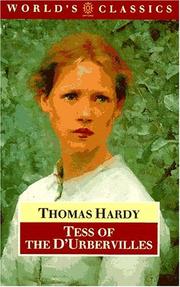
The Greatest Book I Ever Hated: Tess of the D'Urbervilles


A few weeks ago, I talked a little about the two basic functions of art, at least how I see them. Broadly stated, art (and by extension, literature) can be viewed as having two primary and often conflicting goals:

1. To entertain us and provide an escape
2. To unsettle us and prod us to action

If you want to read more of the initial discussion, go here. In that post, I talked about how most books straddle the line between escapism and unsettling content,  but then promised to talk about two books that had a profound impact on me, largely because they didn't bother walking the tight rope. 

Following that, I posted about one of my favorite escapist reads ever, Three Men in a Boat (To Say Nothing of the Dog). This book helped me through one of the worst reading slumps of my life and taught me a great deal about how to make reading an enjoyable, lively experience.

Today, we are not discussing that book. Instead...

Gotta admit though. Love this cover.
THE CONTEXT:

I can't think of a book I liked less than Tess of the D'Urbervilles. While Three Men in a Boat is largely silliness to the exclusion of any kind of hard-hitting content, Tess is hard-hitting content to the exclusion of anything that reminds you of happiness or why life is worth living. I read this book in my final year of high-school, because no one gets through high school without reading at least one novel they loathe. I loved The Great Gatsby and so Tess seems to have been where I paid my dues.

When I started this blog, I made myself a promise. This blog would be about celebrating good literature, rather than ripping on the stuff I dislike. Of course novels are still open to literary criticism here, but one thing I learned in grad school was that my own opinion really was just that. An opinion. Books I hated were loved by other people. My taste was not the definitive measure of quality. So why am I devoting an entire post to a book that, frankly, I cannot stand?

Reason #1: The author of this book is long dead and so I'm not terribly worried about how Thomas Hardy will feel because I did not like his book. No one will @ this post to him on Twitter. He can go on blissfully decomposing without ever knowing I hated his work.

Reason #2: In fairness to Thomas Hardy, his poetry wasn't half bad. 

Reason #3: I dunno. Maybe I'm not as much of a happy, positive, person as I'd like to think. Maybe I have some bile in my mouth that I need to spit out. 

Reason #4: I don't actually contest that Hardy was a great writer or even that Tess is a good book. I couldn't have hated a book this much unless it had some kind of power behind it. One of my professors once told us that she chose books for her classes that she knew, at the least, would incite a response. She couldn't guarantee that we'd like everything we read, but she could stoke the fires of discussion. Tess is a perfect example of that philosophy. Hardy himself clearly wanted his reader to respond and in that he was very successful. I'm not sure "enjoyment" was even on his radar.

Reason #5: A couple months ago I had a terrible realization: The novel I am working on right now was at least, subconsciously, inspired by how scarred I am from reading this book.

Let's delve a little deeper into those last two points, shall we?

AN INTENTIONALLY HORRIBLE STORY - SPOILERS!!!!!! I DON'T CARE IF I SPOIL THIS BOOK!!!!!

While not often repeated, the full title of the book is actually Tess of the D'Urbervilles: A Pure Woman Faithfully Presented. That in itself is an incredibly bold assertion, especially when it's publication date, 1891, is considered. The Victorian Era is not well known for leniency when it came to who could be called a "pure woman" and Tess's life is filled with instances that would have spoken to impurity. 

As a young girl, she's sent off by her family to live with a rich, distant "relative" who sexually assaults and eventually rapes her. (Note: Hardy never uses the word rape, which isn't surprising, since definitions were shady at best back then. Consent wasn't a Victorian Era strong suit, but to modern audiences, she's asleep and a dude comes at her. It's pretty hard to mistake.) She gives birth to a child out of wedlock, whom she names "Sorrow." The baby dies without baptism and when Tess begs the parson about the state of her son's soul, he pityingly informs her that the child cannot enter Heaven.

This shakes her faith, and when she meets a young, handsome intellectual by the name of Angel Clare, she decides to embrace a life of skepticism. She works on a dairy farm and this is the closest Hardy gets to letting her be happy. She and Angel fall in love, but it's not until their wedding night that Tess has the nerve to tell him about everything that happened to her. And like the upstanding gent Angel is, he promptly abandons her. 

Look, I could go on. Suffice it to say, this story amounts to Angel coming back, Tess finally getting revenge on the man who ruined her and death for our heroine beneath the pagan monuments of Stonehenge. I gotta say, if you have to die, Stonehenge is the most rock n' roll place to do it, so we can give the book that.

Actually, I can give the book it's most important element, and that's Tess herself. Start to finish, I liked her. She's smart and fiery and ultimately, a very principled person. That wasn't to say she lacked flaws either. Hardy never cheapened the story by making her perfect. But she was a pure woman, faithfully presented. We were very different people, but I empathized with her tremendously. I wished the world had been kinder to her, yet at the same time, I admired Hardy's unflinching portrayal of her life. It was like Hardy took a look at the way poor women were treated and abused around him and went, "wow, that sucks. I should write a book about this." Not many men of his time would have seen the world so sympathetically through the eyes of a girl like Tess.

SO... WHY DID THE BOOK ACTUALLY FAIL?

The problem is, there is another main character in this novel who is not Tess and his name is Angel Clare and he is the biggest nose wipe in the history of literature. Like, I just opened the Wikipedia page to double check a few details in this post and went "For the love of milk! WHY IS ANGEL SO HORRIBLE????" I'd forgotten about the part where, on their wedding night, he confessed to also not being a virgin. And yes, he still proceeds with the abandonment because he's not going to tolerate this non-virgin nonsense in his wife. (Remember, too. Because rape.) HA! WOW! What an upstanding citizen!!! No wonder our heroine loves him!!!!!

Maybe he was sympathetic back in 1891. I don't know. Maybe his hypocrisy and self-righteousness didn't sting so badly. But the truth is that the ruin of Tess belongs not just to the novel's villain, but also to Angel Clare. I don't know if I would have minded this if Hardy hadn't expected me to forgive him at the end. (Did he? Did Hardy want me to cheer for Angel consoling Tess's younger, still living sister? GROSS MAN!!!!) I've heard many people say that Delores Umbridge might just be the most awful, hateful person in literature and while they may be right, it still stands to reason that Angel Clare is worse to read. Why? Well, because there's a kind of pleasure in hating a villain. Hating a hero, I find, just makes you hate the book. 

The novel, however, is a classic, and despite what high school reading might make you believe, most classics are considered to be what they are because someone liked them. So maybe Angel didn't ruin the novel for every reader like he did me. Maybe for some people, he was part of the underlying "truth" of the work. I'm not here to argue that he isn't a realistic character. He's so banally realistic, you'll find yourself seeing him everywhere you look. But he's unlikable. Coupled with that, the book is also very bereft of hope. The closest it gets to a glimmer at the end is Angel walking off into the sunset with Tess's sister which, I'm sorry, DOES. NOT. CUT. IT.

I mentioned in an earlier post that I found Jimmy, the protagonist of Margaret Atwood's Oryx and Crake, to be unlikable, but the book itself somehow managed to portray the end of the world, yet still gave the reader a taste of hope. I'm not convinced you can have it both ways. Hamlet is a somewhat hopeless tragedy, but I love it because I love Hamlet the character. You get one or the other:

Hopeless ending? Better give us someone we want to grieve!
Unlikable central protagonist? Better be something positive that justifies our effort spent reading this book!

Uggghhhhhhhh.... Angel Clare. I feel like I need to wash my hands just from typing about the guy.

THE BOOK THAT NEVER LEFT ME

I'm writing a book right now about a girl struggling to navigate through a world dominated by men. It's a historical fantasy and takes place in a time period just a little before the Victorian Era. She's a quiet, fast thinking girl who is largely underestimated by the world around her. Eventually, she meets a pompous, self-important man that provides her a great deal of trouble when he begins to pursue her romantically. 

For a long time, I felt like my heroine's name was too derivative of something, but I couldn't put my finger on what. I kept flipping through other Young Adult novels, trying to figure out whose name I'd stolen. I wanted to change it if it seemed too closely tied to some fad out and about right now.

I've been working on and off on this project for a couple of years. It's been my primary work-in-progress since September. Only a month ago it hit me.

Her name is Tessa. I'm not changing it.

Now, don't get your knickers in a twist just yet. No, I am NOT rewriting Tess of the D'Urbervilles. I would not put the world through that again. But some deep seated part of me can't handle Tess dying under Stonehenge. Some part of me needs to see that girl get a happy ending. Or... at least a happier ending.

So I'm going to write her one. 

With grudging humility, I guess I have to say thank you. Thank you, Thomas Hardy. Thank you for writing TessYou upset me. 

But you also inspired me.

Monday, February 23, 2015

MaddAddam and why the first book is (almost) always the best

Welcome to my series on speculative fiction! For it, I will be focusing on three different series of books, highlighting three different lessons that readers (and writers) can learn from some of the best science fiction writers in the business. Since whole series are taken into account, I won’t be focusing much on plots, but rather on what unique lesson we can learn from each series as a whole. This time we’re rather spoiler free, since this is a series I don’t want to ruin for anyone.

Oryx and Crake
MaddAddam, otherwise known as Orxy and Crake

Confession: One of my favorite TV shows is CBS’s Survivor. It wasn’t always. I am not a reality TV aficionado and I was not someone who watched the earliest seasons of the series. But when I realized that it combined three of my greatest passions - tropical locations, tight editing and people taking strategy games SUPER seriously - a new obsession was born.

But since I’m a bit of a Johnny-come-lately fan of the series, some of the discussions about it have the tendency to baffle me, particularly ones about which season was the series’ best. For a large number of people, there is no topping the first season. It was too important. Too revolutionary. It set the groundwork for all subsequent seasons and all that follow have merely been echoes of it. Holding any other season up next to it just undervalues how important and shocking the first season was.

Even if I don’t understand these arguments vis a vis Survivor, I do get where they’re coming from in relation to books. The first book of a series has a kind of magic to it. It introduces the main characters, the elements the story is governed by and, most importantly, the setting. It’s undeniably true that many people read sci-fi and fantasy for the world building. And when you’re just scratching the surface of the world, there’s a sense of a new adventure around every corner.

Consider a few examples: The Hunger Games is at its most compelling when we don’t yet know the rules of the arena and are experiencing the horror along with Katniss for the first time. The Giver is extra potent because we don’t know what the next thing Jonas reveals about his world will be. They’re very much like that first season of Survivor - startling, revolutionary, instantly memorable. And in both cases, they’re the strongest novels in their respective series.

I’ll quickly list a few more series I consider to be examples of this phenomenon: Redwall by Brian Jaques, The Thief by Megan Whalen Turner, Wicked by Gregory Maguire. Even series in contemporary settings fall victim to this. Think of L.M. Montgomery’s Anne of Green Gables or Judy Blume’s Tales of a Fourth Grade Nothing.

Now, don’t get me wrong. All of these series followed up their first books with strong material. Some people may even pick some other book as their personal favorite, but my point is that sequels in a series have to work extra hard in order to equal their starting books.

So when I say that Orxy and Crake is brilliant, but its sequel, The Year of the Flood is still better, you know just how hard Margaret Atwood worked on that second book. She beat the odds. The following is my list of rules Margaret Atwood taught me for “how to improve on a first book.”

1) What fell flat in Book 1, ditch for Book 2
In Oryx and Crake, you’re stuck looking at Atwood’s post-apocalyptic world through the eyes of a strange outcast, known as Snowman. Through introspection, Snowman reveals to the reader “how the world went wrong” and we learn that once upon a time, he was known as Jimmy, an ordinary boy born to privilege who let himself be lulled into a false sense of security, even as the world was crumbling.

I say you’re stuck with him because Jimmy isn’t an entirely pleasant person to be with. He wins your sympathy, but I don’t think I’ve ever met a reader who actually liked him. But the world and the tragedy of his life is fascinating enough that it’s still a great book.

Then The Year of the Flood starts, Jimmy is nowhere to be seen and hallelujah! Though everyone in the series is damaged and filled with shades of darkness, by The Year of the Flood, there is someone worth rooting for. When Toby enters the story, wearing a pink spa jumpsuit and carrying a shotgun, there’s such a strong sense that this is someone who deserves to survive. And in that moment, the fate of humanity feels more real. If Toby dies, what’s the hope for any other half-decent person?

And as the series shapes up to be her story, it’s pretty clear that going forward, Atwood knew to focus on the character who had the gravitas to carry the plot. Jimmy is still there. He does stuff. But since he doesn’t have Toby’s power as a character, his role is diminished.

In this particular case, the weakness was a character, but this could be true of other elements too. Leave a boring setting. Axe a metaphor that isn’t working. There’s no need to repeat the same mistakes twice.

2) But for goodness sake, don’t get rid of what DOES work!

Just as Jimmy’s story is told alternating between the present and the past, so too is The Year of the Flood. In fact, this book expands on the strange story telling devises, working in sermons and hymns around the characters' memories and real-time struggles. It’s part of what makes this series so layered and beautiful.

For me, this is one of the reasons the later books in The Thief series are a bit more hit and miss. Whalen Turner very bravely switches up her view point during the series. Sometimes it pays off. But when she got to the fourth book and, for the first time since Book 1 returned to a first person narrator, I couldn’t help feeling that first person perspective is her ace. The first and fourth books share that perspective in common, and that sharpened focus made her stories far more potent. When she wrote in third person in Books 2 and 3, the story felt flatter.

It’s a delicate balance, choosing between what should stay in a book and what needs to grow. There’s not a cookie cutter solution for every series and author, but both questions - what should change, what shouldn’t - need to be considered during the creative process.

3) Give people that “explorer” of a new world feeling all over again

Even with the improved character conflicts of The Year of the Flood, Atwood might never have topped her first book if she hadn’t found some unique ways of developing the world she’d set out in the first book. As it turns out, there is much we missed from Jimmy’s perspective. The books almost feel part of different worlds, the characters come from such different spheres. As a result, that adventurous sense of discovery that makes first books so irresistible is still on offer for Book 2.

Another series that excels at this are the Harry Potter books, the evidence for which is in the titles. There is never a book title that directly references anything that came before it in the series. Even by the time of Book 7, no one has ever heard of a “Deathly Hallow.” Rowling kept her series chugging by making sure she had something new to tell us each book.

On a smaller scale, Divergent also checks this box. In Book 1, we meet the Abnegation and Dauntless factions, with just a few scenes involving Erudite. Book 2 takes Tris through both Amity and Candor and fleshes out the rest of the Erudite section. It’s really well balanced and one of the reasons that, for me personally, Insurgent is the best of the series.


In theory, if you can do these things - rework what doesn’t ring true, play up the elements of your book that people love and give the reader more world to explore, you should be well on your way to surpassing your first book.

Just good luck doing any of this in practice!


Wednesday, September 17, 2014

Writerly News: Why you wish you were taking Seriated Speculative Fiction

It's been a bit longer than I'd hoped between blog posts, mostly due to technical difficulties.

I own a laptop, (I call it Critter) that is mighty in soul but not in body. Critter's actual computer-y components work fine. It's just exceptionally fragile and prone to crumbling. When I first received Critter, it got so excited it's hinges started bursting apart. With some creativity and a few coats of glue, we've managed to weather a few years without any major incidents, but the end of this summer proved to be the time when Critter threw in the towel. Once again, the inner computer worked fine, but the metal that joins the power cord and the inner computer decided to break and pop out after I did a whole lot of nothing to it.

Luckily, the laptop doctors managed to fix Critter up and Critter has since returned home, slathered in a fresh coat of glue (seriously. There is additional glue on my computer. Along with replacing the part that broke, they generously squirted more glue on Critter) and humming away happy as ever.

This all happened just in time for my Twitter account to malfunction and lock itself up for several weeks. So while I could finally write again, I had limited options for alerting people of blog updates. Mercifully, the account is back to normal again. So I now have a healthy computer and a healthy connection to the my interwebs "presence" (such as it is).

At the same time, the usual September business engulfed me as I moved to a new job and, even more importantly, into the final semester of course work for my Masters degree! It feels very exciting and I've worked towards this for a long time. So hurray. :)

As my writing life is once again being dictated by course work, I thought it might be fun to switch up some of my posts to reflect what I'm working on, especially since my final classes are SO COOL!!!

Due to the fact that I am currently working with my school by distance, my final course is something of a self-directed study. It's half literature/readings course and half writing/workshop seminar and since I'm the only student, its somewhat tailored to my interests.

So what is this mystery class? (Other than fabulous, of course)

I have proudly and pretentiously titled it: Seriated Speculative Fiction

But what does that MEAN?? Well, to those uninitiated in the jargon of University Creative Writing, "seriated" means "something that comes in a series" and "speculative fiction" is basically code for "science-fiction and fantasy, but we're calling it something else because SERIOUS writers keep making fun of us for writing science-fiction and fantasy."

This is a pretty special kind of course to do. Most of the time in English literature courses, there are a lot of confines on what you do and don't have time for. I took a class in my first semester on English novels that prominently feature manor houses and use them as a thematic element. Yes, that sounds really specific, but there was still plenty that was being left out by the course. The novels were dense and we only had time for five. Also, it turns out a LOT of people have written novels about crumbling English manors. When you think about it in those terms, it's easy to see that I could have done a whole course on just Charles Dickens featuring manor houses as a strong thematic element. But of course, in order to do the topic justice, our teacher chose breadth and we read five different authors, just one book by each.

Last year I studied Young Adult literature, which was a fantastic course, but there the subject matter was even broader. We plowed through over a dozen novels for this course, but again, there was only time for one book by each author. This meant, for instance, that when we were covering the topic of science fiction and dystopia, our professor had us read The Hunger Games but neither of the books that followed. Frankly, it's difficult to make time for a series within a class, unless you're studying the work of a single, specific author. (Example: I took a course on August Wilson, one of Pittsburgh's favorite sons, and we read his entire Pittsburgh Century Cycle. But unless you're a two time Pulitzer winning playwrite, like Wilson, it's unlikely you'll get to read every work by a single author.)

But as a science fiction and fantasy writer, the topic of the "series" is a highly relevant topic for someone like me. Certainly there are stand alone novels within these genres, but a large number of the most "important" works within sci-fi and fantasy are series. With authors creating whole new worlds, isn't it natural to use those worlds for as many stories as possible? The pattern is obvious as early as The Lord of the Rings or The Chronicles of Narnia and not much has changed since.

On top of that, in my first year in my program, I wrote a sci-fi/fantasy novel, which I then had to put on the back burner so that I could finish my thesis the following year. But I'd confided to my thesis director that I did have ideas for a second book in the same series and she's been looking for an excuse to teach a course like this - one that focuses on how a series builds over time rather than as stand alone novels.

And so here I am! Studying the coolest thing ever and writing some of my own *ahem* seriated speculative fiction on the side. I'll be reading three full series for the course, each published relatively recently and each aimed at a different age group. And as I finish each, I plan on posting a few of my thoughts about the series as a whole and what can be learned from them. So for those reading along, the series are as follows!

As my middle grade series, I will be studying The Giver Quartet by Lois Lowry

Because reading it for YA lit clearly wasn't enough, my YA series will be The Hunger Games Trilogy by Suzanne Collins

And ending the year, I will tackle the adulty adultness of The MaddAddam Trilogy by Margaret Atwood

I just finished up The Giver, so expect a follow up post to this one coming soon! Until then, happy seriated speculative fiction to all!