Showing posts with label reviews. Show all posts

Friday, May 18, 2018

Speak Easy Speak Love

It's 1927 and down at the Hey Nonny Nonny speakeasy, the jazz is playing and the booze is flowing. Hidden inside a dilapidated manor house on Long Island, seventeen-year-old Hero struggles to keep the place afloat after the death of her mother. With gangs and bootleggers trying to pressure her out of the market, it's going to take her whole crew to keep the speakeasy open.

Luckily, she's got the help of her long-time ally Prince on her side, and sometimes even Prince's mobster connected half-brother, John. The jazz music comes courtesy of rising starlet Maggie, who's loyal to Hey Nonny Nonny to a fault. Plus there's the loving patronage of rich trust fund kid Benedick, who would give anything to run away from his current life of comfort to become a writer. And starting today, there's also Beatrice, Hero's ambitious, would-be doctor cousin, who sees no point in holding her opinions back from anyone. Least of all some upstart, rich boy, writer, like Benedick.

As the summer heats up, so does the battle of wits between Benedick and Beatrice. And soon, it seems everyone at the Hey Nonny Nonny is at terrible risk of falling in love with each other.

What Makes It So Good

As a teenager, my favorite play by Shakespeare was Much Ado About Nothing. I loved the dynamic between Benedick and Beatrice and I still think some of the funniest scenes in theater ever are the ones where the Prince decides it's time to trick the pair into falling for each other. Also, I loved Denzel Washington. And Keanu Reeves. And Michael Keaton. And of course I loved Emma Thompson. And I loved Kenneth Brannagh almost as much as he loves himself.

In my second year of university, I took a course on Shakespeare's comedies, and this was where I realized that my love of the play was, at least in part, largely based on one fantastic adaptation. Read as plain text, it is staggering how much time is wasted on pretending Hero is dead, in order to give the second half a plot line. The parts I loved best about the show are largely over by the halfway point, and then the pace of the play grinds to a halt.

I came out of that class surprised to realize that, while Kenneth Brannagh may have created my favorite Shakespeare adaptation with his movie, there were stronger scripts in the Bard's canon. I've never seen a bad production of Twelfth Night, because the material is just too good.

So when I found out McKelle George was coming out with a book that was a 1920's update of the story, I was intrigued, because a) I love the Jazz Age and b) even with it's slogging second half, there's still a lot to love about Much Ado About Nothing. It still has some of Shakespeare's best characters. I still ship Benedick and Beatrice like no other couple.

I first heard of Speak Easy Speak Love in a class McKelle George taught at the Storymakers conference in 2017. She and a friend were presenting on the topic of writing books that were based on classic literature, and what went into the process of adaptation. They emphasized the importance of balancing between loyalty to the source material and finding places to make it your own. And the best places to make something your own tend to be where the flaws are in the original.

Of course it's important to still love the source material, and believe me, I came to this book with high expectations because I love the original so much. But it was so nice to not see Hero spend half the story pretending to be dead. It was great that Benedick never has to challenge Claudio and the Prince to a duel (because Hero is pretending to be dead) that never happens (because Hero actually isn't dead) and overall, just wastes everyone's time. Who even likes those scenes? Not me, dear reader.

Aside from some smart updates in terms of plot, the book also excels as a loving adaptation of the Bard's work. Within the theater, it's traditional that directors give their own spin on the setting, since the stage plays Shakespeare wrote are so sparse in terms of set direction. My favorite version of Twelfth Night I ever saw took place in a 1960's beach shack.

Similarly, the setting is so lovingly rendered here. The book is filled with fabulous historical touches, that make the place feel very real, and the Author's Note at the end does a fantastic job outlining where liberties were taken, and what the real-life equivalents of these events were.

The characters are all fantastic as well, though a couple chapters in, I had to come to term with the fact that Emma Thompson was decidedly not playing Beatrice. It almost feels like someone else has been cast in the part. Someone who plays up how smart Beatrice is, rather than how charming. Once I got over that, I loved her. Benedick is utter perfection in his big-headed, big-hearted way and the rest of the cast is just barrels of fun. Overall, I highly recommend it.

What Could Make it Better

Like the play it is based on, the book's plot starts and stutters at times. McKelle George actually does a lot of work to infuse plot into a meandering play, but I think there are some inherent problems that emerge when you base a book on story that feels more like a series of awesome scenes than a fully cohesive narrative.

There's an argument to be made that I'm being unfair to the source material. Story plotting worked differently 500 years ago, and I certainly don't mean to discredit the inherent genius of Shakespeare by poking fun at it here. And it's worth repeating that I do still REALLY love this play. It isn't meant to be overly plot focused, which is why we accept the way the narrative skips around between dramatic and comedic, between the main cast and the Dogberry subplot. There's just so many great characters, with interesting things to do. Who wants to be hogtied to plot when all this other fun stuff is going on?

I bring all this up, because this book is also prone to subplots and taking its sweet time to enjoy a scene. I've seen some reviewers mark the book down for this fact, but to me, it was part of the charm. If the plot had been over-the-top punchy, I'm not convinced it would have felt like Much Ado About Nothing. It would have been decidedly Much Ado About Something.

Regardless, it's still worth mentioning, because it takes a while for the central conflict to land. Whereas the original spends way too long in a dreary conclusion, this book is a little slow to finish setting things up. The masquerade that shapes the opening of the play happens close to the middle of the book. So that should give you an idea of where the balance has swung. Overall, this strikes me as a forgivable decision, because again, the first half of the play is the best part. Might as well spend most of the reader's time there.

So if you're at all a fan of the Bard and especially if you also have a soft spot for historical fiction, pick this one up. You'll be singing Hey Nonny Nonny along with the rest of us.

Tuesday, April 24, 2018

Ranking The Harry Potter Books from Worst To Best

Ah, Harry Potter!

Whenever I'm fumbling around for topics to write on, there is no source more reliable than that great, cultural juggernaut, the mighty wizard himself, Mr. Potter! (our new celebrity)

I have enough opinions about the Harry Potter series I could probably write seven books of my own simply analyzing them and the profound impact they had on children's literature, the cultural conscience, and my own life. I come from the generation raised on Potter - the one that went to book launches in costumes and scoured message boards for theories about what would happen in the next sequel.

Overall, the series is a benchmark for children's literature and I have no doubt it will go on to be part of the "canon," both for Middle Grade fiction and Young Adult. If I had to pick one thing Rowling did consistently well in every book, it would be her worldbuilding. It amazed me how good she was at introducing something new in EVERY BOOK that still felt natural to the rest of the world that came before. She was a master of never over-playing her hand, holding onto good plot twists for years. As a result, each book really feels necessary to the overall series. If you skip out on one, you skip out on an essential part of the mythos she created.

Even so, some of the books are distinctly better than the others. Some are better paced, some have deeper theme resonance, some have better side characters.

Picking a favorite Potter book isn't an easy task. It's not as though any one book is a trash fire, and whether or not you share the same opinions as me will depend on certain factors - like if you're super into Voldemort as a villain or if you really loved reading about Quidditch matches. As a result, I can't help but rank these by how I appreciate the novels, and as you read my brief review of each, you'll start to pick up on exactly what did and did not work for me in the series.

Each book will be ranked on the following list of factors, which I recommend all people use for evaluating Harry Potter books:

Title Element:


Harry Potter titles serve as a tip off towards the MYSTERY! of the book. They rarely made sense pre-release, teasing some element we hadn't been introduced to yet. In this way, they serve as a decent way of evaluating the worldbuilding of each novel.

Defense Against the Dark Arts Teacher:


Voldemort cursed the position and so there was always a new one each year! And not everyone can be Lupin. This ranking indicates how strong the side characters were, often a top feature of Potter books.

Ron Weasley:


Ron was my favorite character. Most of the time. He fluctuates between selfish, oafish phases and the wise-cracking loveable side-kick that we - well, loved. My biggest beef with the movies was that they only got that first side. He played the buffoon 99% of the time, never giving us what made him engaging in the books. I get why some people found him annoying. So did I, on occasion. How strong the "Ron factor" was often speaks to how well the dynamic between the main three characters was working. Seriously, when Ron is at his best, so are Harry and Hermione.

Pacing and Theme and Actual Relevant Stuff and, let's face it, where 90% of the ranking is - Yeah, this is the only category that matters. But I you need to hear my Ron related thoughts too.

So, without further ado...

#7 - HARRY POTTER AND THE DEATHLY HALLOWS


Fact: This list would be in a totally different order if it was
ranking the movies because Emily LOVES wizard battles!

Title: 4

This title let us know the series was going to wrap up on a wild note. And the Deathly Hallows ended up being totally rock and roll.

Teacher: 7
Some random death eater we hardly see, since the books don't take place at the school. In general, there is a dearth of relatable side characters.

Ron: 6
Ron emerges from the cocoon of his obnoxious phase back in Book 6! He's a little annoying at times here, but it's building towards redemption, so over all, pretty good.

Actual Ranking: 7
Ugh. This book. I love it. I love every Potter book. But I've always been aware that I distinctly love it less than all the others. It ditches the traditional school setting, to it's detriment. It's missing most of the lovable side characters, only to wantonly kill a lot of them in the last act. It ends with that horrific epilogue.

That being said, it has some real strengths. The Deathly Hallows was a fun level of mystery to sew into the series at a point when the world felt known. Ron's betrayal and eventual reuniting with Harry have a lot of emotional resonance and kind of encapsulate how the whole series has evolved between the three leads. Dumbledore's philosophy about death - a philosophy that's been building up since the first book, finally comes full circle. Molly Weasley blasts some serious witch-hiney and Harry finally takes out old Voldy. And Snape. Oh my gosh, Snape. The "feels" with him are complicated. Whether or not you see him as a hero or still inherently abusive, I like him for the fact that he's always at least interesting.

Overall, Book 7 is a beautiful send off to a great series. So why is it so low?

Partially because a lot of the book is unpleasant. Getting through the camping in the woods section is a slog. Books 4-7 are all too long. Period. They ramble in a LOT of places, but whereas that was mostly bearable in the previous books, here it's unpleasant and boring. There aren't any jokes to break that meandering pacing up. Everyone is too depressed. I get that the book isn't supposed to be happy, but if your children's book is dark, it can't waste time being boring. (did we need to see Lupin have a midlife crisis? Or the Godric's Hollow sequence where they literally learn nothing helpful for their quest?) Honestly, the darkest parts of the book are often the best. It's great when they're in mortal peril. It means SOMETHING IS HAPPENING!!!

The book also does a weird thing that none of the other books do with regards to the central mystery. In the other books, the reader learns what Harry learns with Harry, but in Book 7, for the sake of dramatic tension, Rowling holds information back that Harry knows so that reader doesn't - namely that he controls the Elder Wand. I get why she did this, and I'm not sure I have any kind of work around for it, but it did feel a bit disingenuous. Much of the appeal of these books hinges on the reader discovering the wizarding world WITH Harry, but the very conclusion relies on Harry hiding information from the reader. And I don't like that.

#6 - HARRY POTTER AND THE HALF-BLOOD PRINCE


Felix Felicis, providing much needed humor.

Title: 7
Despite being primarily about the history of Voldemort and Horcruxes, the title is essentially Harry Potter and the Snape Snape Snape. It's more Books 5 and 7 that strike me as the Snape books - the ones that show his relationships with James and Lily. Overall, bit of a disconnect.

Teacher: 5
We don't get a new teacher here, since Snape is a known entity, but he's compelling, and we DO get Slughorn over at Potions. Still pretty darn good, but there are stronger entries.

Ron: 7
This is the book that all Ron haters go to in order to justify their poor thinking. The trio is at it's angstiest here, with no one really getting along, but no one having a proper, outright argument either. It's just obnoxious. His relationship with Lavender is weird, and I think squandered time that could have been better spent delving into his relationship with Harry and Hermione, especially since he abandons them briefly in Book 7. More on this unfulfilled potential later.

Actual Ranking: 6
In this book, the villain's development matters more than what any of the heroes are doing. We spend a lot of time in the pensieve - most of our more interesting scenes, in fact. Voldemort is a good villain, but I've never been a huge apologist for him. He's evil because love potion. Kinda sad. Kinda lackluster as an explanation. I'm not sure what origin story would have satisfied me, but the interesting evil in the books - the kind that is textured and complex - comes from other villains, like Umbridge and the Malfoys. And Snape. But again, this is a false Snape book. A book that sets you up for Snapeness and fails to deliver.

He is, of course, the title element, but that reveal feels anticlimactic. Also, there's some weird gender politicking over his old textbook where Harry's like "I sense the DUDENESS of the Snape who wrote notes in this" and Hermione is like "OMGosh, please shut up" and what the crap did this subplot add?

The poor pacing is on grand display here, with Harry at odd times stalking Draco, or observing Ron's terrible love-life, in between jumping in the pensieve with Dumbledore. The Ron/Lavender relationship is a low-point for the series, which the book seems to know, yet it plows ahead into it. Harry also gets his own terrible romance, complete with chest monster, and the series Moste Boring Character, Ginny Weasley.

Ginny, who is so pretty even the Slytherin's notice. Ginny, who can play every Quidditch position, then call out that annoying, shrill Hermione. Ginny, who is perfectly understanding when Harry breaks-up with her to go on an epic quest to stop Voldemort. In a series filled with fully realized characters,  with flaws and strengths, Ginny is shockingly flat. All her flaws are conveniently locked away in Tom Riddle's diary, back in Book 2. It stuns me, because there is so much potential for an actual character arc here. Ginny should have so many trust issues from getting possessed by the boy in her diary who claimed to care about her. Or she should be driven to her Goddess-like levels of perfection BECAUSE she screwed up so badly in her first year. But instead of exploring the obvious depth Rowling set up, instead she is nothing but pitch-perfect girlfriend material for Harry. She never challenges him or asks anything of him. She's just super understanding and really cool. A fantasy girlfriend. Their relationship is completely unbalanced, unrealistic and uninteresting. I could say more, but this isn't meant to be a total Ginny hate fest. She doesn't deserve that much abuse. She's boring, not morally objectionable. But man, do I hate boring.

By now, you're probably wondering why this is ranked above Book 7 and I will admit, it came close. If not for the Epilogue where Harry is shown married to freakin' Ginny and all his children inherited her obnoxious genes, things could have been different. But there are some good moments in Book 6. Since they're at school, there are still funny scenes and quirky side-characters breaking the flow up. Harry goes to the Slug Club party with Luna! Yay! Slughorn is fabulous and repping for all the non-evil Slytherins! The felix felicis scene is divine. Moral of the story: Slughorn is great.

Also, I think over the years, we've forgotten how powerful the death of Dumbledore was. I remember after the book came out, we were reeling. There were news articles about people hanging banners off of overpasses that read DUMBLEDORE IS DEAD because no one knew how to process the revelation. This was a moment so huge, it made everyone debate for YEARS whether or not Snape was evil, something that, in hindsight, seems kinda obvious. But it didn't back then.

And even if I got bored of Harry chasing Draco, watching young Malfoy's desperate attempt to redeem his family paid dividends. Heck, it set up the best elements of the most recent Harry Potter book, Cursed Child (otherwise known as Sir-Not-Appearing on this List. For spoiler reasons. And because, c'mon. Even the weakest of the original series is miles better.)

The book had lots of good parts, even if it ran around in circles chasing it's own tail at times. And I can't overstate how much the jokes were needed to keep the lumbering pacing from falling apart. So it gets a spot above the bottom. Hurray for it.

#5 - HARRY POTTER AND THE CHAMBER OF SECRETS


That time we learned evil is a fan of anagrams

Title: 6
I'm a firm believer that if you have to call it a "secret," you're veering into telling rather than showing. The sequence in the Chamber itself is pretty good, but I never was crazy about the title itself. This ranking is probably the most impacted by the way the title made me "feel" rather than how strong of a role the title element played in the story, but much of the middle of this list comes out close to each other, so it's hard to rank any other way.

Teacher: 3
I have mixed feelings on the movies, but I will forever be grateful for the greatest casting match-up of all time, when Kenneth Brannagh played himse- I mean, Gilderoy Lockhart. I love him so much, and he might just be my favorite thing about this book.

Ron: 4
Ron is a solid best friend here and adorable confronting his fear of spiders. Yay, Ron!

Actual Ranking: 5
Of the early books, this is my least favorite. It doesn't do much terribly wrong, BUT... I don't like Colin Creevy. And I don't like Dobby. I'm sorry, I just don't. At the end of Book 4, during the three-year hiatus between book releases, I did a lot of theorizing. I was particularly concerned with which characters might die and I started making a list of people I could handle dying without caring much. Top of that list were Colin and Dobby and then they DID both die and I felt like a terrible person, not least of all because even after he died, I STILL DIDN'T CARE ABOUT COLIN CREEVY!!! Dobby sorta won me over in later books. Sorta.

If these characters didn't annoy me, I might have rated the book more highly. It does introduce us to the Burrow, Lucius Malfoy and the House Founders. Some of my favorite aspects of the series have roots in Book 2. I really respect it for everything it sets up in later books, but I think too much of the plot revolved around the set-up of "Harry is annoyed by his adoring fans." Because, you see, I also found many of those adoring fans annoying.

Still, the final battle in the Chamber is amazing, Gilderoy Lockhart is a fantastic flim-flam man and the basilisk in the pipes is super creepy. This book also gives us the best iteration of Ginny, since it's the one where she's sweet and human and fallible. She's a great character to be used by Riddle too, since she's so innocent and inherently valuable to Ron and I value what Ron values.

I know plenty of people love this one, and I've had it pointed out before that this book might be the most plot-heavy. There isn't an inch of fat in this book, with pretty much every scene proving important to the central mystery. It's also the shortest book. While I accuse the later books of being too long, this one might be too short for my taste. There aren't enough character moments. The ones we do get are pretty great, especially those involving the polyjuice potion and Lockhart. But many of the other character moments involve Dobby and Colin. For me, much of my love of the Harry Potter series comes from the character moments, so without these firing on full, it adds up to a lesser whole. Of all the books, this is the one I'm the most indifferent about. It doesn't inspire the sense of frustration that Book 7 does or the wallowing of "what could have been" that I feel for Book 6. It's a good book, just one I found less engaging than the others.

#4 - HARRY POTTER AND THE GOBLET OF FIRE


Warner Brothers went to great lengths to ensure that Harry and Ron
sported hair as truly awful as high school feels at 14.

Title: 5
I remember being kind of underwhelmed by this title, especially when we found out what the Goblet was right away. I was like, "whatever, it's just a trophy" and then the end came and "OH MY HECK IT'S A PORTKEY TO VOLDEMORT!!! DANGER!!! DANGER!!!" Man, Harry Potter has the best titles.

Teacher: 6
Mad-Eye Moody/Barty Crouch Jr. is one of Rowling's great villains hiding in plain sight. I flip-flopped on where to place him compared to Quirrell, because as a character, he is more enjoyable, but Quirrell was a more shocking reveal. By the time Moody is revealed as the villain, I think you're kind of on to him, but it's a nice twist that it's not even the real Moody. The scene where he preaches CONSTANT VIGILANCE is one of the low-key funniest scenes in the entire series, though it's tempered by the heartbreaking realization at the end that he's taunting Neville, possibly on purpose. Still, it's my favorite piece of Potter to read out loud.

Ron: 3
I may be alone in thinking this, but this is annoying Ron done RIGHT. The Yule Ball sequence is a showcase of Ron's potential for pettiness, meanness and insecurity, but it's done in a way that I think adds to his humanity and shows how awkward and wrong-headed young love can be. His fight with Harry is also well done, and helps confront the inherent imbalances in their relationship. And despite being a bit of a boob for the whole book, Ron is still funny. Some of his best lines are in this book, from jokes dancing naked in Dobby's tea-cozy, to his claim he got a Yule Ball date out of "sheer animal magnetism." He's rough-edged and hilarious here. Lots to love.

Actual Ranking: 4
The middle book! Right in the middle! This was definitely not intentional, but it feels right, doesn't it? This book, to me, is where the problems of the later books began. The pacing fell off the rails, for the sake of stuffing the book to the gills with character moments. For those who don't love the moody teens era of Potter, this is also where the moodiness takes a decidedly "teen-aged" turn.

But it's also one of the funniest books in the series, between the Yule Ball, "Mad-Eye Moody" turning Draco into a ferret, Hagrid falling in love, Dudley going on a diet and Harry bathing with Moaning Myrtle. It's a trip.

I've called out the later books as too long, and I stand by that, though I want to temper that statement here. I believe that we, the fans, are partially to blame for the ballooning length of the Harry Potter books, because all we wanted was more. More funny scenes! More character moments! Rowling was so good at writing side-characters, and once she reached Book 4, she leaned into that, giving us a plethora of extraneous character scenes. Most of Book 4's funny sequences wouldn't exist if it had been as tightly written as the first three. So while we get detours from here on out, they do at least expand the world and let us relish the characters a little longer. There are worse things to destroy pacing for. Man, I remember being disappointed when I learned Book 6 WASN'T going to be longer than Book 5!

Also, this book gets a few things completely right. Voldemort's rise is given lots of room to torment us with the horror of what is happening. Rowling clearly knew this book needed to act as a transition between the Middle Grade aspects of the early books and the mature themes of the more Young Adult inclined later series. She pulls that transition off with the rise of Voldemort brilliantly, setting up the action of the rest of the series in the process.

#3 - HARRY POTTER AND THE ORDER OF THE PHEONIX


What's gonna work? TEAMWORK!

Title: 3
Leading up to the book's release, I was excited, because it just sounded so rad. And even though the mystery of WHAT the Order is gets resolved quickly, I still love the way it plays out over the book. This book really expanded the adult wizarding world, letting us in on how the first war was fought and how the Ministry of Magic worked. The book ends with the first wizard war of the series, and it's such a worthwhile build to the shoot-out in the Ministry between Death Eaters and Order members.

Teacher: 2
Yes. The second best Defense Against the Dark Arts teacher is Umbridge. You hate her. You wanted her dead more than Voldemort. And it's for those reasons she's so fabulous. The main villains of the Harry Potter series - Voldemort, the Dursleys, Draco and Snape - are all introduced in Book 1. They represent separate areas Harry has to confront growing up. His past (the Dursleys), his peers (Draco), his assumptions (Snape) and evil itself (Voldemort). Most of the supporting villains are appendages to these .

But another villain is added when Harry reaches the time that most teenagers find themselves confronting "society" for the first time, and it is personified in Delores Umbridge. She represents the sheer unfairness of the world, and does so perfectly. Her lack of comeuppance is infuriating, and yet also the right fate for a villain of her ilk. Because "society" never goes away. You just have to live with it, even though some days, you hate it more than evil itself.

Ron: 5
Ron is so lovely in this book. He and Hermione realize that Harry is going through a rough time and so they step-up to support him. Ron feels like he's grown up considerably since Book 4, actually complimenting Hermione and thanking her for the things she does for them, something that tends to unnerve her. It's adorable.

One of my biggest problems with Book 6 is it undoes a lot of what feels like genuine character development that Ron underwent in Book 5, for the sake of laughs at his stupid relationship with Lavender Brown. Personally, I think Book 6 would have been stronger if the plot had involved Hermione and Ron ACTUALLY DATING and breaking-up, and letting that fuel Ron's despair in Book 7. And I hate to say it, but I think the reason it didn't happen is that I don't get the impression Rowling is great at writing romance (see commentary on Ginny). But can you imagine how great the Book 7 ending would have been if that big kiss came out of them deciding it was worth being together, despite the hurt of a previous relationship? Ugh! In a better world, that is the arc we would have had.

So yes. This lovely version of Book 5 Ron is getting marked down, because I have a fanfic version of where Book 6 SHOULD have gone in my head, that the actual Book 6 ruined for me. Sue me.

Actual Ranking: 3
Of all the Harry Potter books, this is the one that has moved upwards in my rankings the most over time. When I first read it, right after it came out, I was not prepared for Wizard Angst. Up until Book 5, Harry seemed infallible to me, and I didn't like realizing that he wasn't.

But the more I thought about it, especially as later books came out, the more I respected this book and came to like it, then love it. Harry finally processes the anger and resentment he feels for all the loss he's suffered in life. I wanted him to be too noble to let this stuff get to him, but looking back, I'm glad he wasn't. His hurt and anger made him more real.

But this book also shows the roots of the Harry who will one day stop Voldemort. In the previous books, he's primarily reacting to circumstances that come to him. Here, he's trying to figure out how to act for himself, but he doesn't have the tools to do that yet. So he mouths off to Umbridge. He tries dating Cho Chang. He begins leading Dumbledore's Army. He defies the training in Legilimens Snape gives him, believing his connection to Voldemort to be valuable.

And that last action ends up spelling the death of his beloved Godfather, Sirius. It's a heartbreaking consequence to his unwillingness to cut himself off from Voldemort, but if Harry had followed his training, he might not have been tempted out of the school and into harm's way. Then again, maybe that confrontation would have come in another place. The war was on it's way, and there's something beautifully tragic about that inevitability.

Book 5 is the book where Harry grows up. One part I love is the long denouement after the battle at the Ministry of Magic, where Harry struggles to come to terms with with the loss of Sirius. He's in enough denial that he even asks Nearly-Headless Nick if his Godfather might come back as a ghost, but gradually, he learns to accept that this won't happen.

Rowling has gone on the record several times saying that the series is largely about death - accepting it, processing it. It's there in the first book, when Dumbledore calls it the next adventure to the well-organized mind. And of course, it's there all the way until Harry's mind is well enough organized, that he's willing to take on that adventure in order to stop Voldemort in Book 7. Book 5 is where Harry first confronts death personified, in the form of the thestrals, and then gradually begins to accept it, as he learns to move on after Sirius.

Overall, I think Book 5 has some of the most profound emotional resonance. It's tough to read at times for that reason, but over all, I think that speaks to why it's so good.

#2 - HARRY POTTER AND THE PHILOSOPHER'S STONE

The precious babies!

Title: 1

The one that started it all. Note that this ranking is based on the original title, and not the abomination that they made of it in the US versions. When I read this book as a smug little twelve-year-old, I relished the fact that I knew what a philosopher's stone was, even though Harry didn't. But then it turns out to be the key to everything in a wonderful, twisty, mysterious plot for immortality, where self-sacrifice is the key to obtaining it.

Teacher: 4
Quirrell isn't the most interesting character, right up until it turns out he's been trying to kill Harry the whole book, then he's kinda fabulous. Plus, he's got an undead, zombie Voldemort on the back of his head. It's creepy and weird and marvelous. A great kick-off to the books.

Ron: 2
In which we meet Ron, and he is wonderful. He is the best friend we all wanted. He insults, then saves Hermione, and it is love. He sacrifices himself on a chessboard. Blessed, lovely Ron.

Actual Ranking: 2
Mr and Mrs Dursley, of number four, Privet Drive, were proud to say that they were perfectly normal, thank you very much.

I will never get over what a great opening line that is. Or what a great opening book to an amazing series this book is. I have a slight bias towards the first books in series that I've talked about elsewhere on this blog. It's my opinion that first books have an advantage over all others, in that they get to introduce the world. Everything is new and exciting, and isn't that just the truth with Harry Potter? Everything we would go on to love about the books starts here. Magic, Quidditch, the Hogwarts express, classes, the trio, owl post, the Forbidden Forest, Diagon Alley, Hogwarts castle. The list goes on and on and on and on and on.

Aside from the setting being new, so are the characters. The Harry Potter books are filled with people worth loving, and one of my favorite parts of the book is watching the central relationships form. There are few groups of friends I've rooted for more in literature than Harry, Ron and Hermione. Each one feels so essential to the balance of the group. This is proven when they enter the trapdoor together, and each one has a unique sacrifice to make for the good of their quest.

The central mystery introduces us to all the fun of a Potter book, and here, the characters are trying to solve it for the same reason we are - not because the world depends on them solving it, but because solving puzzles is fun. Why is there a troll in the dungeons? Why is there a three-headed dog in the third floor corridor? Why does Snape hate Harry? What is the Philosopher's Stone?

At first, they're driven by sheer curiosity, until they realize that an actual plot is in motion, then things get serious. It mirrors the reader experience that would eventually happen across the entire series. What starts off as light-hearted fun, eventually comes to mean much more as Rowling unfurls her stories of loss and triumph.

Altogether, a brilliant start to a brilliant series.

#1 - HARRY POTTER AND THE PRISONER OF AZKABAN

I still feel annoyed that they ditched the wizard robes for most of
Movie 3, but this scene still rocks.

Title: 2
Otherwise known as Harry Potter and the Hottie McHotterson.

Teacher: 1
After two terrible teachers, the students were due for someone who excelled in his position. Enter Remus Lupin, the teacher everyone dreamed they could have. And like so many good things, he's ripped away too soon. When I finished reading this book, I was shook, because I no longer knew if I planned on marrying Ron or Lupin. WHO WOULD IT BE?????

Ron: 1
Is it weird that I love the Ron and Hermione that fight with each other so much? This book is Hermione's rough year - the one where she takes too much on and suffers for it, disappointing both herself and her friends. And Ron really doesn't let her off the hook, harder on her than almost anyone else. Right up until he realizes that they've also let her down, and she deserves his help too. I've always loved how natural the relationships between the main trio feel, and the fighting between Ron and Hermione here isn't caused shallowly. Ron had good reason to think Hermione's cat ate his rat and in his place, I'd have wanted to kill her for denying it.

And yet Harry's role in the trio here is also fascinating. Back when people used to argue over who would end up with Hermione - Harry or Ron - this book to me served as strong evidence for why Harry and Hermione just wouldn't work, because when she and Ron are fighting, it's consistently Ron's side he takes. Ron is the emotional glue of the trio. He dictates when they're "fighting" and when they aren't. The books where Harry struggles with outright loneliness aren't the ones where Hermione is gone, but Ron. Here, he's given a chance to choose between them and picks Ron. This sucks for Hermione, but I think there's some realism in the relationships here, and what it often feels like being a girl whose best friends are boys. Like, man, have I lived this myself.

This book hits me in a very personal place because of how much I relate to Hermione's falling apart from Ron, and their eventual reconcile. The moment where he promises to help with Buckbeak's trial and she starts sobbing in his arms is so cathartic for me, I just can't deny the personal punch of this book when making my rankings.

Also, Hermione slaps Draco and I'm pretty sure we can pinpoint that moment as the sexual awakening of Ronald Weasley.

Actual Ranking: 1
Rowling has gone on record saying that the Dementors represent depression. This metaphor comes from a deeply personal place for her. They are the death of her mother. They are the failure of her first marriage. They are her struggle to raise a child while living on welfare. They are also Harry's greatest fear.

I didn't know that when I read this book, but I don't think it's an accident that reading it, my heart ached for Harry. Of all the books, this one is the most tender. Harry is vulnerable to the Dementors because of the tragedy he has faced, and he is at times both desperate to escape their influence and tempted to wallow in the memories they bring - memories of his parents' voices, which he can't hear any other way.

Lupin tries to teach him how to face one, emphasizing happy memories as the most powerful means of projecting a Patronus charm. But in the end, he finally succeeds by projecting not a memory, but a hope for his future, that he's going to live with Sirius and finally have a real family again. In the end, it isn't a hope that comes true, but it's enough to get him a little farther.

That message meant so much to me as a young girl. Even though my heart ached when he lost both Sirius and Lupin, his first real connections to his parents, I felt sure things would be all right. Of all the Harry Potter books, this one strikes me the most as being about the inherent value of hope. When Harry expresses his frustration that all he's tried to do hasn't amounted to anything, Dumbledore reminds him that by helping Sirius escape, he's saved two lives, and those two lives have value. The previous two years, Harry was able to fix everything, but this time he must learn to look forward with hope, even when things are difficult.

That theme is also well personified in Lupin, who is kind and decent, even though he's been dealt a hard hand, much like Harry. I love Lupin so much. He exuded goodness, even with his frailties, and while I got annoyed with him a little in Book 7, I do think his issues with commitment were well set-up by his backstory. In the end, he is good and kind and maybe wants people to like him a bit too much, since he's been handed so much hatred. Overall, a wonderful character.

The emotional resonance has always been what I come back to with this book, but it also has my favorite mystery. I love how the story of Harry's parents is revealed. This was also the first book to make liberal use of clues that were sewn several books in advance. Sirius is mentioned in the very first chapter of Book 1. The Whomping Willow is a fun set piece in Book 2, but plays a much larger role here. And most importantly...

TIME TRAVEL!!!!!!!!

I have mixed feelings on Harry Potter and the Cursed Child, and one of the main reasons why is because the books complicate how time travel works in Harry Potter, and not for the better. What I love about how it's used here, is that time travel can't alter the fact that time is a fixed loop. Harry sees himself stop the dementors, and then he stops the dementors. I love time travel when it's used this way, and it's a fun ending to the mini-mystery that Ron kept trying to solve (but rarely bothered Harry) of how Hermione was attending all her classes.

I struggle to find any weaknesses in this book, though for those who don't like Book 3, I'll admit it can be quite dark. That's kind of what you get when half the plot is a metaphor for battling depression. Plus, there is the sheer weirdness of, um... Ron's rat being the man who betrayed Harry's parents. I had to reread that line the first time I read the book. But, hey! It was a twist I didn't see coming.

CONCLUSIONS!!!

The longer I write, the more pessimistic I get about certain things. I often find myself looking at long series and thinking "man, what are the odds all of those are equally good?" Even with Harry Potter, I don't think Rowling got it all right. I know I have my favorites.

But so do you.

And that's the thing I keep coming back to. Even with the variations between them, I don't think the series has a particularly "weak link." I've looked at enough fan polls to know that favorites tend to follow two patterns. First, that Prisoner of Azkaban usually takes the largest chunk of votes, but never an outright majority. Second, that all the books have their defenders. The series gave all of us something we needed at some point.

And by all of us, I mean all of us who read them. For those who didn't... what on earth did you read this giant list of spoilers for? Go read the books!

Friday, September 23, 2016

To All the Boys I've Loved Before

Image result for to all the boys i've loved beforeLara Jean is a girl who enjoys the simple, comfortable life. Her best friends are her sisters, Kitty and Margot, and Margot’s boyfriend, Josh. But Margot is off to Scotland for university and – to Lara Jean’s amazement – breaks up with Josh before leaving.

The break-up prompts Lara Jean to admit to herself that she might have feelings for Josh. She thought she got over him when he and Margot started dating, but apparently not. As she finds herself attracted to him again, she tries to force away her feelings the same way she has gotten over every crush she’s ever had – by writing him a letter and hiding it in the hatbox under her bed. Lara Jean’s letters contain all the thoughts and feelings she never dares say to the boys she’s loved, and by writing them, she finds herself able to move on.

Then on the first day of Junior year, her middle school crush, Peter, walks up to her with a few questions. Questions about a letter he claims she mailed him. A letter, Lara Jean realizes, she wrote him back at the end of Eighth Grade.

The hatbox is missing. The letters were mailed, including the one to Josh. And Lara Jean’s simple life is about to get far less comfortable.

What Makes It So Good

I feel like I recommend a lot of dark, gruesome stuff on this blog. Books with flesh-eating horses and mutated dog-men and haunted grave diggers and Hitler. So let’s celebrate something different today!

This book is fluffy and cute and sweet and wonderful. The loveliness starts with Lara Jean herself, who is charming and neurotically teenaged all at once. She’s the kind of girl who does well in school, not because she’s a tortured genius, but because doing well in things matters to her. She’s not in the popular crowd, not because she’s hopelessly uncool or outcast, but because she’s a bit of a homebody and would rather be baking cookies than partying. Watching her step outside her comfort zone and grow up is so satisfying. Her arc is one of a girl who gradually realizes she wants more out of life, but who also hangs on to her goodness and sweetness, knowing those are part of who she essentially is.

Jenny Han is great at making you care about the things Lara Jean cares about – her sisters, her single father, whether or not she should include pictures of Josh in the scrapbook she’s making for Margot. She’s funny in her simple obsessions. And the relationship drama that falls out of her letters getting mailed also feels authentic. More often than not, its humorous rather than overwrought and her reactions are very relatable. I know of a lot of highschoolers that live more in a world of imaginary romances than real ones, and Lara Jean is clearly more comfortable with the imaginary.

But of course, this book wouldn’t be complete without the eponymous “boys she loved before” and here again, the book hits a home run. Most of the drama focuses on two of the boys. Josh, who still belongs to Margot in Lara Jean’s head, and Peter, who can’t help getting involved because he finds this whole fiasco hilarious. Of course there’s a love triangle, but Han doesn’t sink too much angst into it and by the end of the book, you’re pretty firmly steered in favor of Lara Jean’s decision.

It’s been a long time since I enjoyed a romance this much. If you’re looking for a light read, but don’t want to sacrifice characterization or theme, I highly recommend this book.

What Could Make It Better

So… let’s not beat around the bush. The premise is pretty contrived. The letter writing itself seems like something a girl would do, but the letters getting mysteriously mailed out? Lara Jean, this is why you DO NOT write addresses on letters you don’t actually want mailed!

And this isn’t the only contrived, rom-com level trope this book employs. There are quite a few, though I won’t detail them all for fear of giving away the entire plot. What Han excels at is making these tropes seem relatable again, but they are there in full force. If you hate this sort of thing, you may still hate it here, but you might find yourself liking it. Maybe you were just waiting for proper execution.

If you think of this book as a rom-com, most of the tropes are easy to swallow. All romantic comedies have some kind of quirky premise that is meant to make a story stick out from the pack. Maybe there’s a man in a coma. Maybe there’s a woman writing an article about How to Lose a Guy in Ten Days. I’m not one to fault a book for using a catchy, contrived premise. To me, it’s what it does with it. And over all, I was satisfied with how Han told her story.

This book is also what you might call “very highschool.” I can’t imagine encountering the same problems Lara Jean faces in university, let alone during actual adulthood. It appealed more to my inner sixteen-year-old far more than it resonated with my current emotional state. But again, I don’t think that’s a fault. A lot of YA feels written for an older audience, whereas this book definitely focuses on the hopes and dreams of teenagers. But it might be a turn-off to some readers.

Overall, I’d urge you to give this book a try, especially if you’re in the mood for something happy and light. It’s a fantastic pick-me-up.

P.S. There is a poll in the upper right hand corner!!!

Did you know I am obsessed with polls? WELL NOW YOU DO! Right now I'm trying to get an idea of what people like reading on the blog, so that I can hopefully provide more of it. So click all the things you like! Multiple answers are allowed. And if you have any questions/suggestions, sound off in the comments! Love you guys! :)

Monday, September 12, 2016

How Diversity (and Lin Manuel Miranda) Can Make A Story Awesome

Lin Manuel Miranda's musical IN THE HEIGHTS

Lately, there have been a lot of discussions around diversity and inclusivity in my writing community. I say lately, but really, these discussions have been going on for a long time. However, they have their moments where they boil over a little more heated, and the past few weeks, this has seemed to be the case.

This is a topic I have a lot of thoughts on, mostly because that when it comes to increasing diversity in books and in the publishing industry, I am all for it. A lot of the time, I kind of expect people to take this for granted. I'm not one to make a fuss. I'm not one who likes hurting feelings. But I am also someone who hates faulty logic, and lately, there have been some arguments AGAINST increasing diversity in books that have relied on terrible, narrow-sighted premises and that is the kind of thing that I just cannot stand for. So in the name of sense, I am saying some things.

Actually, I am saying a LOT of things. Bear with me. I have a lot of thoughts on this.

Bad Argument #1: There isn't really a lack of diverse books. I read "To Kill a Mockingbird" and that had race issues in it.

A lot of my readers are not writers and are likely unaware of the discussions writers have around diversity. But if you're someone who is concerned with social justice and media, you've probably heard of these discussions in some other venue. Maybe you watch movies and saw some of the discussion around the incredibly white Oscar nominees of the past couple years. Or maybe you like theatre and noticed that everyone is losing their minds over Lin Manuel Miranda's musical, Hamilton (we'll talk more about Miranda in a minute).

Generally, you can drag-and-drop that discussion onto books. Books, like most media, are dominated by white, heterosexual, able-bodied heroes. Oh sure, there are exceptions. There are lots of great books out there about minority characters, but this is more a symptom of there being "lots of great books" than of there being adequate exposure or opportunities for books focused on minorities.

If you need convincing at all, I compiled a list of as many books as I could think of that have been featured in some way on my blog. Most were selected for book reviews of some kind, because I think they're great books. A few came up because you can't discuss Young Adult literature without saying a few things about Harry Potter and Twilight. I think the list provides a decent litmus test of what you'll "happen" to see and read if you are not actively selecting for diversity. Below, I have highlighted all the books that definitively feature a protagonist who isn't white.

True Blue Scouts of Sugar Man Swamp – a white boy and some raccoons
Ship Breaker – a mixed race boy, possibly Latino, but it’s all pretty vague. Could be white
Divergent – a white girl
The Night Gardener – a white girl and a white boy
The Giver Quartet – three white boys and two white girls
The Hunger Games – a girl. Probably white.
Twilight – a white girl
Harry Potter – a white boy
MaddAddam Trilogy – a white girl, a white boy, a white woman and a white man
The Scorpio Races – a white girl and a white boy
The Absolutely True Diary of a Part-Time Indian – a Native American boy
Three Men in a Boat – a white man
Tess of the D’Urbervilles – a white girl
Bone Gap – a white girl and a white boy
Stand Still. Stay Silent. – four white boys and two white girls
Wolf by Wolf – a Jewish girl who *usually* looks white
To All the Boys I've Loved Before - a half Korean girl (spoiler! This review is upcoming!!!)

I included that last one because I actually did write that review already, so it seemed part of the same, pre-post on diversity thought process of mine.

Now, racial diversity isn't the only kind of diversity you can read about, but I hope this gives some idea of why, when people seemingly go on and on and on about inclusivity, it isn't because they are going on about nothing. These are not books I stumbled into accidently. The majority are award winning and highly respected. Others are runaway blockbuster hits. Most are used as benchmarks within the discipline.

So here are some numbers:

Of the 17 books above, only 2 feature definitively non-white protagonists
If we include Nailer from Shipbreaker, that number goes up to 3
Wolf By Wolf features a religiously diverse protagonist. The count goes up to 4
Stand Still. Stay Silent. features linguistic diversity and isn't heteronormative. The count goes up to 5
Bone Gap features a protagonist with a disability. The count goes up to 6

And that's it. 6 out of 17 books feature diverse protagonists. Due to the inclusion of a couple works of classical literature, maybe the number skews a little low, but one of the advantages of being white today is that you have the past to bolster you up. We've been the heroes in the cultural narrative for a long time.

A lot of people may argue that I'm being unfair, only counting books where the protagonist belongs to a diverse group. And yes, I will grant you that it's nice that Katniss is friends with black characters and that Bella has a thing for Jacob. They help, because they show that neither Katniss nor Bella belongs to some sort of strange world where the diverse characters have all been edited away. But these are still stories that are about the experiences of people who don't grapple with issues that exclude them from the mainstream. The diverse characters are appendages to those stories, not the focus themselves.

What I'm saying is that things could be better. There could be more diverse books. I might need to more actively select FOR diversity if I want to feature it on my blog. But you'll notice something else about that list. The bottom of it - which is composed primarily of new releases - is more diverse than the top. I didn't do this intentionally, but the books I am reading and that are promoted to me are changing. Modern writers are getting better at including diversity, and a lot of the best stories today feature diverse protagonists. Which leads me to...

Bad Argument #2: If people are just trying to promote diverse books, then what will happen to "good" literature? This is like affirmative action hiring in books! I don't like it!

I think it goes without saying that books should recommend themselves on their own merits. I've picked up diverse books I haven't liked. I've also picked up books that don't feature diversity that I haven't liked. Just as there are "lots of good books" out there, there are also lots of bad books out there. And because reading is so subjective, it can be hard for us to understand why one book got published and another one didn't. And all too often, people use this as an excuse to blame diversity.

You see the same nervousness around diverse books that you do around affirmative action hiring, particularly from writers. Writers who aren't from diverse groups get antsy when they see an editor or literary agent calling for diversity. It's like a scholarship they can't apply to, and it upsets them, because they're looking for a way into the market too.

But this is the thing: For every editor there is asking for fantasy that features non-European mythology, there is another one turning down a manuscript with a diverse protagonist because there just isn't "broad enough market appeal" for it. And "market appeal" is often seen to equal white, heterosexual, able-bodied etc etc

If you want a good example of this, take a look at the way books are adapted into movies. In The Hunger Games, Suzanne Collins describes Katniss as olive skinned, dark haired and dark eyed. She's racially ambiguous. But most of us don't think of her that way anymore because we've all seen her played by fair skinned, blue eyed Jennifer Lawrence. Lawrence was a logical choice for making the movie more "marketable," a traditional, white beauty who was a star on the rise. Of course she did a good job, and since Katniss's race was ambiguous at best, I wouldn't say she was miscast. But can you see what I mean? When a spot is "neutral" so-called, it's usually filled by a mainstream character.

When people actively call for diverse work, it isn't because they are trying to exclude other writers, but because they're trying to make a space for work that otherwise might struggle to get into the "neutral" slot because nothing is ever neutral. Not really.

And if you find yourself "missing" these opportunities, consider for a moment whether or not your own work really is at it's very best. There might be more diverse work out there now, but there's also still plenty of stories about white people. Don't worry, I went to the book store. I checked. Our faces are still on plenty of covers. Which brings us to...

Bad Argument #3: Diversity is great and all, but not EVERY book should have to be diverse, right? Authors shouldn't feel pressured to include it if they don't want to.

If you are asking this question because you are looking for permission to write a white, able-bodied, heterosexual etc etc mainstream character as your protagonist, then I hereby give you permission. Yes, go ahead. It's your story. You can write your story about whatever you're little heart desires. Similarly, yes, you can enjoy a book about white characters without feeling guilty for liking it. There are great books out there that aren't terribly diverse.

And the reality is that even when we're looking at mainstream protagonists, there are still lots of differences between them . We all love the Avengers and how different they are from each other and yet they're all white, 30-something-year-old dudes. Give or take. (That's starting to change. Marvel is planning on releasing some movies that should broaden the line-up.)

But on the flip side, I will say this: Writers have a responsibility to represent diversity not because it is the buzz phrase du jour, but because writers have a responsibility to represent reality. And the reality is that the world is a diverse place.

If you live in Europe and North America, there was a time when reality did seem less diverse. I don't think Shakespeare had much exposure to cultures other than his own, so when he wrote reality, it was a narrow version of it. And good gosh, we should be grateful he didn't veer too far off of what he knew! *coughshylockchough*

But we don't live in that world anymore. Less than 50% of kindergarteners in America are white. Around a quarter of all Americans live with a disability at some point. If you don't see the need to feature at least SOME non-mainstream characters in your work, then you might just be ignoring reality. And yes, that is something that deserves to be called out. The "mainstream" I've mentioned so many times isn't what it used to be. It's varied in a way that it wasn't before.

There will still be exceptions. There will still be deeply fascinating, genuine books that feature little-known aspects of European history. There will still be stories about small towns in middle-America where everyone attends the same highschool and everyone looks like each other, accept for that one kid who sticks out like a sore thumb. These might be portraying reality in a time or place where it would feel a bit forced to make everyone "diverse for the sake of diversity." But even then, it wouldn't hurt to do a bit of extra research - to make sure we are portraying reality in those places and not just our assumptions about it. Even back in the olden days, there was still more immigration and mixing that went on than people often care to acknowledge.

So with all that said, I want to provide one last argument; one of my own, which I hope strikes people as a good one. In fact, I'm going to go out on a limb and even label it as such.

Good argument #1: Everyone benefits from diversity because it gives us more stories; stories that wouldn't be available to us otherwise.

A few years ago, I went on a trip to New York with my older sister. Being musical theatre enthusiasts, we decided to go attend a show we knew very little about, but had great buzz. It was called In The Heights and told the story of a neighborhood in northern Manhattan primarily made up of Latin American immigrants.

The musical was the first major work by Lin Manuel Miranda, who has since then achieved dizzying acclaim with his more recent work, Hamilton. But it was In The Heights that made me fall in love with Miranda and his hip-hop, rap infused musical theatre stylings. There isn't really anyone else like him on Broadway.

One of the scenes that completely fascinated me was one that involved Benny, a black cab driver who worked for a Puerto Rican ran cab company. He gets involved with his boss's daughter, Nina, and to his shock, is rebuffed by her family. Benny had always enjoyed an easy relationship with his boss. They're both minorities. They're both used to not having their dreams taken seriously, because they're from a "bad" part of Manhattan. But Benny is a cultural outsider, who speaks some Spanish, but isn't fluent. He finds himself viewed as an intruder and this understandably hurts him.

The resolution of this storyline is probably best left to the musical, but I remember this was a real wake-up call for me. I was so excited watching this, because I had literally never seen this story before. I hadn't seen it anywhere. One of the main reasons why was because, in my own life, there is literally ALWAYS a white person present. It can't be helped because guys, I AM that white person! Shocking, I know.

Miranda gave me a peep into a world of race relationships and cultural hierarchy that had very little - almost nothing, really - to do with white experience. The baggage is different. The tensions are different. The assumptions are different. As a result, the stories are different. Having a white character present for that scene would have radically altered the tone, and so I found myself very glad that there weren't any. Not because I'm inherently "uninterested" in the stories of white characters, but because sometimes they need to step out of the way and make room for other people - to make room for the stories that cannot involve them.

And that's what we stand to gain when we open up to diversity in literature. We end up able to empathize with more people and aware of worlds that are beyond our ability to observe. We have so much to gain by letting more stories be told by the people who experience them. So don't fear the future, friends. It's a place with a lot of great stories to tell.

Monday, August 22, 2016

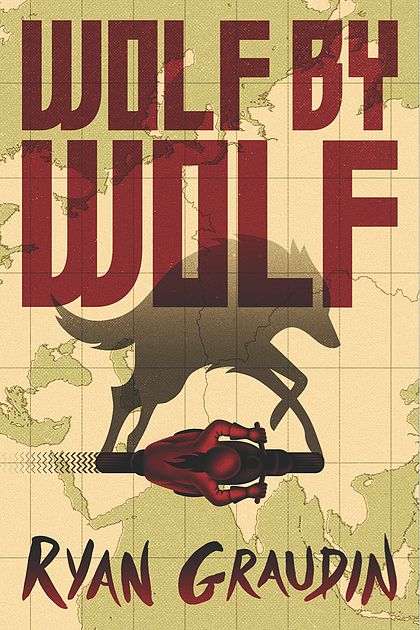
Book Reviews: Wolf By Wolf

Wolf By Wolf by Ryan Graudin
Ten years have passed since the Axis powers won World War II. To commemorate their victory, each spring, Germany and Japan host a motorcycle race across their controlled lands, the racers drawn from the best of the Hitler Youth and Japan’s elite racing camps.

Only one girl has ever competed in the race, last year’s victor, Adele Wolfe, darling of the Third Reich and particular favorite of Adolf Hitler. But this year, someone else is racing in her place. A survivor of the death camps, Yael can skin shift, thanks to the years of Nazi experimentation performed on her as a child. Using Adele’s face as her own, Yael enters the race, determined to win and kill Hitler at the victor’s ball.

But navigating the road is only one of the dangers she’ll face. Adele has plenty of blood on her hands from last year’s race, and if Yael wants to complete her mission, she’ll need to answer for Adele’s crimes.

What Makes It So Good

Anyone following my blog knows that I’m a huge fan of The Hunger Games trilogy. Those books prompted a huge wave of follow-the-leader novels, all tackling the topic of dystopic futures and life-or-death competitions. The trend was so pervasive, that about three years ago, publishing got so sick of dystopic YA that it’s kind of shocking that this book wiggled through.

But Ryan Graudin hit on a way of writing a dystopia that didn’t feel derivative or played out. Instead of this being some futuristic society that keeps its people in line with laser guns, it’s the most famous dystopia that ever existed – Nazi Germany. Of course, Graudin isn’t the first person to write an alternate history where the Nazis won the war. Anyone who reads comics knows that superheroes can’t get enough of punching Hitler in the face. But her take does feel satisfyingly unique. The inclusion of the race gives the book structure, keeps the pace brisk and – yes – seems like something else Graudin picked up on from the success of The Hunger Games. We YA readers do like our cutthroat competitions.

A lot of people who dislike The Hunger Games do so because they don’t find it plausible. You can’t say that of Wolf By Wolf. The scenario isn’t that far off of what could have happened. Adjust when Hitler planned on launching Operation Sea Lion, and he very well could have won the war. Graudin has done her research, and it shows. From the Zundapp motorcycles to the fragmented remains of the USSR to Yael’s skin shifting ability, the details real and imagined blend together seamlessly.

Yael’s relationships are also fascinating. She comes into the race predisposed to hate all the Hitler Youth boys, but as she’s forced to interact with them, she can’t deny that there’s something more to each. Though none of them have survived the horrors she’s endured, they’re also victims of Hitler’s reign.

The writing itself is sharp, weaving together flashbacks of Yael’s past with the race, allowing the reader to come to know the force that drives her. The prose is at turns heart breaking and brutal, but I never found it so dark I didn’t want to read on. Over all, a fantastic read. Get on the fan wagon while there’s still room, because a sequel is coming out this fall.

What Could Make It Better

I had very few quibbles with this book, but I can think of a couple things that might bother a different reader. One of the strengths of The Hunger Games was that Katniss herself had a very distinct and understandable personality. Within a chapter or two, she made sense to you and even if you hated her, you could still easily describe her personality – sour, withdrawn, but also determined and wily.

You can’t say this of Yael. Yael is a blank slate, a girl who is so wrapped up in her mission, she has very little sense of herself and her own likes or dislikes. For most of the book, she’s impersonating Adele and trying to think of what Adele would do, rather than what she, Yael, would want. This can get frustrating.

Actually, it could have been much worse. A flaw like that would destroy most books. Video games make use of this trope all the time, giving the player a generic, chiseled dude to play who doesn’t interfere with the player’s ability to imagine themselves in the role of hero. If there’s no personality complicating identification, it’s easy to do. But this style of game isn’t typically known for gripping stories. It’s a sacrifice of story quality for immersive experience.

While video games can justify this choice on occasion, it’s harder with books. Yet I’ve read some YA where the author seems to purposely make the heroine as indistinct as possible so that any girl reading can imagine herself into the story without much problem. And yes, they can be immersive, but they can also be shallow. This is where your Bella Swann style heroines come from – girls who seem like shells rather than real people. And Yael is a bit of a shell.

But for this book, it was absolutely the right choice. Yael is a blank slate character because she is LITERALLY a blank slate. One of the saddest and most telling lines of the book comes early on when Yael admits that she can’t remember what her own face looks like. She was too young when the experiments started and took away her original appearance. So yes, Yael doesn’t really know herself and doesn’t seem certain of what she wants. But this bothers her. A lot.

In a certain way, Yael could be any girl out there. We all get to imagine ourselves racing motorcycles and hunting Hitler. That’s her gift and her curse. But by the end of the book, I think Graudin does a decent job of showing that even if her identity has been stripped from her, she isn’t every person who has ever lived.

Young Adult literature is often characterized as being a genre focused on “coming-of-age” and knowing yourself. Yael provides a fascinating entry point into a very universal theme. Most teenagers feel like a blank slate in some sense, one that’s fighting to know itself and grow up. Yael shows just how powerful an identity can be, whether it’s your own or one you stole from someone else. Besides, one of the most enjoyable parts of fiction is getting to imagine ourselves in someone else’s skin, and Yael gives us so many people to be.

Tuesday, February 23, 2016

Stand Still. Stay Silent - A Book/Web Comic Review

Stand Still. Stay Silent by Minna Sundberg.
The Rash illness spread too quickly for anyone to develop a vaccine or learn its true nature. In its wake, nearly all of humanity seems to have been wiped out, most of the known survivors residing in Iceland, which closed its borders at the beginning of the plague. Pockets of civilization exist throughout the other Nordic countries, but for the most part, the world is Silent.

90 years after the initial devastation, a team secures government funding to send a party to mainland Denmark to investigate what remains of the Silent World. Woefully underfunded, the team is staffed only by those desperate enough to work for little pay.

There's Tuuri, a Finnish scholar, mechanic and all around handy-gal who just wants to see the world.
Lalli, the team mage and tracker who let his cousin Tuuri drag him into this.
Emil, a reluctant soldier, this Swedish pretty boy comes from a once wealthy family that fell on hard times.
Mikkel, the Danish cook/medic who has an impressively long resume (mostly because he can't hold down a job).
Sigrun, the bull-headed, thrill seeking Norwegian Captain who can't turn down a challenge, even if might kill her.
And Reynir, an Icelandic farm boy who probably should have never left home.

Oh and there's cats. Lots of cats.

What Makes it So Good

I've been wanting to review a web comic for a long time. They're one of my favorite art forms and one of the primary reasons I'm a total internet junkie. In addition to that, most of my readers are not necessarily web comic aficionados. For those people in particular, I would LOVE to introduce them to the wonders of the medium, because it's incredible what's being made right now and put on the internet for free by these artists.

But up until now, I hadn't found one that met my rather extensive list of criteria. It was as follows:

1) A Long Runner. I wanted to highlight something that had enough story down that I could read through a sizable chunk of material and, therefor, give a fair appraisal of it. With a backlog of just under 500 pages, Stand Still Stay Silent (or SSSS, for short) has a good chunk to get you addicted, but isn't so long it intimidates new viewers.
2) A Frequent Updater. Because most Web comics are self-published, self-directed projects, it really varies how much time their artists have to devote to their work. Since the expectation is that the work is available for free, it can take a while to build a large enough fan base that the creator can derive a living through advertising/ merchandise/ print runs/ kickstarter/ patreon etc. While this is something I don't mind putting up with, for those new to the genre, I wanted their first experience with a web comic to be of one that updates dependably. SSSS keeps a brisk schedule of one new page per week-day which is incredible, given the level of detail on each page. This woman clearly draws faster than I do.
3) Relatively "Clean" Material. For the record, there are some "adult" comics I've really loved, but because I blog primarily about children's books and YA novels, I wasn't interested in highlighting an overly gritty or crude piece. Most web comics are about college-aged characters, and that often leads to raunchy material. SSSS focuses more on friendship, adventure and mystery, even with a cast that falls around the 19-30 age range. I'd rate it somewhere between PG and PG-13.
4) Visually Appealing. All skill levels exist on the internet, and all sorts of people make comics. With some, the art can be pretty rough, but if the story is still good, I'll stick with it. But again, as a "gateway" comic, I hoped to find something with a high level of polish. SSSS is so freakin' gorgeous, I'm kind of worried people will walk away thinking this is the norm. The design is so incredible, it's worth reading just for the art.
5) Story Focused. Web comics run the gamut and I love so many of them. Many people are familiar with things like XKCD or Dinosaur Comics which focus on the short-strip, joke-a-day style of comic. You can *kind of* piece together character descriptions for The Stick Figure With the Top Hat or T-Rex, but with both, the jokes and the words are the primary concern. I'm not as qualified or interested in reviewing those. SSSS excels in it's story telling, and it's that aspect I'll focus on for the rest of the review.

Story telling in web comics works differently from how it does in novels. As a rule, most web comics have more open-ended storylines; the kind that can be added to over the years, as the author gets new ideas. They're a bit like TV, in that the hope is that they can run for a long time and continue to build. So structuring them so that each episode feels satisfying while also leaving the door open for new adventures is a tricky balancing act.

SSSS does this very well. The expedition plot line could, theoretically, go on forever. But at the same time, there's a real sense of progression from one chapter to the next. The world opens up beautifully, and the reveals are well timed. It really is one of the most thoughtful portrayals of world-destroying apocalypse I've ever read.

The cast is also delightful. Every character rings as distinct and their voices all sound very different - often quite literally. One of the joys of this comic is how much of it is about language and culture. The author is half Swedish/half Finnish, and you can see how deeply familiar she is with the intricacies of all the Nordic languages and mythologies. The cast, being multinational, do not all speak the same languages, and so Tuuri often has to translate between group members. It's super fascinating, reading this, because as the fantasy unfolds, you can't help learning things about Scandinavia.

The use of folklore is also fantastic. Again, you can feel how deeply lived and researched this comic is. Monsters of Norse times have been given a futuristic twist and spiritualism of early Finnish peoples guides the mage culture. On top of that, she's added variations in the levels of technology that survived in the various countries, so that the whole world and cast feels wonderfully diverse.

I really can't recommend this enough! And it's FREE TO READ! Click the Link now!!!!

What Could Be Better

While I love the characters, they are (at this point) a little lacking in motivation. Now don't get me wrong, each person has their own reasons for being on the expedition. But with the exception of Emil, who has family and a fallen heritage back in Sweden, we don't really get the sense that anyone has really given anything up. Or even totally understand what each character needs to learn.

That being said, I'm optimistic this stuff will develop over time. A recent flashback helped give some more depth to Lalli, and each of the characters is clearly flawed, so surely they need to learn SOMETHING. The reality is, it's tough in a web comic to foreshadow your cast's ultimate development, because the overall length of the piece is often undefined. But I don't think this gets the comic off the hook entirely. I've read a few comics that do a very good job of at least telling you what to watch out for during the first few chapters.

Right now, the primary concerns of the story are WILL THEY SURVIVE and WILL THEY LEARN THINGS THAT HELP THEIR PEOPLE and for now, these are good goals. I'd just like to see some more character dependent goals mixed in, because I like the characters so much. In particular, I adore Sigrun, who we currently know the least about, backstory wise.

Another potential weakness is the super long prologue, which gets a big solid MAYBE from me about whether or not it was needed. I loved the prologue. I loved the foreshadowing. I loved going back and figuring out which main characters were descended from which prologue people. But it was also really long and it took me a while to figure out that I wasn't reading about the main cast. Oddly enough, the prologue is actually FAR more character driven, as it shows a diversity of reactions that are happening around the region to the news of the Rash illness. All those stories are justified purely in terms of the emotions they convey. Probably why I liked it so much.

Final Verdict

For anyone who has wondered about web comics/graphic novels or for anyone who already loves them and needs something new to read, open up Stand Still Stay Silent NOW! It's beautiful. It's interesting. It's charming. It takes a lot of well known tropes and makes them wonderfully new, through the power of language, culture and research.

And should a Troll happen across your path, remember the best way to survive - Stand Still. Stay Silent.

Tuesday, December 15, 2015

Book Reviews - Bone Gap


Bone Gap
Seventeen-year-old Finn O'Sullivan is used to losing people. Two years ago, his mother picked up with an orthodontist and moved to Oregon, leaving him and his older brother Sean alone in the sleepy town of Bone Gap, Illinois. So when beautiful, enigmatic Roza disappears on the O'Sullivan boys too, people assume its nothing more than her turn to move on and leave the boys to their lonely lives.

Only Finn knows that isn't what happened. Roza was kidnapped, right in front of him, but when he can't provide the police with a helpful description, her captor gets away. When the searches turn up nothing, everyone decides this is just some delusion of his. Hasn't he always been the town nut-job? The kid who won't look other people in the eye? Worst of all, Sean seems to believe them. With his older brother retreating deeper and deeper into anger and depression over Roza's disappearance, Finn's at risk of losing the only person who has stuck by him his whole life - Sean.

Meanwhile, in a strange suburban house where the lamps are fused to the floors, Roza wakes up. And she's trying to figure out why Sean hasn't come to save her.

What Makes it So Good:

You might have noticed it's been a while since I did a straight up book review. There have been a couple of reasons for that, but probably one of the biggest is that I tend to read and write in cycles. Good books turn me into an anti-social zombie who won't emerge from my room or sleep until I have consumed the very brains of the book. I don't get anything done on a reading binge, other than reading.

Similarly, when I'm writing heavily, I don't do much reading. I usually try to stay focused on the task at hand, instead of letting other author's characters compete with mine for attention in my brain. So since the past fall has been pretty heavily writing based for me, there hasn't been a lot of reading going on. (Don't worry, I read a lot in the spring. Just didn't find much I wanted to review). But with the end of the year comes end of year best book lists, and those are just plastered with tempting covers and blurbs. One that I saw on a few already was Bone Gap, and with it's intriguingly minimalist bee themed cover, I was curious about it. The other day I went to the swimming pool and while there, popped in at the adjacent library. And wouldn't ya know it? Bone Gap was sitting right on the shelf in the YA section. So even though I was leaving for Christmas holidays in only a week, I picked it up. And wow, am I glad I did!

Bone Gap has all the markers of an award winning, best book. It's a coming of age story with a hint of magical realism, an unreliable narrator and beautiful, evocative writing. This pretty much describes 90% of the books that make it onto the Printz award lists.

Most importantly, the characters in this book are amazing, especially Finn. The book is told through alternating third-person points of view, and I was always excited when the narrative circled back to Finn's life in Bone Gap, where he was odd but oh, so endearing. Along with him, there was his over principled, always angry, self-sacrificing brother Sean. Sean treads the line between obnoxious-twat-who-won't-listen-to-the-main-character and broken-nice-guy-you-just-want-to-give-a-hug really well. One step too far in either direction would have unbalanced the story, either by making him unlikable or making him outshine Finn, who rightfully leads this story. But there's also the lovely Roza, the bizarre Old Charlie Valentine and, my other favorite, the crabby girl who tends bees who tries to convince everyone to call her "Petey" instead of "Priscilla" (they won't).

The mystery elements of the story are also handled well, as Finn gradually reveals the circumstances of Roza's arrival and departure. This is one of those books where once you know what's going on, you suddenly realize how well the previous chapters reflected the central mystery.

I also have to give this books props for deconstructing the fairy tale myth of the helpless woman who waits to be rescued rather well. Roza wants to be saved (what rational person wouldn't hope someone was looking for them after they are kidnapped?) but the people of Bone Gap seem to be too broken to find her. So desperately, she tries to find her own way out of the mess she's in.

The book is also fascinating in it's treatment of beauty and what it means to truly see a person for who they are. Roza has been quantified by her outward appearance her whole life. Petey is a girl that the local bullies all tease about being a butterface. And Finn, clueless as he is, doesn't seem to understand why he's an object of affection for half the girls in school, while his best friend Miguel can only look on in envy.

With all these different elements at play, it's easy to see why Bone Gap is such a layered, textured, satisfying read. This book has something for everyone, performing one wicked balancing act to keep all the threads going. This couldn't have been an easy book to map out and write, so I salute Laura Ruby for her incredible work here.

What Might Make it Better:

My last compliment to the book is actually going to lead into my one criticism of it. There is a LOT going on here. Like, a LOT. And it's arguable if every thread is necessary or if every element is executed equally well. Nothing is done badly, but I'm not sure that's the same as saying that every scene earns it's place, considering the strength of the other elements.

In particular, I do have to pick on Roza a little. She's a fun deconstruction of the helpless heroine, but in being that, she occasionally sticks her toes into the camp of "Mary Sue." For those who are unfamiliar with the term, a "Mary Sue" it used in fiction to describe two related, though slightly different types of characters. The term was first used in a very old Star Trek fanfic, that was purposely making fun of bad fan fiction that existed as nothing but a wish fulfillment strategy. It featured a character known as Ensign Mary Sue, who was unbelievably amazing at her job, was beautiful beyond reason and had both Kirk and Spock in love with her as a result. These types of characters are common in fanfic, but also creep up in regular fiction. For instance...

1) Mary Sue can exists as an author insert character, there to play out the fantasies of the author. Especially common in fanfic (ie; the character gets to have a romance with the target of the author's choosing). How does this manifest in regular fiction? Many would say you need not look further than Bella Swan from Twilight. It's been noted that Bella's physical description, from her brown hair and eyes to her widow's peak, mirrors the appearance of Stephanie Meyer in suspicious detail. But on the whole, these kinds of obvious "author inserts" are uncommon. I don't think this was at play with Roza.

2) But a Mary Sue can also refer to a character who is too perfect and is created to be adored by everyone else. Their flaws, when inspected, don't really seem like flaws. And Roza kind of fell on her face here. I struggled for a while to think of ANY flaws Roza has. She's kind. She's feisty. She's clever. She'd never be vain, no matter how beautiful she is. In fact, about her only flaw is that she isn't very trusting... except that flaw is a direct result of how beautiful she is. She doesn't trust, because people have done her dirty in the past and refused to treat her like a normal human being because she is SO beautiful! Like, c'mon, man. I'm not saying that isn't an interesting characterization, but it doesn't count towards your "character flaw" tally. But Roza pretty much never says or does the wrong thing. She's morally untouchable.

I generally liked the character, and I liked what Laura Ruby was trying to say with her, but she never seemed as real as Finn or the other citizens of Bone Gap. On the whole, I would have found her story line more compelling and her thematic relevance more stirring if she felt a bit more realistic. In a lesser novel, this could have seriously impacted the overall book, as her part is by no means small. But strong prose can make up for a lot, and so on the whole, I swallowed her. There were worse sins than trying to get away with someone as magical and wonderful as Roza, especially when Ruby was feeding you an extra dollop of honey to make the story go down easy.

Overall, I highly recommend the book. The weaknesses aren't too weak and the good stuff is just so good, that it wouldn't be worth missing out on. It definitely earned its place as one of the best books of 2015