Showing posts with label Hunger Games. Show all posts

Wednesday, February 6, 2019

Momentum and the Art of the Ending

Growing up, one of my favorite things to do was play video games (she said, as if this phase had passed at all). I was particularly into RPGs and like any good 90's kid with a Playstation, this meant a lot of Final Fantasy. Little surprise, I was largely into these games "for the stories," but my favorite part of the games usually came when the gaming mechanism and the storytelling were the most at odds. My delight was the late game side-quest.

I really wanted that dress made of belts, I tell ya.

Side-quests are like the subplots of video games - not strictly necessary for the wider narrative, but very important in that they add richness and depth to the world. In genres like science fiction and fantasy, which numerous video games and all Final Fantasy games fall into, side-quests and subplots are essential for giving the epic scope to the world building that a too tightly hemmed story could not.

But there is a time and place for all things in fiction, and video games often fall into a trap of going off the rails thanks to the inclusion of the side-quest. In every Final Fantasy game, all the best side-quests opened up right at the end of the game, when you finally had an airship to fly around the map and enough weapons to blow up whatever might be at the end of your little diversion from the plot. Often, the end of a game played out like this:

Girl in dress made of belts: Oh no! Thousands have been murdered by Lord Eveelus and his laser drill! If only we'd beaten him to the cave of Ger'blath and the mystic jewel inside!
Spikey-haired dude: BROODING
Guy with guns even though everyone else has swords: We must go to the government facilities at Rindondonk and stop Eveelus from activating the drill again!
Spikey-haired dude: Now that my amnesia is gone and I know Lord Eveelus is my father, I must kill him. This war cannot wait.
*COLLECTIVE BROODING*
Girl with glasses: I'll fire up the engines and we'll go to Rindo-
Me, the Player: Nope. Please head to the northeast corner of the map.
Glasses girl: But Lord Eveelus-
Me: Nope, definitely not. We finally have an airship and there's an island in the northeast corner we haven't explored yet and what if there's a really big sword on it? Don't worry, it can wait.

And it could! It was never essential that you actually head to Rindondonk right away. Lord Eveelus would wait. By the time I got around to the main plot line again, I'd generally forgotten half the details of the final conflict and all sense of urgency was gone.

In books, the author controls the pacing of the plot and inclusion of subplots, so this kind of thing is rarer, but it does still happen. I've heard a few people comment that the end of the first Hunger Games book can be a bit rough for this. Right as Katniss is starting to get confident in her position in the games, she spends a few chapters getting Peeta's health back in order. It serves the narrative well in many ways, but as my sister once put it, for some reason it feels like she's stuck in that cave with Peeta for forever. All the momentum the book built up to that point screeches to a halt.

Even Katniss is so done with this cave.

Pacing refers to the speed at which the reader is pulled through the plot, and is one of the trickier things to master in writing. Both the romance with Peeta and even that quest to the north east corner of the video game world are necessary parts of their stories, even if they are subplots. But included in the wrong place or dragged on too long, they reduce the impact of later scenes that are maybe more important for the resolution of the overarching story.

For endings in particular, good pacing usually means preserving momentum. By the time the climax arrives, readers generally don't want diversions. They want to feel the urgency of the characters carry them through to the end. Achieving this means that all the set-up for the ending needs to come earlier - those subplots need to be woven in before the crush of the final conflict squeezes out space for them. Yes, parts of the subplot can come back. Take the end of the Harry Potter franchise where, right before the final battle with Voldemort in the seventh book, Percy Weasley turns up, begging his family to forgive him for being a butt and let him fight alongside them. There's a tense family moment, but very quickly, that resolution happens, because that subplot was set up a long, long time ago. Not much is needed by the time Percy bursts onto the scene. His character growth feels like a part of the climax, rather than a diversion from it.

So while the problem with Katniss and Peeta might happen in the cave, the root cause was probably earlier. Suzanne Collins showcases the pair together plenty in the first half, but Katniss doesn't demonstrate much vulnerability to Peeta until the cave scene. If Collins had let them be a little more tender together earlier, she might not have needed to spend so long in the final third of the book trying to earn all those "feels" she needed for the final climax to work. Maybe that story Katniss told about Prim's goat should have been back on their pre-games train ride. Then there could have been a quick allusion to it, then immediate kissing and behold! The cave scene is a chapter shorter and my sister is a chapter less antsy for the action to pick up.

As is the case in most things in life, one of the best examples of pacing endings properly comes to us from the TV show Survivor. I've mentioned before on this blog that I find the show a fascinating lesson in editing, and often what I'm meaning by that is editing for pacing. Survivor pioneered a lot of tropes in reality TV, but it's fascinating what particular tropes they carefully avoided from the beginning of the show, and one was the late episode commercial cut.

MUAHAHAHAHA! I'm talking about Survivor again!!!

From American Idol to Cutthroat Kitchen, almost every other elimination style reality show relies on a cheap form of cliffhanger to keep viewers around past commercial breaks. Right as the host is about to announce the eliminated contestant, the camera cuts away and you're suddenly watching a woman dance around her kitchen with Mr. Clean. But not on Survivor. This was a conscious decision on the part of the producers, who didn't want to compromise the momentum of these important moments or cheapen them with content they didn't control. It paid off, and eighteen years after it aired, the show is still going strong, while scores of imitators have fallen. I'm of the opinion that people get tired of being manipulated. Those pre-elimination commercial breaks serve as reminders that producers see their audiences as potential customers, and their own shows as gimmicks that get you to watch advertisements. Obviously this isn't the only reason most of these shows turn-over and get replaced by other, similar reality shows, but it speaks to a lack of care from the show runners. If the climax of a story isn't sacred, then nothing is.

In contrast, on Survivor, from the start of tribal council to the eliminated contestant getting their torch snuffed, there are no commercials, no artificial breaks and no outside-the-moment confessionals from other players. For writers, the lack of confessionals is particularly important. Throughout the rest of the episode, confessionals are used to provide narration alongside the scenes of camp and give the viewer a glimpse into what the contestants are *really* thinking. During tribal council, however, the emphasis is on the moment at hand. All the set-up that gets the viewer into the players heads has to be already done.

In a particularly well crafted episode, the viewers know enough about the inner workings of camp-life to have a sense of who is vulnerable to elimination each night, but not enough to know for certain who it will be. Tribal then unfolds in a manner that makes it feel more "live," even though the whole show is pre-recorded and edited. Still, it tricks the brain into feeling the urgency of the moment and the show doesn't relinquish that urgency until after the votes are read. It's solid, good storytelling.

Survivor isn't perfect from a storytelling perspective. Believe me, I have examples. But I find some of the choices they make interesting and instructive because for how silly the show is, it's edited extremely well. Meandering, unfocused endings are very easy to write, and I've seen a few of them editing unpublished works. Truthfully, I've written them as well.

Luckily, I've got reality TV to correct all the things I learned from video games.

Saturday, January 13, 2018

Two Out of Three Ain't Bad: The Meatloaf Method of Character Development

Since finishing my latest book, I've been taking some time to beef up on my craft of writing study. Due to my limited free time, I decided that what I was looking for was a quality writing podcast, that I could have on while walking home or completing routine stuff at work. All of this preamble is to say that I am now officially addicted to Writing Excuses.

Brandon, Mary, Dan and Howard are offering up some of the best advice on crafting stories available on the internet. They get an A+ for me, both for depth and accessibility. I find myself reminded of things I learned in school, but restated or filtered through new eyes.

One thing I've enjoyed has been Brandon Sanderson's theory on character. Character is arguably the most essential part of any story. Give people an engaging character to follow, and the rest of the story often writes itself. Strong characters are so essential, that the entirety of this year's Writing Excuses is going to be dedicated to the study of character. Yet, when Sanderson teaches about character, he tells his students that there're only three qualities that matter.

This sounds insane, especially coming from a guy like Sanderson, who has written dozens of books with massive casts. And in fairness, Sanderson knows he isn't covering every permutation of character with this theory. What he's covering instead is how an audience engages with a character. And if you ask me, he's bang on. You see, I can tell Writing Excuses is a brilliant podcast because it happens to align with my own pre-conceptions of how good writing works. And if you don't think I'm authoritative on this topic, then I turn you to none other than the great Loaf himself.

This is not a face you argue with

I am, of course, talking about the classic rock song, "Two Out of Three Ain't Bad." It's not quite a love song. Not quite a break-up song. It's more about a "good enough for now" that is somehow more depressing than outright ending the romance would ever be. I love the whole, glorious, bombastic thing, but for our purposes today, we're looking most closely at the iconic chorus.

I want you
I need you
But there ain't no way I'm ever gonna love you
Now don't be sad
'Cuz two out of three ain't bad

For a romance, this is awful. But it makes for a fantastic character and a great story, and story-telling was always what a Meatloaf song excelled at. But how do you apply it? I'll admit, that the rhyming stanzas don't necessarily expose the recipe for reader/character engagement, but with a little help from Brandon Sanderson, I think I can break it down for you.

If you want a reader to engage with your character, they need to be at least one of the following, probably two, but almost NEVER all three...

1. I Want You

One way to get a reader invested in a character is to give them a compelling desire and then to have them chase that desire. Sanderson likes to call this "pro-activity." A pro-active character will drive the plot forward by making choices of their own accord. They're easy to compel to action and rarely reluctant. It's the difference between Captain America, who desperately tries to join the army, and the Hulk, who is so afraid of his powers, he strives to be as inactive as possible. Cap is pro-active. Hulk is not. (At least in the MCU - Marvel Cinematic Universe - all these things get hazier once you factor in years of different comic book writers interpreting the characters)

Interestingly, the thing the character wants doesn't necessarily have to be terribly noble in order for the reader to engage with them. Cinderella wants to go to a ball, but man, do we care! Edmund Dantes wants revenge. Indiana Jones wants to know what's inside that temple. Derek Zoolander wants to build a center for kids who can't read good. Characters who excel at pro-activity simply try harder than everyone else. They might not be the most qualified. They might not even have the right objective. But they pursue it with passion, and that kind of gumption sucks a reader in.

But what if you're writing about a lazy slob? Someone who wants things but doesn't follow through on that? Well, if that's the case, they better...

2. I Need You

Once you know what a character wants, the next important thing is how they are going to achieve it. Some characters have the skills they need. Some don't. Sanderson would refer to this as character "competence." This is super sleuth Sherlock Holmes, who can solve any puzzle. Katniss Everdeen has a freaky ability to snipe her way through the Hunger Games. Or it's Tony Stark, weapons expert and over-the-top cool guy. Readers enjoy stories about people who are exceptional, because they're the type of people who are equipped to live through exceptional circumstances. Within the MCU, Hawkeye fills the role as the "incompetent" team member. He's fighting space aliens with a bow and arrow.

Competence is an interesting thing to measure, however, because it's situational. Tony and Sherlock are obvious examples, but what about Dolly Levi, the matchmaker who always knows exactly who to introduce someone to? In her story, that's the only measure of competence that matters. One of my favorite movies that plays with this situational aspect is Legally Blonde. Elle Woods spends the movie struggling to prove that she's just as smart as her classmates. It's not until the end of the movie, when the court room drama turns to hair care, that she reveals to everyone that brilliance can sneak up on you in the most unlikely of places.

If the pro-active characters try harder, the competent ones try better. Of course, neither of these factors suggest that the character is trying to do the RIGHT thing.

3. I Love You

There is one final way you can make a reader like your characters which is, you know, by simply making them likable. When Sanderson talks about character "likability" I don't think he's talking about if the reader likes the character. Think of it more like, would you like this character if they were a real person you had to put up with daily? Are they a half-way decent person?

Katniss, for instance, is a likable character, but not a very likable person. She's prickly and angry and unpleasant. Readers like her for her other qualities. In contrast, Samwise Gamgee blunders through much of the Lord of the Rings, but no one is better at loving their friends than Sam. It doesn't seem like a very important skill, but it rockets him in reader's hearts, because who wouldn't want a friend like Sam? For the fans of Stranger Things out there, Will Byers isn't very competent or pro-active. But he's sweet and gentle and lovable, so you keep hoping that the characters will save him. Or there's Groot, who is adorable and makes us laugh, even if he's a killer tree monster.  Or Luna Lovegood, who has us by the hearts the moment she reads her Quibbler upside-down.


But Two Out of Three Ain't Bad...

It might seem after reading this list that the answer would be to make a pro-active, competent, lovable hero and readers will be hooked on your story, right? RIGHT? Interestingly, no. There are very few characters who manage to tick all three boxes and get away with it. Classic portrayals of Superman probably come the closest to making a perfect hero interesting, but it does speak to why Supes can be such a tricky character to write.

The problem with a character who scores highly in all three categories is that it usually means they don't have room to grow, and traditionally, stories are about growth and character change. Almost any genuine character flaw will take a person down a peg in one of these categories. If they're a slob, they probably aren't very pro-active. If they're impulsive, they probably make a lot of mistakes and wreck their competence. If they're sharp tongued and emotionally detached, they damage their in-universe lovability.

Especially with main characters, you tend to need two out of three. They need enough good qualities to propel the story forward, but enough weaknesses that they have something to learn. Combine the three basic qualities into pairs, and you get three basic types of heroes.

Pro-Active/Competent: The Classic Anti-Hero
Strengths: Motivated, skilled, can and does do all the awesome things.
Weaknesses: Mean, unconcerned with others, self-interested.
Growth arc: Learning to be better/value others/sacrifices for others
Examples: Sherlock Holmes, Gregory House, Katniss Everdeen, Tony Stark, Elphaba

Competent/Likable: The Reluctant Hero
Strengths: Capable and uses their strength for good, understanding others, empathy
Weaknesses: Wishy-washy, nervous, uncertain of their place in the world, victim of circumstance
Growth arc: Taking control of own life/destiny/accepting their role
Examples: Harry Potter, The Hulk, Peter Quill, Spiderman, Eleven, Belle

Likable/Pro-Active: The Everyman Hero
Strengths: Highly motivated to save the day, seeks adventure
Weaknesses: Frequently fails, out of their depth, self-doubt
Growth arc: Becoming the hero they are in their hearts/completing their "quest"
Examples: Captain America, Elle Woods, Derek Zoolander, Mulan, Moana

Of course, some of these are characters who have been written and rewritten so many times, it's difficult to point to any portrayal as definitive. And often, a series will transition a character from one category to another. Luke Skywalker starts Star Wars as something of an unskilled Jedi, who must learn to master his abilities. Once he has, his arc becomes about sacrificing for others and whether he can save those he loves, much more in line with the first category. Similarly, Tony Stark is a better person by Iron Man 3, so much of the movie involves stripping him of his super suit, and rendering him an Everyman.

Naturally, you can argue that these categories aren't anywhere close to describing all the possible variations on character, and I would agree that they're generalizations.

Still, if Meatloaf knows that two out of three ain't bad, who are we to argue?

Friday, March 3, 2017

Tropes VS Tropes: Best Fantasy Feast


Welcome to the new Tropes VS Tropes series, where we celebrate the tools of fiction and ask ourselves, "who did it best?" As discussed earlier, a trope is a commonly used literary device or plot element that an author uses to call up a quick set of associations in the reader, so that they can build a story more quickly/easily.

Last time I discussed The Plucky Girl Goes on an Adventure (a surprisingly common trope in early children's literature) and then solicited my readers for suggestions for future articles. I got some great ones, which I hope to dive into soon, but one thing I noticed was that all the suggestions tended to be character related, possibly because the examples I gave in that first post were character tropes. But tropes can extend far further, and to give an example, I'm doing one that isn't a character trope at all. Today, we're talking about what (after elaborate clothing) is probably the most favorite thing of every long-winded fantasy writer on the planet. FOOD!!!!

The Fantasy Feast


Image result for game of thrones feastsFull disclosure: I have never read the Song of Fire and Ice books, probably because I am a terrible person, but you know what I DID know? Without ever having read the books or watched the shows, I knew if you Googled "Game of Thrones" and "Feast" the internet would throw down with some awesome photos because in fantasy novels, feasts are serious business.

In speculative fiction, food is one of the main ways that authors worldbuild. You can learn a lot about a culture by what and how they eat. Feasts also provide a chance to see what your fantasy culture is like when it celebrates, plus they provide opportunities for the characters to mingle and have intrigues. They rank right below "the prince is holding a ball and invited all young maidens" for socially crucial events. One does not miss the Feast.

But if you had to attend a feast in a marvelous world, what one should you pick? With so many to choose from, I have narrowed the list down to four, all coming from children's lit, since that's my area. But I'd love to see someone better versed in the feasting of adults do something similar!

AND THE CANDIDATES ARE!!!!!

Peter Pan: A Special Award for Worst/Most Hilarious Feast

The feast scene isn't one of the more familiar parts of Peter Pan, and I can only think of one adaptation that features it at all - Hook. In it, a now adult Peter joins the lost boys for a feast only to see that there is literally NOTHING adorning the silver platters. As the boys reach for this pile of "nothing" Peter grows more and more frustrated, since they keep insisting there's food in there. This spirals into an argument with their leader, Rufio, and finally, playfully, Peter pretends to dig his spoon into his empty bowl and "throw" some of the nothing at Rufio.

And right at that moment, as he chooses to pretend the food is real, a real glob of florescent whipped cream hits Rufio in the face.

Image result for hook feast
Only a child would find this many shades
of Cool-Whip appetizing.

It's so magical. It's so lovely. It's such a perfect example of how fantasy feasting can paint a world just right. The power of imagination is so potent in Neverland, it literally makes food appear. It's possibly the best fantasy feast ever because it's practically a post-modern fantasy feast where one actually feasts on fantasy.

Except in the book, that isn't how it works at all. In the book, Peter Pan is much more Fey and he actually CAN'T TELL THE DIFFERENCE between when he's only pretending to eat and when he's actually eating. And because they're the same to him, he expects the Lost Boys to treat make-believe food the same as real food and if they don't, he get's angry, because in the book, Peter is a fabulous, tyrannical dictator and Thou Dost Not Tell the Peter there is No Food. Instead, the Lost Boys just go to bed hungry because Peter is insane and oh my gosh, do I love that book.

But I'd much rather go to a feast that I was confident would actually exist.

The Hunger Games

Being about hunger, it's not surprising that food plays a key role in Suzanne's Collins books. When Katniss arrives at the decadent capital, the shallow populace is constantly eating. They eat so much, they make themselves throw-up so they can eat more. Famously, during her audition in front of the judges, they grow bored of watching her and start feasting and she gets so annoyed, she shoots an arrow through the apple of the suckling pig.

Image result for hunger games arrow pig
What is a feast without suckling pig?

The Hunger Games provides a decent example of using feasts to further the plot, whether Katniss is shooting apples or dancing with Plutarch Heavensbee. But overall, Katniss is so judgey of all the feasting, the reader never really wants to attend one . For some reason she finds feasting a bit uncouth when everyone's starving. Really harshes on the awesomeness of feasting.

It's not all bad, though. Katniss does rave about the lamb stew, but I think I'd rather feast somewhere that I don't have to feel terrible about myself for enjoying the food or where an angry rebel might try to shoot me while I eat.

Harry Potter

When Harry arrives at Hogwarts and has his first feast in the Great Hall, I think it's fair to say that all of us go veritably INSANE with joy at the thought of joining in. Everything is either British or magic or both and I think it's fair to say that British food never sounds so good as when J. K. Rowling describes a neglected orphan feasting on it.

Potter is one of those series that has spawned legions of recipes for fans to imitate - from pumpkin pasties, to butterbeer, everyone wants to replicate the Great Hall feasts. Who doesn't want house elves prepping their food and making it appear as if no one needed to order it?

Of course, the underlying house elf tensions that fuel the feasts are a bit uncomfortable come book four, but c'mon. Look at that feast! LOOK AT IT!!!!

Image result for great hall feast
Also: Feasting changes seasonally!
But... I must admit, I don't think this is the best feast out there. It's probably the best location. And it's got some cool foods added from the magic of the world. But most of it is sweets. Where are the main courses that you can only eat in the Potterverse? After you've sampled all the sweets and drank you're Butterbeer, you're going to be kind of jittery and buzzed at the same time, but what about a proper meal? You know, the HEART of a FEAST?????

Redwall


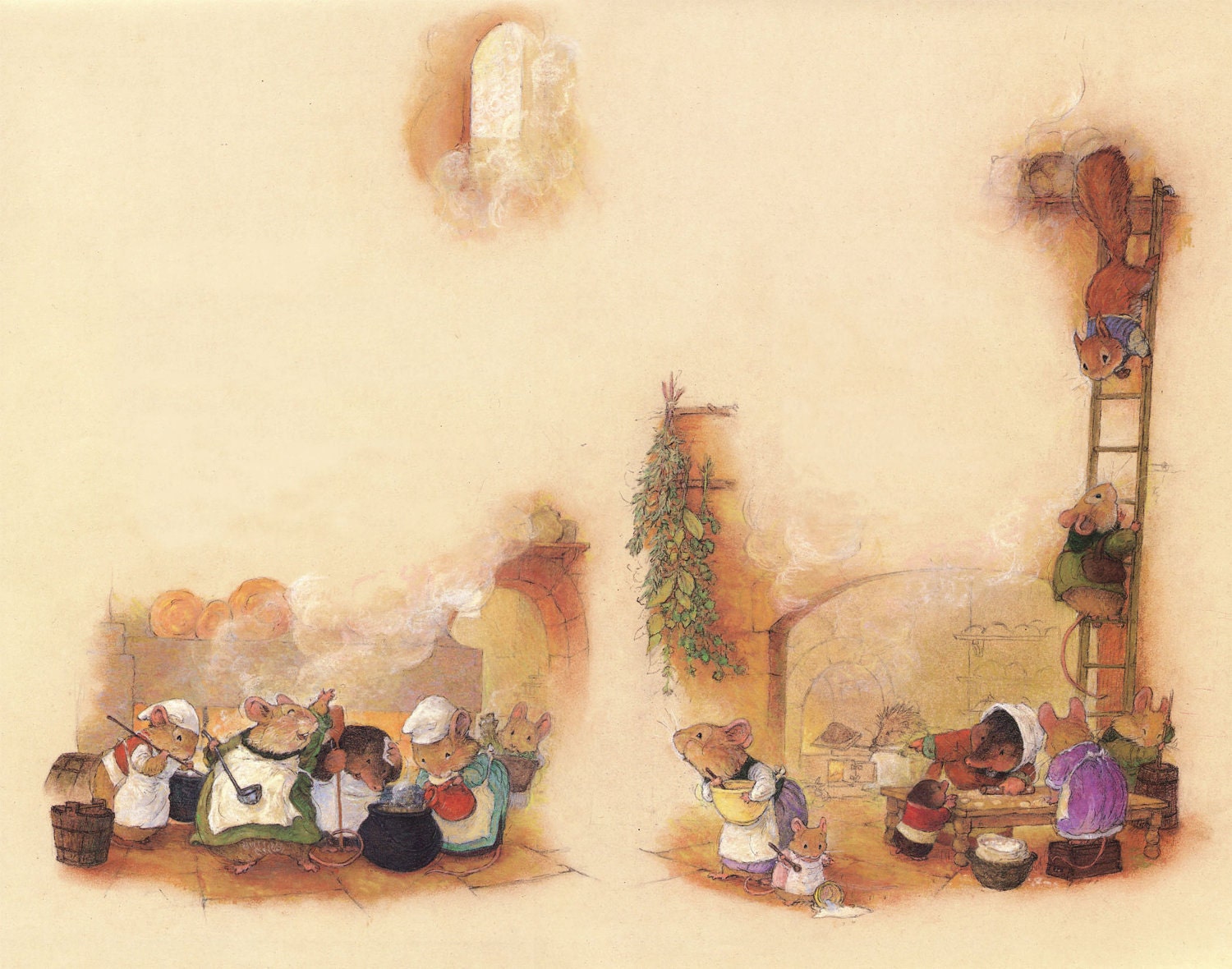
Image result for redwall feastWe all have books from childhood that we can't entirely explain our obsession with. Books that we loved so dearly as kids, but then we start to notice some of the flaws of as we get older. For those who aren't familiar with them, the Redwall books are about mice and moles and otters and hares and badgers and other nice, English animals living in an abbey and... they're sort of monks, maybe?

Every book, they get attacked by evil English animals, like rats and weasels and voles and stouts. Sometimes even cats show up. One character got attacked by a nasty pike. And then they must save Redwall Abbey!

One of my toughest realizations in adolescence was when I came to terms with the fact that every book in the series had essentially the same plot and characters, going through the same motions. But one of the most important repeated elements of these books is that Redwall is not only under attack, it's under siege. Supplies must be managed carefully, because running out of food is not an option. You see, running out of food is the worst thing that could happen to a Redwall mouse, because those animals LIVE for nothing but hardcore FEASTING!!!!

I can't tell you how many times I have wanted to eat the shrimp gumbo that the otters always make so hot, they're crying after. Or Abbot Durral's Seventh Season Cake, which is always shown in meticulous preparation. Or the shrewbread or the salads or EVERYTHING. Redwall food is so vast, there is a Redwall cookbook now, with seasonal recipes, and I cannot tell you how much I want it.

The feasts in Redwall took several chapters - from a character suggesting one, to the preparation, to everyone finally eating, to everyone lounging around in a food coma after. It was amazing! AMAZING!!!! There was a small chance a group of stouts or rats would attack while you were feasting, but this is a small price to pay if it means you get to sample the spring trout.

In many ways, Redwall genuinely was about the feasts. You want to see the mice and their allies save the abbey over and over, because you want them to protect the homey, good feeling about the place. A feeling that is best personified by their intense love of food and sharing it with others. So yes, I genuinely believe that the feasts were a major part of why I loved those books so much.

I might want to live in Hogwarts castle more than I do Redwall Abbey, but even the Potterverse could learn a few things about feasting from these mice. They know what's going on.

BEST FANTASY FEAST GOES TO:

REDWAAAAAAAAAAAAAAAAAAAAALL!!!!

Saturday, January 14, 2017

Who Did it Better? Tropes VS Cliches


Don't you just love trashy magazines? Aren't those fashion sections great, where they line up photos of socialites in the same outfit? What a reputation killer! However, they tend to throw at least one of the poor celebs a bone, by pointing out WHO WORE IT BETTER of the pair.

Okay, so maybe you hate those magazines. I actually am pretty indifferent on the topic. But I'm thinking I might add a similar feature to this blog. Only instead of picking apart character's outfits, we're going to pick apart literary tropes!

But Emily, what IS a trope?

A trope is a common literary device - a narrative element that we've probably seen before, somewhere else. Because we've seen a trope before, it tends to call up memories of the other things we associate with it.

When the trailers for Star Wars: Rogue One came out, I was struck right away by how much they costumed Jyn's character so that she looked like Katniss in the Hunger Games movies.


Image result for rogue one jynImage result for katniss hunger games

While there are clear differences (Jyn doesn't get arrows. It takes a couple movies before Katniss gets a scarf) I'd argue that Jyn's look is directly meant to evoke in us a recollection of what we know about Katniss. Since the Hunger Games came out, this "look" is visual short-hand for a no-nonsense female character who rebels against the rules set by an evil empire.

Katniss herself isn't the first character to be costumed this way, but you could say she "codified" that trope. She provided us with the most obvious, recent and relevant set of meanings to go with that visual palette.

And when tropes work well, that's how they work. They bring up associations, but then tell their own stories using the trope more as a starting point. If you want to read a more thorough discussion of what tropes are and how common they are in fiction/if you want to waste an afternoon or possibly your entire life reading, see tvtropes.org for the most comprehensive list out there.

However, things can go wrong when tropes are used lazily or too frequently and become the most terrible of all literary devices... the cliché!

Very often, the difference between a trope and a cliché is simply how it's done. To reference Star Wars again, Princess Leia starts the first movie a Damsel in Distress, but she goes on to subvert that trope by a) not expecting Luke or Han to save her and b) going on to take her own, proactive role in all the subsequent rebellion efforts. Here, it's a well used trope.


Image result for general organa
General Organa. The best damsel out there.
Still love and miss you, Carrie Fisher.

Contrast that with a movie like Sleeping Beauty where Princess Aurora literally lays there waiting to be saved, and you've got something more like the cliché people groan at when a story features a Damsel in Distress.

The New Feature!!!

And so, like gossip rags over-examine outfits, I'm going to do this to books and other media! Pick a trope, pick a couple books and then argue out who did it best. Who elevated their story beyond the tired and overused paths of fiction, and who fell into the trap of clichéd writing?

To whet your whistle, here's a mini-episode! Today we're doing...

THE PLUCKY LITTLE GIRL GOES ON AN ADVENTURE

Competing for the title of "Best Plucky Girl" we have three young ladies from the realm of classic kidlit! Please welcome to the stage...

ALICE

Image result for alice in wonderland
Alice in Wonderland is arguably the first true children's book ever written in the English language. The only things that predate it are faerie tales and moralistic primers like Goody-Two Shoes which is a story so boring, it created a trope of a very different kind... namely, the boring little girl who does nothing but follow the rules.

Alice is not that girl. Like a lot of people, I knew the Disney movie adaptation from childhood, but it took me years to actually read the book. One of the things I was pleasantly surprised by was how much I liked Alice herself. She's younger than most people remember her, probably only meant to be about 7 years old, and she's odd and funny in all the little ways you expect from a girl that age. She's obsessed with her cat Dinah and keeps offending people in Wonderland by telling them all about how great Dinah is, forgetting she's talking to birds and fish and flowers that Dinah would happily destroy. The whole story is driven by her curiosity and willingness to try things she probably shouldn't, and these qualities in the end shape Wonderland itself. It's one of the few stories where the "it's all just a dream" ending works, because Wonderland itself is a reflection of Alice and her childlike whimsy. Altogether, a solid first entry for the trope.

DOROTHY

Image result for dorothy galeLike Alice, Dorothy Gale is another character that is younger in the book than people tend to remember her, thanks to the movie. Again, you get the sense she's about 7 years old.

The Wizard of Oz holds a special place in my heart, not as the book my parents read to me, but as the book my older sister read aloud to me as a child. It's still one of my favorite children's books. But how does Dorothy herself measure up?

Dorothy is much more reliable and practical than Alice. She's lost in Oz by chance, not by willful curiosity, and she wants nothing more than to return home. I like Dorothy a lot, but she's a bit of a flatter character than Alice.

Incidentally, if we were comparing movies and not books, the win would go to Dorothy. Judy Garland fills the character with such fantastic humanity, and there's a growth and turmoil to Dorothy that you don't see in the book that is present in the movie. So while she loses to Alice here, it could have gone another way so easily. Alas.

BUT WAIT!!! HERE COMES ANOTHER CHALLENGER!!!!

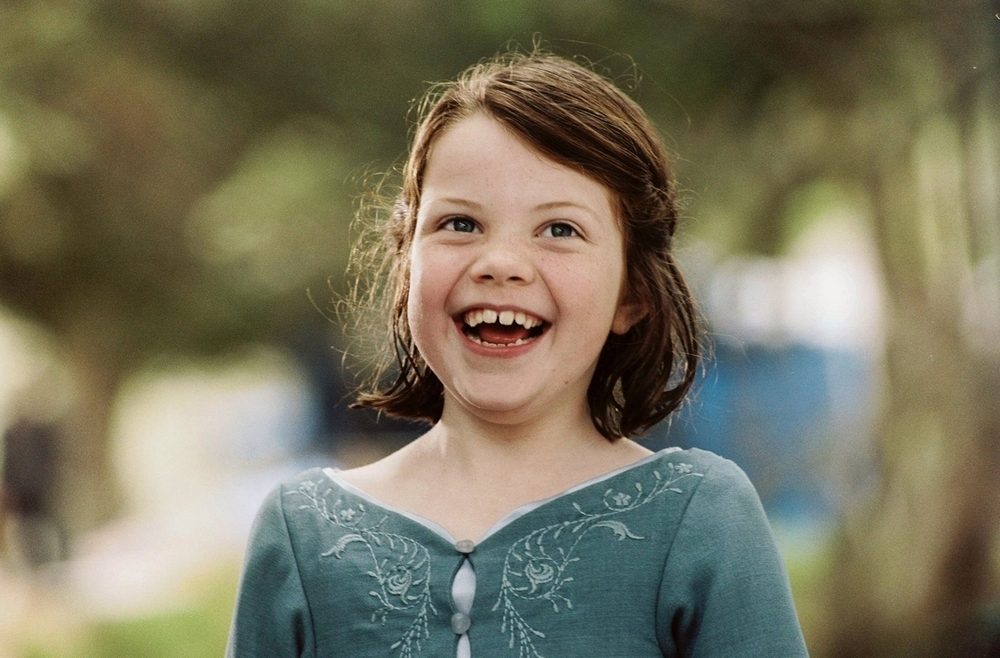
LUCY

Image result for lucy pevensie
It's a little embarrassing how long it took me to finish reading The Chronicles of Narnia. I started the book so many times before getting to the end a few years ago. The reason why was simple. Whenever I read past the first several chapters and hit the section that was less about Lucy, and more about everyone adventuring together, I mourned a little, because Lucy is the freakin' best.

Thanks to being the youngest of four children, Lucy tends to be cast at the correct age and everyone knows her for what she is - a sweet, adorable, curious, loving little girl. She's the best things about Alice and Dorothy rolled into one - willful and curious like Alice, but kind and gentle like Dorothy. She has a strong sense of both justice and wonder. Those first scenes with Mr. Tumnus, and then when she defends herself and what she saw to her siblings are fantastic and speak to such a full, interesting character.

This is the kind of plucky girl you want to see on an adventure. The one that is ready to face both the wonder and peril of the unknown. She's the perfect person to introduce us to Narnia, and the winner of this, the first battle-of-the-tropes.

BEST PLUCKY GIRL: LUCY PEVENSIE!!!!!

And there you have it! If you enjoyed this feature, let me know what tropes you would like to see analyzed. Rest assured, I won't always be so "nice" to the competing books. But I do think these three characters are all decent portrayals, even if one is stronger than the rest.

I've got a few more "episodes" in mind (I almost did a different one as the starting episode, but then realized I had too much to say about it and this would have been an insanely long blog post) but I'd love to analyze some of your suggestions! So sound off in the comments!

Monday, August 22, 2016

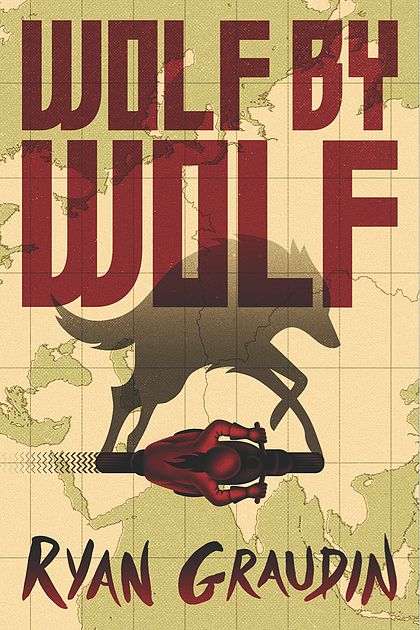
Book Reviews: Wolf By Wolf

Wolf By Wolf by Ryan Graudin
Ten years have passed since the Axis powers won World War II. To commemorate their victory, each spring, Germany and Japan host a motorcycle race across their controlled lands, the racers drawn from the best of the Hitler Youth and Japan’s elite racing camps.

Only one girl has ever competed in the race, last year’s victor, Adele Wolfe, darling of the Third Reich and particular favorite of Adolf Hitler. But this year, someone else is racing in her place. A survivor of the death camps, Yael can skin shift, thanks to the years of Nazi experimentation performed on her as a child. Using Adele’s face as her own, Yael enters the race, determined to win and kill Hitler at the victor’s ball.

But navigating the road is only one of the dangers she’ll face. Adele has plenty of blood on her hands from last year’s race, and if Yael wants to complete her mission, she’ll need to answer for Adele’s crimes.

What Makes It So Good

Anyone following my blog knows that I’m a huge fan of The Hunger Games trilogy. Those books prompted a huge wave of follow-the-leader novels, all tackling the topic of dystopic futures and life-or-death competitions. The trend was so pervasive, that about three years ago, publishing got so sick of dystopic YA that it’s kind of shocking that this book wiggled through.

But Ryan Graudin hit on a way of writing a dystopia that didn’t feel derivative or played out. Instead of this being some futuristic society that keeps its people in line with laser guns, it’s the most famous dystopia that ever existed – Nazi Germany. Of course, Graudin isn’t the first person to write an alternate history where the Nazis won the war. Anyone who reads comics knows that superheroes can’t get enough of punching Hitler in the face. But her take does feel satisfyingly unique. The inclusion of the race gives the book structure, keeps the pace brisk and – yes – seems like something else Graudin picked up on from the success of The Hunger Games. We YA readers do like our cutthroat competitions.

A lot of people who dislike The Hunger Games do so because they don’t find it plausible. You can’t say that of Wolf By Wolf. The scenario isn’t that far off of what could have happened. Adjust when Hitler planned on launching Operation Sea Lion, and he very well could have won the war. Graudin has done her research, and it shows. From the Zundapp motorcycles to the fragmented remains of the USSR to Yael’s skin shifting ability, the details real and imagined blend together seamlessly.

Yael’s relationships are also fascinating. She comes into the race predisposed to hate all the Hitler Youth boys, but as she’s forced to interact with them, she can’t deny that there’s something more to each. Though none of them have survived the horrors she’s endured, they’re also victims of Hitler’s reign.

The writing itself is sharp, weaving together flashbacks of Yael’s past with the race, allowing the reader to come to know the force that drives her. The prose is at turns heart breaking and brutal, but I never found it so dark I didn’t want to read on. Over all, a fantastic read. Get on the fan wagon while there’s still room, because a sequel is coming out this fall.

What Could Make It Better

I had very few quibbles with this book, but I can think of a couple things that might bother a different reader. One of the strengths of The Hunger Games was that Katniss herself had a very distinct and understandable personality. Within a chapter or two, she made sense to you and even if you hated her, you could still easily describe her personality – sour, withdrawn, but also determined and wily.

You can’t say this of Yael. Yael is a blank slate, a girl who is so wrapped up in her mission, she has very little sense of herself and her own likes or dislikes. For most of the book, she’s impersonating Adele and trying to think of what Adele would do, rather than what she, Yael, would want. This can get frustrating.

Actually, it could have been much worse. A flaw like that would destroy most books. Video games make use of this trope all the time, giving the player a generic, chiseled dude to play who doesn’t interfere with the player’s ability to imagine themselves in the role of hero. If there’s no personality complicating identification, it’s easy to do. But this style of game isn’t typically known for gripping stories. It’s a sacrifice of story quality for immersive experience.

While video games can justify this choice on occasion, it’s harder with books. Yet I’ve read some YA where the author seems to purposely make the heroine as indistinct as possible so that any girl reading can imagine herself into the story without much problem. And yes, they can be immersive, but they can also be shallow. This is where your Bella Swann style heroines come from – girls who seem like shells rather than real people. And Yael is a bit of a shell.

But for this book, it was absolutely the right choice. Yael is a blank slate character because she is LITERALLY a blank slate. One of the saddest and most telling lines of the book comes early on when Yael admits that she can’t remember what her own face looks like. She was too young when the experiments started and took away her original appearance. So yes, Yael doesn’t really know herself and doesn’t seem certain of what she wants. But this bothers her. A lot.

In a certain way, Yael could be any girl out there. We all get to imagine ourselves racing motorcycles and hunting Hitler. That’s her gift and her curse. But by the end of the book, I think Graudin does a decent job of showing that even if her identity has been stripped from her, she isn’t every person who has ever lived.

Young Adult literature is often characterized as being a genre focused on “coming-of-age” and knowing yourself. Yael provides a fascinating entry point into a very universal theme. Most teenagers feel like a blank slate in some sense, one that’s fighting to know itself and grow up. Yael shows just how powerful an identity can be, whether it’s your own or one you stole from someone else. Besides, one of the most enjoyable parts of fiction is getting to imagine ourselves in someone else’s skin, and Yael gives us so many people to be.

Thursday, January 21, 2016

Scene VS Chapter: The Units of Pacing Fiction

Recently, I've been swapping chapters as part of a critique group and, along with that, offering feedback on a few pieces of writing. As these things often do, it got the wheels in my head turning, especially in regards to one of the hardest questions any writer has to face:

How long is a chapter?

Some of you might already be thinking. "Emily, that's silly. There's clearly no set length. Some chapters go on for 40+ pages but others I've seen wrap up in a paragraph or two. How can there be a standard measure for how long a chapter is?"

In answer to that, you're right, there isn't a standard. At least not a length based one. Courtesy of Jerry Spinelli's Hokey Pokey, I can think of one book that had a completely effective chapter that was only one word long. But even including these outliers, there are some commonalities. And with that in mind, I am gonna do my darnedest to articulate them, for those who are interested.

Why are Chapters SO HARD?

A lot of the people who read my blog are foremost readers,  so it might surprise some to know that chapter length is a super common problem for writers, especially when starting out. By the time you're writing a novel, you've usually got an idea of where a paragraph ends or how long a sentence should be, but what about things that are larger than that? Or at least, usually larger than that. (Think again of Hokey Pokey)

This was also one of the hardest things for my professors in my Masters program to describe to me. We talked a lot about feeling where there was a natural break in the story, but not everyone has that preternatural feel for pacing. Some people feel the rhythm of paragraphs, or descriptions, but not the ebb and flow of a chapter. The fact that the length varies so much can make them seem especially arbitrary and confusing, and with little advice other than to feel the break, I can see why my classmates struggled.

Being somewhat lucky on this count, I did feel chapters. My writing has many weaknesses, but one thing I was consistently told was that I paced my stories well. On a larger, book level, chapters are the unit of your book's pace. You want, roughly speaking, for your book to read:

In Chapter One, THIS happens, and then that makes it so that in Chapter Two, THIS happens, and that totally forces Chapter Three to be about THIS!!!

A book can't showcase everything, so chapters are the dots on a connect-the-dots picture. They're the points that are enough for you to understand the story - to make the leap from one place to the next.

But enough metaphor. This is practically as bad as telling someone to feel the break, if not worse. (FEEL the dot, my child!)

Why I wanted to write about this is because I think I do know a concrete way of pointing to where (usually) a chapter begins and ends. I've seen people hint at this before, but since I can't think of another article to point someone to in order to back me up, this is largely my own thoughts. Of course, others have probably taken credit for similar ideas, but this is very much the Gospel According to Emily when it comes to writing. Take it as such, and hopefully, enjoy!

I'm going to start by talking about some parts-of-writing that are frequently discussed and agreed upon: Sentences and Paragraphs.


A Sentence is...

A single thought.

This is something frequently repeated by high school teachers and university professors the world over. Just because you CAN write a compound sentence doesn't mean you SHOULD. For example...

"Alison hated waiting for the bus in the rain and her father had a meeting at the bank that day."

...is technically grammatically correct, but it's not a good sentence because those two things have nothing to do with each other. The pieces joined by the word "and" should be relevant to one another, like...

"Alison hated waiting for the bus in the rain and could already picture herself smelling like wet dog for the rest of the day."

I still find this sentence a bit wordy and it could be broken up further, but I think you get the idea. The sentence is essentially about one thing: Alison hates how the rain makes her smelly. Trying to include anything more than that is beyond the scope of a sentence.

A Paragraph is...

A single idea.

Every first year university student has to grapple with this at some point in their education, as they try to make their writing intelligible, and the same principle applies to writing. For example...

"Alison hated waiting for the bus in the rain and could already picture herself smelling like wet dog for the rest of the day. She hoped her dad's meeting at the bank would go well for him, but the alignment of the crystal moon was causing minotaurs to attack banks today, so she was worried. Alison hoped Johnny from fifth period English would like her sweater."

This is a hot mess of, once more, things that have nothing to do with each other. Dad's meeting with the bank (or minotaurs) deserves it's own paragraph, if not more. It's a separate idea. Consider instead something that links together all the little thoughts (sentences) into a single idea...

"Alison hated waiting for the bus in the rain and could already picture herself smelling like wet dog for the rest of the day. She cursed herself for wearing a wool sweater, but it seemed like a good idea when she got dressed in the morning. She liked the way it hugged her curves and hoped Johnny might notice during fifth period English. Water dripped down the back of her neck, soaking her spine. Now the sweater didn't so much hug her chest as suction to it."

Now it's about one idea! There's a girl in the rain and she cares what a boy thinks of her, but oops! Things haven't gone according to her plans to make him like her, all because of the rain. The rain causing Alison discomfort is the underlying idea of the whole paragraph. If she moved on to worrying why the bus was late, that would be another paragraph. If she moved on to worrying about her most recent conversation with Johnny that is, again, another paragraph.

In great news, this approach to sentences and paragraphs also works for scenes and chapters. In both cases, they are single serving units. But of what?

A Scene is...

A single moment at a single location.

The champions of scene are not so much fiction writers, as dramatists. Anyone who writes theatre can tell you that when you change location, you change scene, so the set can be switched up. Also, if significant time passes within your location, you dim the lights to black briefly so that everyone knows you've changed scene. "Alison at the bus stop, Thursday" is a different scene from "Alison at the bus stop, Friday" and that's a different scene from "Alison at school, Friday."

In fiction, a lot of these distinctions blend together, because we're expected to transition. We show our characters board the bus BEFORE we show them at school, so that the movement between scenes isn't jarring. This transitional stuff is typically referred to as "exposition" and every novel needs some, but preferably, includes more scenes than exposition. Striking the right balance between the two is one of the great mountains every novelist must climb, but I'm saving that topic for another day.

The truth is, scene often is not something we point to through formatting. Scene formatting exists in theatre and screenwriting, but not in novels. We have periods to end sentences and line breaks to end paragraphs and page breaks to end chapters. Scenes lurk beneath that, forming a key part of story structure, but not as a function of grammar.

I describe all of this because I want to make one thing very clear: A chapter is not a scene. The opening chapter of the Hunger Games takes the reader first to the woods with Katniss, then back home to wash up, then finally to the reaping. Those are three separate scenes.

But a chapter also isn't a collection of scenes. Some chapters are only one scene long and yes, some scenes are multiple chapters long. In Harry Potter and the Prisoner of Azkaban, the Shrieking Shack scene starts halfway through Chapter 17, spans the entirety of Chapter 18 and finally finishes at the end of Chapter 19. Throughout that section, various people come "on" and "off set" but the time and location never change. It's all continuous action.

So if there is no correlation between scene length/scene density and chapter length, WHAT IS A CHAPTER?????

A Chapter is...

A single plot event.

Only one pivotal, plot driving thing happens per chapter. Plenty of "actions" might be taken by the characters to drive the plot forward, but the chapter is about one event. One choice that really matters. One revelation that rocks the world. One key thing you need the reader to remember. One event.

I talk about The Hunger Games a lot, and defend it as a great book. The reason why isn't because it's poetic or deep (though I like the writing and the themes resonate with me) but because it is a master class in pacing. Consider the first several chapters of the book and the "events" they are about (spoilers, of course):

Chapter One: Prim's name is drawn at the Reaping.
Chapter Two: Peeta's name is drawn at the Reaping.
Chapter Three: Katniss says goodbye to her family and Gale.
Chapter Four: Katniss travels to the Capital.
Chapter Five: Katniss is in the tribute parade
Chapter Six: Katniss meets an avox she recognizes in the Capital
Chapter Seven: Katniss goes through training and shoots at the judges during her evaluation
Chapter Eight: Katniss scores a high rating from her evaluation
Chapter Nine: At the tribute interview, Peeta drops the bomb that he likes Katniss
Chapter Ten: Katniss and Peeta share a tender moment right before the Hunger Games begin...

Do you see how it goes? There's only one really important thing to glean from each chapter, and each of these things move the plot forward. On top of that, each chapter typically ends with something that hints towards the next major event of the next. If you want to be taught something about pacing and chapter rhythm, I am not kidding when I tell you to reread The Hunger Games.

You'll notice that some of those "events" are very self contained, like the tribute parade, but others are more nebulous, like "travelling on a train" and "sharing a tender moment," but they are separate events for Katniss. Peeta isn't even finished his interview when he professes his love for Katniss, but that's such a bombshell revelation, it's separated out as it's own event.

Think of an event like a newspaper headline, rather than an "occurrence," like a parade. Often in the newspaper, you'll see the same story covered from multiple angles, because they all are relevant to understanding the overall story. You could almost think of these like chapters. Consider these potential headlines and what type of chapters they might be hinting at in their news story:

NEW SAFETY POLICY COULD IMPACT FARMERS ( the "sizing up the situation" event chapter, like the one we get when Katniss is on the train)
MODEL BETTY McPRETTY REVEALS ACTOR JOHNNY McHANDSOME AS BABY DADDY (revelation event chapter, like when the names are drawn at the Reaping or Peeta drops his truth bomb)
OLYMPIC GAMES COMMENCE IN VANCOUVER (actual "event" event chapter, like the tribute parade)
MOUNT VESUVIUS EXPLODES AGAIN (dramatic, plot event chapter, like Katniss shooting at the judges)

All of these things are "news" events and all get their own headlines in order to catch attention. A chapter works the same way, highlighting the most important events you need your reader to remember. Once you've moved on to a new, critically important thing, move on to another chapter.

The trick of implementing all of this is, of course, figuring out what your events are. What are the major things you can't have your reader missing out on? For everything they MUST know, give it it's own chapter. But don't cheat either. Remember that it's not enough to say "but they MUST know Alison's hair color!"  Chapter events need to advance the plot. That's largely what makes them events. Some might be more low-key, like the time Katniss spends with everyone on the train, but it's still essential for conveying her from one world to the next.

Scene VS Chapter

Let's consider the story of Alison and the bus stop. If we were organizing her story by scene, it might go a little like this...

  1. Alison waits for the bus
  2. Alison rides the bus to school but it is attacked by minotaurs but then her bus is saved by the Moste Handsome Boy with Eyes of Fire, who then disappears
  3. Alison and her busmates are sent to the school guidance counsellor to talk about the minotaur attack
  4. At lunch, Alison sees the Moste Handsome Boy with Eyes of Fire, but when she confronts him, he doesn't know who she is
This might look like an okay organization to the story, but would it actually break down into a smooth chapter guideline? I don't really think so. Chapter 1, Alison at the bus, would feel ridiculous separated out on it's own, but perhaps less obviously, Chapter 3 would also be a bit thin. The school guidance counsellor might prove an important character later on but there are more important things going on in this story than just a counselling session. Things that are getting a bit squished in Scene 2.

So what would this look like organized as plot events? I think it would go...

  1. On the bus ride to school, Alison is attacked by minotaurs!
  2. She is saved by the mysterious, Moste Handsome Boy with Eyes of Fire
  3. Alison discovers that the Moste Handsome Boy with Eyes of Fire attends her school!
  4. She confronts him, but he doesn't know who she is...
So what's changed? First off, Chapter 1 transitions into Scene 2 for the shocking minotaur attack. Then Chapter 2 concludes the confrontation, with the focus framed around the rescue by the Moste Handsome Boy with Eyes of Fire. Chapter 3 would pick up in the same place as Scene 3, but instead of focusing on the counselling, it builds towards another revelation. It also gives you an idea of what that counselling session might be ABOUT. Alison's guidance counsellor could be repeating that minotaurs aren't real to her, which she almost believes... until she sees Moste Handsome Boy with Eyes of Fire. Once again, we would be partly through scene 4 before the end of Chapter 3. That allows Chapter 4 to be about the confrontation and Alison's paranoia that Nothing Is What It Seems.

One last note - you'll notice that each chapter tends to end right as the main "event" occurs. This is not an accident. Chapters should read like a mini story in and of themselves. They have a beginning that sets up the ending, and that ending is where the impact goes. This both makes them satisfying, single servings of your book and gives the story a "page turning" quality. How can you not read Chapter 4 after you've just discovered Moste Handsome Boy with Eyes of Fire is RIGHT HERE at her school????

Of course, this story isn't real. Yet. But you can do this with a real story too. Sitting down and separating out your plot events from your scenes will help you sculpt your story into a more complete narrative, one where each thing really does build towards the next.

So go find your events. Get them in order like dots on a page, and you might just find you can connect them to build a whole picture.

Tuesday, September 1, 2015

A Whiff of a Revelation

Fact: I have a terrible sense of smell.

I have to physically SEE a cat poop in a littler box in order to know that the box needs cleaning. I pull fresh laundry out of the dryer and think "mmm! This is warm!" because my hands are fine at picking up on sensory detail but heaven help my nose. What does our family laundry detergent smell like? No clue! How is my shampoo scented? Ha!

Probable cause of photo: The cameraman farted. Maybe. How would I know?


Maybe it has something to do with a childhood history of nosebleeds. Maybe I spent too much time swimming in chlorinated swimming pools as a tot. I don't know. But something seems to be deeply, permanently wrong with my sniffer.

Or IS there??????

Of late, I am starting to think that the problem is not so much my nose, but my brain. It seems that my nose is actually quite capable but my brain has decided that smell is the proverbial red-headed step-child of the "sense" children. It ignores it at all cost, much happier to lavish attention on other senses, like hearing and touch. (Or, to be frank, to ignore all five and instead devote itself to abstract thought. My brain is a crappy parent in this metaphor.) It will drum up a sensation of smell for me occasionally, like when I'm eating something and my sense of taste is begging for some scent cues to work with, but perhaps this lack of a sense of smell explains why I'm not a picky eater. I like almost everything (what's not to like if you can't smell what's wrong with it?). Or it could be why with the few foods I don't like (mushrooms and overcooked pastry), the issue tends to be one based on texture rather than flavor.

There is plenty of evidence to suggest that the brain has, among its capacities, the ability to rule out various stimuli as "irrelevant" in favor of others that it wants to focus on. It's the reason why we generally don't walk around, constantly aware of the fact that we're wearing clothes. Touch of that particular sort has already faded to background programming. With hearing, there's a phenomenon known as the "cocktail party effect" that the brain uses when we're in a crowd. Generally, we won't hear a conversation that's going on halfway across the room, or at least we don't think we hear it. Magically, our ears perk up the second someone says our name or something that interests us, even if they're far away, and then off we go to find out what they were saying about The Hunger Games.

Fact: If you are talking about The Hunger Games at a party, I will hear you.

So on the whole, my brain seems to have decided that my nose is hopelessly irrelevant. How do I know this? Well, because I am in the late stages of a cold right now and the world has never smelled more vibrant.

When this cold commenced, I experienced no loss of (perceived) ability. Maybe once or twice, when I was much MORE cognizant of the fact that I was drowning in a deluge of my own mucus (look, if you're grossed out, this is your own fault for reading this. You knew by now this post was about the sense of smell), the thought would also strike me, "wow. I can smell NOTHING." But these were fleeting moments.

Now, I am almost well. Frequently, my nose is clear, and you know what? THERE IS A WHOLE WORLD OF SMELLS OUT THERE!!!! The cat is pungent! The rain is laced with mowed hay and ripe blackberries! The breeze is salty and oceanic! Hours after dinner, the house still smelled like stew! And... good heavens, the cat litter really does need changing.

Guys, the world is magical.

My brain had been deprived of the background information it would usually ignore. But apparently, it's got serious FOMO, because once I got a hint of my sense of smell back, it came screaming out the gates all "whadImiss? WhadImiss???? TELL ME TELL ME TELL ME!!!!"

A week from now, I will doubtless be back to full health. And with it, my brain's elitism will oust olfaction from its list of primary concerns. But until then, everything's coming up roses for Emily.


Okay, so ... this had nothing to do with books.

Whatever, I'm out.

Monday, February 23, 2015

MaddAddam and why the first book is (almost) always the best

Welcome to my series on speculative fiction! For it, I will be focusing on three different series of books, highlighting three different lessons that readers (and writers) can learn from some of the best science fiction writers in the business. Since whole series are taken into account, I won’t be focusing much on plots, but rather on what unique lesson we can learn from each series as a whole. This time we’re rather spoiler free, since this is a series I don’t want to ruin for anyone.

Oryx and Crake
MaddAddam, otherwise known as Orxy and Crake

Confession: One of my favorite TV shows is CBS’s Survivor. It wasn’t always. I am not a reality TV aficionado and I was not someone who watched the earliest seasons of the series. But when I realized that it combined three of my greatest passions - tropical locations, tight editing and people taking strategy games SUPER seriously - a new obsession was born.

But since I’m a bit of a Johnny-come-lately fan of the series, some of the discussions about it have the tendency to baffle me, particularly ones about which season was the series’ best. For a large number of people, there is no topping the first season. It was too important. Too revolutionary. It set the groundwork for all subsequent seasons and all that follow have merely been echoes of it. Holding any other season up next to it just undervalues how important and shocking the first season was.

Even if I don’t understand these arguments vis a vis Survivor, I do get where they’re coming from in relation to books. The first book of a series has a kind of magic to it. It introduces the main characters, the elements the story is governed by and, most importantly, the setting. It’s undeniably true that many people read sci-fi and fantasy for the world building. And when you’re just scratching the surface of the world, there’s a sense of a new adventure around every corner.

Consider a few examples: The Hunger Games is at its most compelling when we don’t yet know the rules of the arena and are experiencing the horror along with Katniss for the first time. The Giver is extra potent because we don’t know what the next thing Jonas reveals about his world will be. They’re very much like that first season of Survivor - startling, revolutionary, instantly memorable. And in both cases, they’re the strongest novels in their respective series.

I’ll quickly list a few more series I consider to be examples of this phenomenon: Redwall by Brian Jaques, The Thief by Megan Whalen Turner, Wicked by Gregory Maguire. Even series in contemporary settings fall victim to this. Think of L.M. Montgomery’s Anne of Green Gables or Judy Blume’s Tales of a Fourth Grade Nothing.

Now, don’t get me wrong. All of these series followed up their first books with strong material. Some people may even pick some other book as their personal favorite, but my point is that sequels in a series have to work extra hard in order to equal their starting books.

So when I say that Orxy and Crake is brilliant, but its sequel, The Year of the Flood is still better, you know just how hard Margaret Atwood worked on that second book. She beat the odds. The following is my list of rules Margaret Atwood taught me for “how to improve on a first book.”

1) What fell flat in Book 1, ditch for Book 2
In Oryx and Crake, you’re stuck looking at Atwood’s post-apocalyptic world through the eyes of a strange outcast, known as Snowman. Through introspection, Snowman reveals to the reader “how the world went wrong” and we learn that once upon a time, he was known as Jimmy, an ordinary boy born to privilege who let himself be lulled into a false sense of security, even as the world was crumbling.

I say you’re stuck with him because Jimmy isn’t an entirely pleasant person to be with. He wins your sympathy, but I don’t think I’ve ever met a reader who actually liked him. But the world and the tragedy of his life is fascinating enough that it’s still a great book.

Then The Year of the Flood starts, Jimmy is nowhere to be seen and hallelujah! Though everyone in the series is damaged and filled with shades of darkness, by The Year of the Flood, there is someone worth rooting for. When Toby enters the story, wearing a pink spa jumpsuit and carrying a shotgun, there’s such a strong sense that this is someone who deserves to survive. And in that moment, the fate of humanity feels more real. If Toby dies, what’s the hope for any other half-decent person?

And as the series shapes up to be her story, it’s pretty clear that going forward, Atwood knew to focus on the character who had the gravitas to carry the plot. Jimmy is still there. He does stuff. But since he doesn’t have Toby’s power as a character, his role is diminished.

In this particular case, the weakness was a character, but this could be true of other elements too. Leave a boring setting. Axe a metaphor that isn’t working. There’s no need to repeat the same mistakes twice.

2) But for goodness sake, don’t get rid of what DOES work!

Just as Jimmy’s story is told alternating between the present and the past, so too is The Year of the Flood. In fact, this book expands on the strange story telling devises, working in sermons and hymns around the characters' memories and real-time struggles. It’s part of what makes this series so layered and beautiful.

For me, this is one of the reasons the later books in The Thief series are a bit more hit and miss. Whalen Turner very bravely switches up her view point during the series. Sometimes it pays off. But when she got to the fourth book and, for the first time since Book 1 returned to a first person narrator, I couldn’t help feeling that first person perspective is her ace. The first and fourth books share that perspective in common, and that sharpened focus made her stories far more potent. When she wrote in third person in Books 2 and 3, the story felt flatter.

It’s a delicate balance, choosing between what should stay in a book and what needs to grow. There’s not a cookie cutter solution for every series and author, but both questions - what should change, what shouldn’t - need to be considered during the creative process.

3) Give people that “explorer” of a new world feeling all over again

Even with the improved character conflicts of The Year of the Flood, Atwood might never have topped her first book if she hadn’t found some unique ways of developing the world she’d set out in the first book. As it turns out, there is much we missed from Jimmy’s perspective. The books almost feel part of different worlds, the characters come from such different spheres. As a result, that adventurous sense of discovery that makes first books so irresistible is still on offer for Book 2.

Another series that excels at this are the Harry Potter books, the evidence for which is in the titles. There is never a book title that directly references anything that came before it in the series. Even by the time of Book 7, no one has ever heard of a “Deathly Hallow.” Rowling kept her series chugging by making sure she had something new to tell us each book.

On a smaller scale, Divergent also checks this box. In Book 1, we meet the Abnegation and Dauntless factions, with just a few scenes involving Erudite. Book 2 takes Tris through both Amity and Candor and fleshes out the rest of the Erudite section. It’s really well balanced and one of the reasons that, for me personally, Insurgent is the best of the series.


In theory, if you can do these things - rework what doesn’t ring true, play up the elements of your book that people love and give the reader more world to explore, you should be well on your way to surpassing your first book.

Just good luck doing any of this in practice!


Sunday, January 25, 2015

The Hunger Games and the rule of “Show, Don’t tell”

Welcome to my series on speculative fiction! For it, I will be focusing on three different series of books, highlighting three different lessons that readers (and writers) can learn from some of the best science fiction writers in the business. Since whole series are taken into account, I won’t be focusing much on plots, but rather on what unique lesson we can learn from each series as a whole. Also, beware of spoilers, and enjoy the second entry, The Hunger Games.

The Hunger Games

The Hunger Games

To begin with, a disclaimer: I love The Hunger Games. I’ve brought the books up frequently on this blog because I love them so much, especially the first. I love Katniss. I love Peeta. When I first read the series, I was just beginning to come out of a phase where I hardly read anything for pleasure. I’d been too swamped down by school reading and it had sucked the joy out of the written word for me for a time. The Hunger Games was an important part of breaking that cycle and for that, I will always love these books.

I say this because the point of this blog post is basically to give the third book of the series, Mockingjay, a whole lot of crap.

The thing is, whatever I accuse The Hunger Games of, I think Suzanne Collins and her books can take it. They’re good and they’re wildly successful. Nothing I say is going to hurt them, but possibly there are some good pieces of constructive criticism I can offer that might point to where the strengths and weaknesses of the series are, because they definitely speak to common issues that plague most writers and so a great deal of fiction.

To begin, the rule of “show, don’t tell.”

There are a few “writing rules” that get passed around in the community. Some have catchy little names like “murder your darlings.” Others are more to the point like “cut your adverbs.” Both of those rules apply during the editing stage of writing, and so you rarely think about them in a first draft. But if there’s one “rule” that is necessary to think about at every stage of the writing process, it’s “show, don’t tell.”

This “rule” is essentially a reminder that readers don’t want to be “told” something, but rather, “shown” it. What is meant by that? Let’s take the first novel in the Hunger Games series as an example. Katniss spends the first half of the book confused as to what Peeta’s motives are and why he is being kind towards her. Most of his kindness she misinterprets as somehow self interested – he’s only kind to Haymitch because he wants favoritism. He’s only kind to her to weaken her resolve. However, the reader is able to watch his actions and reinterpret them. By the time Katniss realizes his sincerity, Suzanne Collins has already given us pages and pages of compelling evidence that Peeta is kind and good and worth saving.

One of the reasons this is such a powerful example of “showing” rather than “telling” is because Collins is using the shown aspect of the story to undermine what is being said explicitly by her narrator, Katniss. Ultimately, the things that we are “shown” turn out to be truer than what was explicitly stated.

For another example, look at the way Collins describes the action in the first book. Every horror Katniss experiences, the reader follows along in step. She doesn’t say things like “I hallucinated because of the trackerjacker venom” but rather, we get to watch her hallucinations in real time. We watch her lose her hearing in her ear. We watch a fire ball explode onto her jacket. Over and over again, the reader is right next to her as horrible things happen to her.

And this is incredibly important to the story. Katniss is not a particularly “likable” person. She’s prickly and short tempered. She holds people at a distance. She’s bad at expressing feelings other than annoyance. But she is resilient. That resilience is incredibly compelling, and as a reader, we feel it every time she pulls herself through another horrific tragedy. Despite her sour disposition, it’s so hard not to empathize with her and root for her. Because haven’t we all felt that way? Put upon and beaten down, but determined to still keep going? It’s a situation we yearn to identify with, because at those moments, we are our best selves. And for all Katniss’s weaknesses, she is someone who keeps fighting no matter the cost.

But something unfortunate happens in the third and final book in the series, and I think it’s one of the biggest weaknesses the entire trilogy has. I’ve heard a lot of complaints about the final book. I’ll list a few potential problems:

1) The pacing felt so slow. It took forever for anything to actually happen.
2) The story felt kind of dark and pointless. Too many people died.
3) Katniss seemed like she’d just kind of given up. This isn’t the Katniss I loved.

These were all things I complained about too in one form or another, but I don’t think any of them is the problem. As I reread the book this past semester, I realized something. First, the pacing isn’t that bad. There actually is quite a lot going on in the book. It just doesn’t make an impact. Second, most of the deaths do make sense from a story telling perspective. They just don’t resonate. Third, Katniss is still fighting the capitol. She has her moments of doubt, but they aren’t that extreme, when you consider everything she’s going through. But for some reason, she just feels whiney.

In fact, all of these issues have the same root cause: Collins, who so excelled in showing rather than telling in the first book, forgot to SHOW us what everything was like any more.

Think again about the scene with the trackerjackers in the first book. The reader spends a long time with Katniss after the wasps sting her. She stumbles around, grabs arrows, sees a strange vision of Peeta, starts hallucinating out of control and, by the time she finally collapses, is convinced ants are digging through her eyes and she’s landed in a pile of bubbles. It is trippy as Pink Elephants on Parade. Similarly, when Rue dies, we watch her sing, decorate the body, pay tribute to District Eleven, go through the motions of staying alive and then snap in shock when she realizes she also killed Marvel that day.

Now let’s look at some transitions from the third book.

1) Katniss finds out District 12 has been bombed! Her reaction is – never mind, fade to black. We’ll start the third book a month later when she’s had time to process.
2) Katniss is terrible in front of the camera! We can tell because... because... because Collins says she is.
3) Peeta lunges at Katniss! Her reaction is – hey look! She’s waking up in the hospital a while later! We’ll talk about the strangulation with distance now.
4) Katniss is shot in Disctrict 2! Her reaction is – whoops, nope! We’re back at the hospital. Glad that’s over.
5) PRIM BLEW UP IN FRONT OF KATNISS! This must merit an intense reaction! This must mean – wait? We’re fading to black again? You mean we aren’t going to be with Katniss in the first minutes, then hours after Prim’s death?

Does this look at all like a pattern? In some books, this might not have been a problem. Some books thrive on emotional distance and making the horrific seem trivial by making it seem small. But that was never the angle of The Hunger Games. Our empathy for Katniss is largely derived by how real and immediate her danger feels. But over and over again in the third book, the audience is being kept out of her most traumatic moments.

Remember how in the first book, you wanted to cry for poor Katniss when they said she won the games, but at the sight of Peeta being taken away in a hovercraft she beat against the doors trying to get to him? Remember how she almost passed out from dehydration? For every emotional and physical trauma she suffered, we were there right with her.

The trauma is still there. Collins is still telling us that Katniss has been strangled and shot and devastated. But we’re not there with her through crucial points in those events. One or two “fade to black” moments wouldn’t have been so bad, but there are several. Any time the story got messy, Suzanne Collins backed us up out of the deep, immersed perspective of Katniss’s immediate reactions to her surroundings.

Now, you’ll notice that one of my observations was that the third book seemed dark, and my suggestions are, on some level, to actually make it darker. To show the pain. But I do think it would have helped, because it would have made it so the darker parts of the story didn’t seem needless. If we had been made to feel the pins Katniss walked on, we would have been glad to walk with her. We would have never told her she was complaining too much. We would have reached out to comfort her when her sister died. And at the end, when she finally finds the will to move past that grief, the relief would have been all the sweeter.

Again, I think the whole series is wonderful. There’s so much I could point to that Collins did well. And the ending is dark. I think perhaps she wanted to spare us from it. But ultimately, the honesty she showed before about Katniss’s pain was what we needed then. We needed to be there with her and feel the weight of just what she lost.