Showing posts with label Star Wars. Show all posts

Saturday, January 13, 2018

Two Out of Three Ain't Bad: The Meatloaf Method of Character Development

Since finishing my latest book, I've been taking some time to beef up on my craft of writing study. Due to my limited free time, I decided that what I was looking for was a quality writing podcast, that I could have on while walking home or completing routine stuff at work. All of this preamble is to say that I am now officially addicted to Writing Excuses.

Brandon, Mary, Dan and Howard are offering up some of the best advice on crafting stories available on the internet. They get an A+ for me, both for depth and accessibility. I find myself reminded of things I learned in school, but restated or filtered through new eyes.

One thing I've enjoyed has been Brandon Sanderson's theory on character. Character is arguably the most essential part of any story. Give people an engaging character to follow, and the rest of the story often writes itself. Strong characters are so essential, that the entirety of this year's Writing Excuses is going to be dedicated to the study of character. Yet, when Sanderson teaches about character, he tells his students that there're only three qualities that matter.

This sounds insane, especially coming from a guy like Sanderson, who has written dozens of books with massive casts. And in fairness, Sanderson knows he isn't covering every permutation of character with this theory. What he's covering instead is how an audience engages with a character. And if you ask me, he's bang on. You see, I can tell Writing Excuses is a brilliant podcast because it happens to align with my own pre-conceptions of how good writing works. And if you don't think I'm authoritative on this topic, then I turn you to none other than the great Loaf himself.

This is not a face you argue with

I am, of course, talking about the classic rock song, "Two Out of Three Ain't Bad." It's not quite a love song. Not quite a break-up song. It's more about a "good enough for now" that is somehow more depressing than outright ending the romance would ever be. I love the whole, glorious, bombastic thing, but for our purposes today, we're looking most closely at the iconic chorus.

I want you
I need you
But there ain't no way I'm ever gonna love you
Now don't be sad
'Cuz two out of three ain't bad

For a romance, this is awful. But it makes for a fantastic character and a great story, and story-telling was always what a Meatloaf song excelled at. But how do you apply it? I'll admit, that the rhyming stanzas don't necessarily expose the recipe for reader/character engagement, but with a little help from Brandon Sanderson, I think I can break it down for you.

If you want a reader to engage with your character, they need to be at least one of the following, probably two, but almost NEVER all three...

1. I Want You

One way to get a reader invested in a character is to give them a compelling desire and then to have them chase that desire. Sanderson likes to call this "pro-activity." A pro-active character will drive the plot forward by making choices of their own accord. They're easy to compel to action and rarely reluctant. It's the difference between Captain America, who desperately tries to join the army, and the Hulk, who is so afraid of his powers, he strives to be as inactive as possible. Cap is pro-active. Hulk is not. (At least in the MCU - Marvel Cinematic Universe - all these things get hazier once you factor in years of different comic book writers interpreting the characters)

Interestingly, the thing the character wants doesn't necessarily have to be terribly noble in order for the reader to engage with them. Cinderella wants to go to a ball, but man, do we care! Edmund Dantes wants revenge. Indiana Jones wants to know what's inside that temple. Derek Zoolander wants to build a center for kids who can't read good. Characters who excel at pro-activity simply try harder than everyone else. They might not be the most qualified. They might not even have the right objective. But they pursue it with passion, and that kind of gumption sucks a reader in.

But what if you're writing about a lazy slob? Someone who wants things but doesn't follow through on that? Well, if that's the case, they better...

2. I Need You

Once you know what a character wants, the next important thing is how they are going to achieve it. Some characters have the skills they need. Some don't. Sanderson would refer to this as character "competence." This is super sleuth Sherlock Holmes, who can solve any puzzle. Katniss Everdeen has a freaky ability to snipe her way through the Hunger Games. Or it's Tony Stark, weapons expert and over-the-top cool guy. Readers enjoy stories about people who are exceptional, because they're the type of people who are equipped to live through exceptional circumstances. Within the MCU, Hawkeye fills the role as the "incompetent" team member. He's fighting space aliens with a bow and arrow.

Competence is an interesting thing to measure, however, because it's situational. Tony and Sherlock are obvious examples, but what about Dolly Levi, the matchmaker who always knows exactly who to introduce someone to? In her story, that's the only measure of competence that matters. One of my favorite movies that plays with this situational aspect is Legally Blonde. Elle Woods spends the movie struggling to prove that she's just as smart as her classmates. It's not until the end of the movie, when the court room drama turns to hair care, that she reveals to everyone that brilliance can sneak up on you in the most unlikely of places.

If the pro-active characters try harder, the competent ones try better. Of course, neither of these factors suggest that the character is trying to do the RIGHT thing.

3. I Love You

There is one final way you can make a reader like your characters which is, you know, by simply making them likable. When Sanderson talks about character "likability" I don't think he's talking about if the reader likes the character. Think of it more like, would you like this character if they were a real person you had to put up with daily? Are they a half-way decent person?

Katniss, for instance, is a likable character, but not a very likable person. She's prickly and angry and unpleasant. Readers like her for her other qualities. In contrast, Samwise Gamgee blunders through much of the Lord of the Rings, but no one is better at loving their friends than Sam. It doesn't seem like a very important skill, but it rockets him in reader's hearts, because who wouldn't want a friend like Sam? For the fans of Stranger Things out there, Will Byers isn't very competent or pro-active. But he's sweet and gentle and lovable, so you keep hoping that the characters will save him. Or there's Groot, who is adorable and makes us laugh, even if he's a killer tree monster.  Or Luna Lovegood, who has us by the hearts the moment she reads her Quibbler upside-down.


But Two Out of Three Ain't Bad...

It might seem after reading this list that the answer would be to make a pro-active, competent, lovable hero and readers will be hooked on your story, right? RIGHT? Interestingly, no. There are very few characters who manage to tick all three boxes and get away with it. Classic portrayals of Superman probably come the closest to making a perfect hero interesting, but it does speak to why Supes can be such a tricky character to write.

The problem with a character who scores highly in all three categories is that it usually means they don't have room to grow, and traditionally, stories are about growth and character change. Almost any genuine character flaw will take a person down a peg in one of these categories. If they're a slob, they probably aren't very pro-active. If they're impulsive, they probably make a lot of mistakes and wreck their competence. If they're sharp tongued and emotionally detached, they damage their in-universe lovability.

Especially with main characters, you tend to need two out of three. They need enough good qualities to propel the story forward, but enough weaknesses that they have something to learn. Combine the three basic qualities into pairs, and you get three basic types of heroes.

Pro-Active/Competent: The Classic Anti-Hero
Strengths: Motivated, skilled, can and does do all the awesome things.
Weaknesses: Mean, unconcerned with others, self-interested.
Growth arc: Learning to be better/value others/sacrifices for others
Examples: Sherlock Holmes, Gregory House, Katniss Everdeen, Tony Stark, Elphaba

Competent/Likable: The Reluctant Hero
Strengths: Capable and uses their strength for good, understanding others, empathy
Weaknesses: Wishy-washy, nervous, uncertain of their place in the world, victim of circumstance
Growth arc: Taking control of own life/destiny/accepting their role
Examples: Harry Potter, The Hulk, Peter Quill, Spiderman, Eleven, Belle

Likable/Pro-Active: The Everyman Hero
Strengths: Highly motivated to save the day, seeks adventure
Weaknesses: Frequently fails, out of their depth, self-doubt
Growth arc: Becoming the hero they are in their hearts/completing their "quest"
Examples: Captain America, Elle Woods, Derek Zoolander, Mulan, Moana

Of course, some of these are characters who have been written and rewritten so many times, it's difficult to point to any portrayal as definitive. And often, a series will transition a character from one category to another. Luke Skywalker starts Star Wars as something of an unskilled Jedi, who must learn to master his abilities. Once he has, his arc becomes about sacrificing for others and whether he can save those he loves, much more in line with the first category. Similarly, Tony Stark is a better person by Iron Man 3, so much of the movie involves stripping him of his super suit, and rendering him an Everyman.

Naturally, you can argue that these categories aren't anywhere close to describing all the possible variations on character, and I would agree that they're generalizations.

Still, if Meatloaf knows that two out of three ain't bad, who are we to argue?

Saturday, January 14, 2017

Who Did it Better? Tropes VS Cliches


Don't you just love trashy magazines? Aren't those fashion sections great, where they line up photos of socialites in the same outfit? What a reputation killer! However, they tend to throw at least one of the poor celebs a bone, by pointing out WHO WORE IT BETTER of the pair.

Okay, so maybe you hate those magazines. I actually am pretty indifferent on the topic. But I'm thinking I might add a similar feature to this blog. Only instead of picking apart character's outfits, we're going to pick apart literary tropes!

But Emily, what IS a trope?

A trope is a common literary device - a narrative element that we've probably seen before, somewhere else. Because we've seen a trope before, it tends to call up memories of the other things we associate with it.

When the trailers for Star Wars: Rogue One came out, I was struck right away by how much they costumed Jyn's character so that she looked like Katniss in the Hunger Games movies.


Image result for rogue one jynImage result for katniss hunger games

While there are clear differences (Jyn doesn't get arrows. It takes a couple movies before Katniss gets a scarf) I'd argue that Jyn's look is directly meant to evoke in us a recollection of what we know about Katniss. Since the Hunger Games came out, this "look" is visual short-hand for a no-nonsense female character who rebels against the rules set by an evil empire.

Katniss herself isn't the first character to be costumed this way, but you could say she "codified" that trope. She provided us with the most obvious, recent and relevant set of meanings to go with that visual palette.

And when tropes work well, that's how they work. They bring up associations, but then tell their own stories using the trope more as a starting point. If you want to read a more thorough discussion of what tropes are and how common they are in fiction/if you want to waste an afternoon or possibly your entire life reading, see tvtropes.org for the most comprehensive list out there.

However, things can go wrong when tropes are used lazily or too frequently and become the most terrible of all literary devices... the cliché!

Very often, the difference between a trope and a cliché is simply how it's done. To reference Star Wars again, Princess Leia starts the first movie a Damsel in Distress, but she goes on to subvert that trope by a) not expecting Luke or Han to save her and b) going on to take her own, proactive role in all the subsequent rebellion efforts. Here, it's a well used trope.


Image result for general organa
General Organa. The best damsel out there.
Still love and miss you, Carrie Fisher.

Contrast that with a movie like Sleeping Beauty where Princess Aurora literally lays there waiting to be saved, and you've got something more like the cliché people groan at when a story features a Damsel in Distress.

The New Feature!!!

And so, like gossip rags over-examine outfits, I'm going to do this to books and other media! Pick a trope, pick a couple books and then argue out who did it best. Who elevated their story beyond the tired and overused paths of fiction, and who fell into the trap of clichéd writing?

To whet your whistle, here's a mini-episode! Today we're doing...

THE PLUCKY LITTLE GIRL GOES ON AN ADVENTURE

Competing for the title of "Best Plucky Girl" we have three young ladies from the realm of classic kidlit! Please welcome to the stage...

ALICE

Image result for alice in wonderland
Alice in Wonderland is arguably the first true children's book ever written in the English language. The only things that predate it are faerie tales and moralistic primers like Goody-Two Shoes which is a story so boring, it created a trope of a very different kind... namely, the boring little girl who does nothing but follow the rules.

Alice is not that girl. Like a lot of people, I knew the Disney movie adaptation from childhood, but it took me years to actually read the book. One of the things I was pleasantly surprised by was how much I liked Alice herself. She's younger than most people remember her, probably only meant to be about 7 years old, and she's odd and funny in all the little ways you expect from a girl that age. She's obsessed with her cat Dinah and keeps offending people in Wonderland by telling them all about how great Dinah is, forgetting she's talking to birds and fish and flowers that Dinah would happily destroy. The whole story is driven by her curiosity and willingness to try things she probably shouldn't, and these qualities in the end shape Wonderland itself. It's one of the few stories where the "it's all just a dream" ending works, because Wonderland itself is a reflection of Alice and her childlike whimsy. Altogether, a solid first entry for the trope.

DOROTHY

Image result for dorothy galeLike Alice, Dorothy Gale is another character that is younger in the book than people tend to remember her, thanks to the movie. Again, you get the sense she's about 7 years old.

The Wizard of Oz holds a special place in my heart, not as the book my parents read to me, but as the book my older sister read aloud to me as a child. It's still one of my favorite children's books. But how does Dorothy herself measure up?

Dorothy is much more reliable and practical than Alice. She's lost in Oz by chance, not by willful curiosity, and she wants nothing more than to return home. I like Dorothy a lot, but she's a bit of a flatter character than Alice.

Incidentally, if we were comparing movies and not books, the win would go to Dorothy. Judy Garland fills the character with such fantastic humanity, and there's a growth and turmoil to Dorothy that you don't see in the book that is present in the movie. So while she loses to Alice here, it could have gone another way so easily. Alas.

BUT WAIT!!! HERE COMES ANOTHER CHALLENGER!!!!

LUCY

Image result for lucy pevensie
It's a little embarrassing how long it took me to finish reading The Chronicles of Narnia. I started the book so many times before getting to the end a few years ago. The reason why was simple. Whenever I read past the first several chapters and hit the section that was less about Lucy, and more about everyone adventuring together, I mourned a little, because Lucy is the freakin' best.

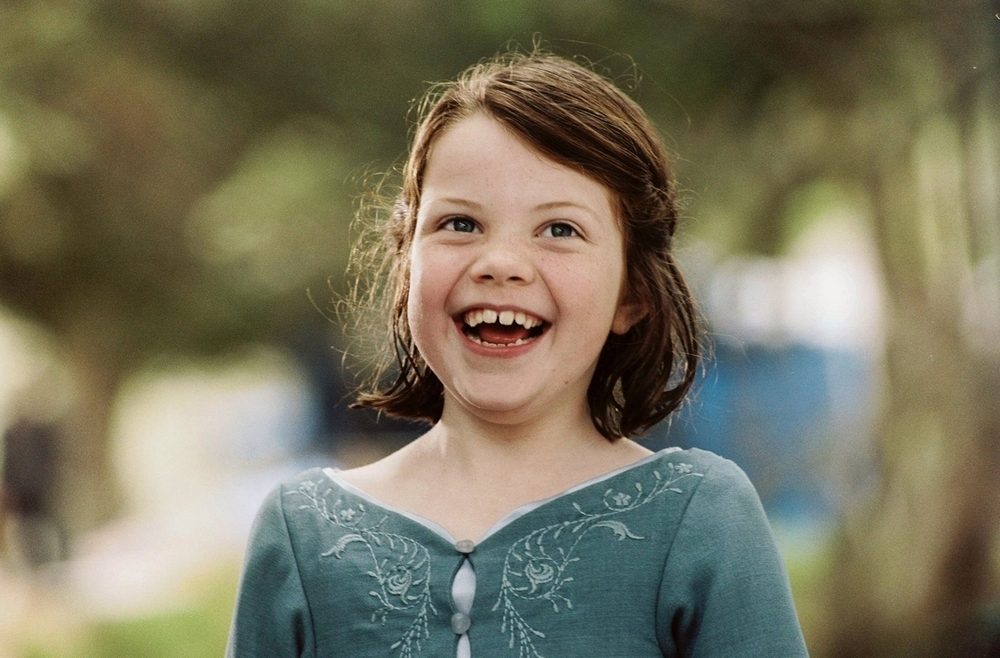
Thanks to being the youngest of four children, Lucy tends to be cast at the correct age and everyone knows her for what she is - a sweet, adorable, curious, loving little girl. She's the best things about Alice and Dorothy rolled into one - willful and curious like Alice, but kind and gentle like Dorothy. She has a strong sense of both justice and wonder. Those first scenes with Mr. Tumnus, and then when she defends herself and what she saw to her siblings are fantastic and speak to such a full, interesting character.

This is the kind of plucky girl you want to see on an adventure. The one that is ready to face both the wonder and peril of the unknown. She's the perfect person to introduce us to Narnia, and the winner of this, the first battle-of-the-tropes.

BEST PLUCKY GIRL: LUCY PEVENSIE!!!!!

And there you have it! If you enjoyed this feature, let me know what tropes you would like to see analyzed. Rest assured, I won't always be so "nice" to the competing books. But I do think these three characters are all decent portrayals, even if one is stronger than the rest.

I've got a few more "episodes" in mind (I almost did a different one as the starting episode, but then realized I had too much to say about it and this would have been an insanely long blog post) but I'd love to analyze some of your suggestions! So sound off in the comments!

Thursday, December 1, 2016

Harry Potter and the Expanded Universe


Image result for fantastic beasts
Ever since I started this blog, there have been certain books that I've made reference to, expecting my audience to know already. This blog is rife with spoilers for The Hunger Games, features the occasional Twilight related diatribe and - let's not forget - frequently pauses to admire the brilliance of the seven book, eight movie Harry Potter series.

These three series have a lot in common. They're all mega-blockbusters, all aimed at children and all garnered a massive adult fan base despite their intended audience. Up until 2016, they also shared another key feature that made them easy to talk about on this blog:

They were all over.

Were.

But someone got a hold of those Deathly Hallows and flipped the resurrection stone, because the Wizarding World of Harry Potter is back from the grave.

Some Context...

I first came across the Harry Potter books at the start of seventh grade. It took one sentence to hook me. I charged through books one, two and three. Then began the waiting.

Anyone who grew up in the late 90s/early 2000s learned the agony of waiting for each new Harry Potter book.  When the series started, I was a year younger than Harry, Ron and Hermione. By the time it ended, I was three years older. It never took me longer than a few days to read each book and so, by and large, most of my time spent with Harry, I was waiting for more.

In order to fill this Harry Potter sized hole in my heart, I took to the internet. I talked to people on message boards about Harry Potter. I read blog posts on everything from wand lore to inbreeding in the wizarding world. I trawled through countless pages of fan art on Deviant Art. It's safe to say that no series hit my developing writer's soul more than Harry's did.

Online, I wasn't alone. There were countless people just like me, desperate for more Potter. Which is why the inevitable blow-ups that happened whenever a new book was released were - in hindsight - kind of bizarre. But not that bizarre.

Fandom Over Time

Image result for ron and hermione
Ron + Herm 4 EVA!!!!
Between the publication of Book 4 and Book 5 alone, three years passed. Three! For teenage Emily, this was an eternity, and a lot of people felt the same way. So they filled the gap with fan theories, fan fiction and fan art. What resulted were divergent opinions about the true nature of the Harry Potter world. Right up until the sixth book came out, there were ride-or-die supporters of Harry and Hermione falling in love with each other. They could (and did) write essays on the ways JK Rowling clearly intended the couple to be together. They were devastated when they realized that Harry and Hermione were a love that would never be, even more so when Rowling joked that they'd missed some "anvil sized hints" that Hermione had feelings for Ron.


There were people who hated the "teen-angst Harry" that replaced our hero in Book 5; people who loathed Ginny Weasley, the more focus she took in the narrative; people who felt betrayed by the heroic end that Snape got; people who lost their minds when Umbridge didn't die; people who disliked the way Book 7 unraveled Dumbledore's legacy. And there were a lot of people who hated the epilogue. Man, people hated that epilogue.

But as each book settled into reality, resistance died down. Like it or not, this was Rowling's world. And you could either throw the whole series out or accept the changes you didn't like. Most people chose acceptance, though not everyone. I had friends who went from super fans to so disenchanted, they never finished the series.

But once 2007 passed, Harry Potter became fixed. Sure, J.K. Rowling continued to give interviews, but the stuff she spoke about  wasn't important enough to make it into the books. None of it defined the series. And if you weren't the type of fan who hung on every word the great Rowling spoke, you might not even know she was still adding factoids to the series.

The Arrival of 2016

In many ways, the great change began back in 2013, with the announcement of Fantastic Beasts and Where to Find Them. For six years, the series had been over. The movie adaptations stretched the timeline a bit longer, but they weren't adding new lore to the world. And even then, the last movie came out in 2011. Potter was supposed to be done.

Fantastic Beasts would be a movie series, focused not on Harry, but on Newt Scamander, the author of one of Harry's textbooks. It would detail his adventures in 1920s America and function as an independent story, within the same world. On the whole, people loved this announcement. It felt like the perfect balance between getting more Potter without dragging out the corpse of the beloved series we'd already said good-bye to.

But then Harry Potter and the Cursed Child was announced and people kind of collectively said, "what?"

Of all the things I listed above, nothing was as universally reviled as Book 7's epilogue. I, like a lot of people, chose to conveniently "forget" it existed and focus on Harry as a teenager. The idea of a story that took place AFTER that time would make it feel more real. And back when she was writing the original series, Rowling double-triple-quadruple promised she wouldn't write Harry Potter and the Mid-Life Crisis, yet here we were, faced with a stage play that was exactly that.

Optimists (such as yours truly) still bought a copy of the play to read, but Cursed Child also made something else painfully clear. The book had three authors on the title page. Rowling wasn't the only one driving the Harry Potter bus any more.

Rowling is the only person on Fantastic Beasts with a "story by" credit, but even that being the case, you can bet the script was vetted and doctored by a whole team of writers. It's just the way movies are made. Besides which, Rowling is a novelist, and screenplays are a different - ahem - beast. The very fact that she has a "story" credit and not a "screenplay" one speaks to the fact that other people stepped in at some point.

In both cases, it can be argued that we might be getting more Harry Potter, but that doesn't mean we're getting any more *pure* Harry Potter. So what role do these additions play in the over-all universe? And are we expected to accept them the same way we did each book in the series? 

Expanding Universes Across Fandom

It might be useful at this point to address the whole notion of an "expanded universe." The term comes primarily from Star Wars, which after it's initial mega-success back in the 70s and 80s, spawned a whole generation of fans hungry for more.

At the time, George Lucas wasn't interested in making more Star Wars movies, so the task of creating fell to others. These works were meant to satiate super fans, but not necessarily define Star Wars for the general public who couldn't care less about Jabba the Hutt's origin story. And what is the cheapest way of creating new content for super fans?

Books, of course! Books are cheaper to produce than movies or TV shows and you don't need nearly as many people to engage with them to make a profit.

Image result for expanded universe
Not gonna lie. I only recognize Han and Leia.
Star Wars wasn't the only series to make use of a niche fan base in this manner. Star Trek, Indiana Jones, and even My Little Pony have all published books related to their respective worlds, expanding the universe for the fans that care without complicating the overall perception for casual fans. In fact, it's understood that further movies or TV shows can "overwrite" these books, much to the heartache of those who love the Expanded Universe. Still, they tend to take it on the chin. The books were extra. Not the main narrative.

For some people, engaging with this Expanded Universe material is the defining test of if you *are* a super fan. You don't know the name of each of the bounty hunters after Han Solo? Well, THAT GUY read a book about each of them! And you call yourself a fan. For shame!

But now that Harry Potter is expanding, the old fan base is at a cross roads, because not everyone wants to jump on the wagon. And if you look closely, you can kind of understand why.

The Harry Potter Conundrum

All of the series I mentioned above started out as Mass Media. Okay, so books are technically mass media too, but they're different. They're the "smart person's" pass time. We all kind of expect books to be simplified or "dumbed down" when they're adapted to film and television. In fact, we're pleasantly stunned when they don't feel that way.

When Star Wars and the like expanded their universes, they were moving "up" the ladder. By adding books to the world, they were going for smarter, niche content that only the true super fan was meant to engage with. The whole notion that complexity could be added to the Harry Potter world by making more movies feels off for a lot of people.

Add to that, blockbuster movies are not the small side-projects you make for a hyper-devoted fandom. They depend on massive ticket sales and cash returns, which comes from lots and lots of people going to see the movies. These movies are for the average joe, not the fans who spent their teen and college years writing side stories where Luna Lovegood takes center stage.

Cursed Child tripped up fans for different reasons. Though a play, most people will engage it first as a book, since the released script made for the biggest Harry Potter book launch in years. Technically, you can also buy the screenplay for Fantastic Beasts, but c'mon. Let's face it. We're seeing it in theatres. So then what's wrong with Cursed Child? First, it reads differently from the original series. It had to, of course. It's a play. But because it's a play, gone are the vast descriptions of magical objects and locations. Gone are the internal thoughts we're used to from Harry. Neither of those things work well on stage, but both were key to Harry's original success.

On top of that, both recent works have highlighted some deeper problems with the series that some fans would rather not swallow. Cursed Child introduces some plot holes, if it's canon. The Pottermore writings that lead up to Fantastic Beasts, plus the movie itself, highlighted some difficulties Rowling tends to have writing diversity. (Those problems have always been there, of course. Try reading Goblet of Fire and finding one French character who isn't a raging stereotype.) And the casting choices for both the play and the movies have led to some mixed reactions.

To be honest, I'm not even sure how much people (on average) care about these problems or worry about the wider implications of adding more to the series. One of the issues with being a super fan for a series is that my vision tends to be a little myopic. I know what the internet junkies are thinking and saying, but Harry Potter touched a far, far wider swathe of people, many of whom host Harry Potter parties and get Harry Potter tattoos, even if they've never dreamed of posting on a Harry Potter message board or reading fan fiction. It's their story too, and who am I to say their experience and insight into the series is any less important than mine? For all I know, these were the people Rowling created the new play and movies for.

Or did she think she could satisfy all of us in one go? Or did she know she couldn't, but kept writing anyway?

The Future of Potter

So where do these works fit? They're going to be well known, more so than the expanded material from Star Wars or countless other properties. And even if other people are involved now, Rowling's name is there, over and over again, reminding us that on some level, she signed off on this. The chances that future books will come out that "overwrite" the new movies and play are slim to none.

You certainly can't force everyone to like the new material. As someone who eagerly read Cursed Child and watched Fantastic Beasts, I can admit, they aren't perfect. And maybe there is something to be said for holding the books up on a different "tier" than the rest of the new material. The "pure" books that Rowling created without the meddling of big studios and big money.

But at the same time...

I would never want to stop someone from critiquing the Harry Potter series. Man, there is next to NOTHING that I enjoy more than picking apart a story I love. One of the major features of this blog is its book reviews, which always mention at least one thing that could be "improved" in a work of fiction. Sometimes it's craft, sometimes its what it says on a social commentary level. But as we pick apart the new additions to the series, overall, I'm excited that there's a lot of interesting stuff to talk about. Even with their weaknesses, I don't think they're anywhere close to being something you would want to give up on.

Image result for ron and hermione cursed child
RON + HERM 4 EVA!!!!!!
For those who are wondering if they should read Cursed Child or see Fantastic Beasts - especially those who are worried that these stories might tarnish something they loved - I'd really encourage you to give them a shot. There are great, new characters to meet. There are all of Newt's creature friends and, holy crap are they lovable. And Cursed Child finally fixed that frickin' Book 7 epilogue and for that alone, the play deserves an award.

I keep wondering what will happen a year or so from now when the dust has settled and these stories have been around for a while. Will they be seen as normal? Will the fan base swallow them on the whole, just like they did the books? After all, this isn't a new pattern we're seeing. People have rejected aspects of "new Potter" every time another story is added to the canon. All that's changed is the level of social media exposure.

Either way, with more movies on the way and new snippets added to Pottermore regularly, one thing is very clear. Harry Potter fans have more content than ever before to engage with, and what they do with it will only be known in time.

Wednesday, November 25, 2015

Emily and the Chapters Christmas Flyer: A Holiday Tale

Guys... Do you realize what day it is?

IT IS EXACTLY ONE MONTH UNTIL CHRISTMAS DAY!!! 


It's no secret that I am a big into Christmas. I love everything about it, even stuff many people can't stand. I love the stores playing Christmas music on loop! I love the over abundance of sweets and chocolate! I love the mess of wrapping paper on Christmas morning! I love how busy the malls get right before the holiday! I love the billions of flyers that show up in your mailbox, advertising STUFF STUFF STUFF to BUY BUY BUY for all the people in your life!

This year, I got especially giddy when I saw that the Chapters/Indigo flyer had arrived, and was even happier when I realized this one was aimed at kids. It even included stickers. STICKERS! Oh, how I envied these children who got to select their favorite books using stickers with tantalizing phrases like "I WANT THAT" and "TOP PICK" printed on them! I opened the flyer, eager to see what books were being promoted to kids and teens this holiday season.

And then...

The Chapters flyer was about twenty pages long. Six pages were devoted to books. Six. SIX!!!! That's one spread for picture books, one for middle grade, one for teens. Everything else was LEGO, American Girl Dolls, Star Wars merchandise and bug-eyed animals. (Serious question: why do all stuffed toys have grapefruit eyes? Man, I hated this toy design as a kid and I STILL hate it!) I closed the flyer feeling a little betrayed that the one major bookstore chain still standing in Canada had put out a Christmas flyer that was only 30% books. (For those of you playing along in the USA, Chapters/Indigo is almost the exact same as Barnes and Noble. It even partners with Starbucks.)

First off, I did expect some toys. It's no secret that Chapters has diversified. When you enter the store these days, you have to wade through a sea of brick-a-brack and monogrammed towels before you reach any actual books. The kids department is no less, um, conflicted? There are games and puzzles and Star Wars (sooooo much Star Wars) and scented erasers and light-up bouncy balls and guys, this piece will go on forever if I list everything that is NOT books that is present in Chapters.

And on the whole... I'm okay with that.

This might seem kind of odd given my previous rant, but hear me out: I love bookstores. I love them so much, that if they have to meet their margins by selling other stuff, I am okay with that. Online book purchasing is eating the traditional brick-and-mortar bookstores alive, and most of the ones that are still standing are there because they have a selection of coffee mugs. If Betty Buysalot picking up a laughing Buddha statue while she waits in line at the check out keeps them in business, then by all means let Chapters keep their Not-Books sections. 

But of course, my comfort with them doing this is somewhat dependent on books being their primary purpose, and the Christmas flyer shook my faith a little. When I'm in the actual store, I still feel okay. There are shelves full of great books, including smaller time authors who want to have a fighting chance to sell their stuff. So don't count Chapters out. In fact, don't count out pretty much anyone who sells books!

In light of all this, I have decided, for the Holiday Season, to compile a few "Emily Rules" for buying books and supporting bookstores this year! Above all, make books a part of your Christmas this year, especially if you've got kids and teens on your list. With this in mind, I give you.....


The Emily Paxman Rules For Having A Splendiforous Christmas Season! 

1. Buy Books
Hooray for books! If you need incentive to buy more books, remember that books are relatively cheap presents that pull your kids eyes away from screens, make them more empathetic, and improve their comprehension and critical thinking skills. They will also do this to you if you are an adult.

The average paperback isn't gonna cost you much more than $15 and kid's paperbacks are often as cheap as $8 or $9. Hardcovers are a bit pricier, but still a pretty good bang for buck. These prices go even further down if you purchase gently used books.

Also, square packages with ribbons around them are sleek, sexy presents on Christmas day. 

2. When Possible, Buy your Books at Actual Living Breathing Bookstores Rather than Online
Turning aside the debate about whether or not you should buy ebooks or physical copies, I'm going to make a much less contentious statement and go from there: Whether you're an advocate for eReaders or print books, the reality is that the majority of books sold are STILL physical books. This is especially true for children and teens, who are less likely to own their own eReaders than their parents.

So with that in mind, I'm going to make my pitch for why you should support a bookstore rather than Amazon when you buy physical copies. Yes, this is largely a rule about a specific company. Amazon currently sells about 60% of all print books in North America. That is a massive share of the industry, and frankly, it has resulted in a lot of the problems you can imagine rising up from a monopoly.

Amazon has surpassed Walmart as the largest North American retailer. They play dirty with contracts, are at war with publishers over book pricing and yes, this does have a pretty brutal impact on authors. In 2014, when they were renegotiating their deal with Hatchette Book Group, they pulled a number of Hatchette's books from their site, delayed shipping them to consumers, and generally made them unavailable to try to scare the publisher into signing a sucky deal. For any traditional, non-self published author, this means that while Amazon is a necessary evil for sustaining their careers, they also make pitiful margins off the books you buy through them. 

All this being said, some books are flippin' hard to find, because they're rare or out of print, and Amazon can be a miracle worker in these instances. They're also the go-to source for self-published books, so if there is a self-published author you want to support, go ahead and use them. They also can save you a pretty penny sometimes too, but you'd be surprised how often you'll do just as well at a regular bookstore, and without shipping fees! If convenience is a concern, know that Chapters and many local bookstores allow you to order through their online stores. 

Most importantly, prioritize the first rule above the second. Buy books, then think about where you are getting them from.

3. Get to Know Your Local Bookstores!
I love Chapters, largely because they have an awesome Science Fiction and Fantasy section. I can also count on them to carry an up-to-date selection of books on the craft of writing.

But they are far from being my favorite bookstore. Unsurprisingly, that honor goes to the store with the best Children's book section, and that store is Bolen Books.

Bolen is local to Victoria, British Columbia and has been a staple of Hillside Mall for decades. Everything that Chapters is trying to do with their Children's section, Bolen does better. They've also diversified their holdings, but instead of carrying a bunch of generic toys you could find at Toys R Us or Walmart, they've focused on "brainy" and local toys. They have a gorgeous wall of puzzles, including the largest selection of local brand Cobble Hill I've ever seen in one place. They stock the high-end, European designed board games that all nerds love, as well as an interesting mix of children's and party games. Every Not-Book item they have seems carefully selected, and is kept in one, moderate sized section of the store, instead of overwhelming the actual books.

Then there's the Children's Section! Not only is it one of the largest in the city, but it carries an impressive mix of local and bestselling authors. It also stocks a fantastic array of coloring, puzzle, and paper doll books that make it truly unique. If you're shopping for a child, I can't recommend a better place.

The staff are always lovely to deal with and willing to offer a suggestion if you need help finding something. I'd also recommend taking your kids here to explore the store on their own. Just as it's important for kids to visit the library, I think it's important for kids to experience bookstores, where often the selection is a little more robust (at least at first glance - libraries of course have networks they can make use of, but let's face it. The most popular books can be hard to get a hold of at the library.) 

Of course, not every city has a Bolen Books. It is, by definition, a local bookstore. But there is probably some equivalent store in your own town. Check them all out until you find one that meets your needs.

4. Don't Forget the Used Bookstores!
Here in Victoria, my favorite is Russell Books. It's one of the best organized used bookstores I've been to, with the shelves reliably alphabetized and the variety on display always changing. They also stock new books, so if something is difficult to find, they can order it in for you, and often at a discount too! For students, they're a huge win, because they offer additional savings when you show them a valid student card.

5. Buy your Children some Star Wars Toys at Chapters
I might add that they also have Star Wars books here.

In all seriousness though, you'd be surprised how many major toy brands are stocked by bookstores. They've got Disney, Paw Patrol, Webkinz and everything else. It may seem like a weird way of supporting reading, but if you buy a few toys along with your books, you're helping keep bookstores open. 

We all know kids want toys for Christmas and I support them in their efforts to play. Brand recognition is also important to them. A couple weeks ago I watched one of my nephews go through that Chapters magazine and joyously affix stickers to the following: 

Star Wars Battleship
Star Wars Monopoly
Star Wars Chess
Some sort of whirly-gig puzzle ma-jigger

Kids want what they want.

But I have to admit... his Mean Old Auntie bought him a book instead.