Wednesday, February 1, 2017

La La Land and the Dreaded PG Rating

As awards season takes hold, my interest in the movies can't help but increase. It's enjoyable, watching the press squabble over what deserves to bring home the big trophies and reading the think pieces about whether or not the Academy is "in touch" with the common viewer anymore.

And like a lot of people who don't go to the movies all that often, I definitely use the awards as an indicator of what I might be interested in seeing that I missed during the hectic Christmas season.

That in itself is a juggling act, because I don't tend to like watching too much violence or sex in my movies. So I also spend a lot of time reading over reviews and rating guides, trying to figure out what I'll enjoy and what will send me running out of the theatre, crying like a five-year-old.

You would think it wouldn't be that hard - that some rule like "skip the movies rated R" would work for me, but it really doesn't. It's incredible how much violence - gun violence in particular - can make it into a PG-13 rated film. And similarly, it's confusing to me why a movie that essentially has nothing but a few F words gets slapped with an R. Some of this is my own personal preferences, but I'll take cussing over guns almost any day.

Of course exceptions apply, and this is sort of the point of the whole post - that the rating guides are arbitrary and so are individual tastes, which makes categorizing based on content incredibly difficult. But adding to the trouble is something we don't often think about enough - movie ratings aren't just content indicators, they're audience marketing tools.

La La Land and the Dreaded PG Rating

Which brings us back to awards season - this awards season, to be exact. One of the big, splashy movies that everyone is talking about is La La Land, an old fashioned musical about love, art and the movie industry. It's gorgeously shot and orchestrated, Ryan Gosling and Emma Stone turn in charming performances and the art direction is on point. If you're on the fence about seeing it, I really enjoyed it, so take that for what it's worth.

It's also rated PG-13 for one - literally, only one. I counted - use of the F word in the entire film.

There is no sex or violence, and only mild cussing throughout the rest of the film. If it hadn't been for that one word, it absolutely would have ended up with a PG rating. In fact, the language is so mild in the rest of the film, I half wonder if it could have pulled a G.

So why did they include that word? Did it add to the story? No. Was it particularly funny? Not really. Was it essential to characterization? No, can't say it was. The one purpose it served was raising the rating.

WARNING!!! SOME CONTENT
NOT SUITABLE FOR CHILDREN!!!!
La La Land is far from the only movie to use this sort of ploy. There's a whole slew of animated movies that include one or two jokes that are just a tiny bit racey so that they can get a PG rating instead of G. Did you know Inside Out was rated PG? What an edgy film, amiright?

The reasons for both of these decisions are the same - marketing. Movies have no way of signaling to their potential audience who they are intended for except through the content rating system.

When you go to the bookstore (yes, this IS about books on some level), you generally won't find any content ratings. Maybe the Erotica is shelved separately from the other books, but even then, you don't see a warning notice above it. Your ten-year-old could head into a bookstore at any moment and pick up a copy of 50 Shades of Gray, but they don't generally do that. Why? Well, because it's not in the kid's section.

That's the genius of bookstores. They shelve by audience, not content. If a story can cross-over between two different audiences, it tends to have copies shelved in both, so you'll find Catcher in the Rye both in the YA section and among the literary classics in the adult section. It's also why you'll find Margaret Atwood shelved both in General Fiction and Sci-Fi. She's considered appropriate both for the nerdy and the literary set.

In the absence of a similar ability to "shelve" movies, the rating system has become the next best thing. G = Picture Books, PG = Middle Grade, PG-13 = Young Adult and R = Adult. Or so it seems. If film makers want to communicate that their project is a "Family Film," intended for more than the tiniest of tinies, they tend to think they need a PG or PG-13 rating. In La La Land's case, it wanted to position itself as an adult film, and people are okay with the notion that adults might enjoy something that's also appropriate for teens. That's not TOO babyish, right?

The funny thing about this shelving strategy, is that it becomes all the less logical when books actually get adapted to film. A YA book might come out anywhere on the scale of G (Like Anne of Green Gables) to R (Like Perks of Being a Wallflower). One of the great conundrums of adaptation is that our cultural standards for books and movies are so incredibly different. In books, it's not so much what the story contains, but how it engages the subject matter. Harry Potter is about death, war and racism and is appropriate for your ten-year-old. Wolf by Wolf is about all those same things, and it isn't. But they aren't next to each other in the bookstore, so it doesn't really matter.

You can tell there was real anxiety that La La Land might not draw in its intended audience if it didn't send the signal that it was meant for older viewers. And I do tend to agree with their decision to market the movie to adults. Some older children might like it, but it's not precisely a family film. Tonally, it's appealing to someone else - someone who wants their spinning, happy musical to include a touch of melancholy. So it strikes me as kind of a shame that in order to "shelve" it, they had to include one word that feels oddly dissonant in the rest of the movie.

I'm not sure what a rating system that worked based on audience rather than content would look like. Perhaps people would hate it, since it wouldn't officially "ban" kids from seeing adult movies. But I could go for it. And it might finally end some of the angst film makers have about how many cuss words to use in a movie.

Saturday, January 14, 2017

Who Did it Better? Tropes VS Cliches


Don't you just love trashy magazines? Aren't those fashion sections great, where they line up photos of socialites in the same outfit? What a reputation killer! However, they tend to throw at least one of the poor celebs a bone, by pointing out WHO WORE IT BETTER of the pair.

Okay, so maybe you hate those magazines. I actually am pretty indifferent on the topic. But I'm thinking I might add a similar feature to this blog. Only instead of picking apart character's outfits, we're going to pick apart literary tropes!

But Emily, what IS a trope?

A trope is a common literary device - a narrative element that we've probably seen before, somewhere else. Because we've seen a trope before, it tends to call up memories of the other things we associate with it.

When the trailers for Star Wars: Rogue One came out, I was struck right away by how much they costumed Jyn's character so that she looked like Katniss in the Hunger Games movies.


Image result for rogue one jynImage result for katniss hunger games

While there are clear differences (Jyn doesn't get arrows. It takes a couple movies before Katniss gets a scarf) I'd argue that Jyn's look is directly meant to evoke in us a recollection of what we know about Katniss. Since the Hunger Games came out, this "look" is visual short-hand for a no-nonsense female character who rebels against the rules set by an evil empire.

Katniss herself isn't the first character to be costumed this way, but you could say she "codified" that trope. She provided us with the most obvious, recent and relevant set of meanings to go with that visual palette.

And when tropes work well, that's how they work. They bring up associations, but then tell their own stories using the trope more as a starting point. If you want to read a more thorough discussion of what tropes are and how common they are in fiction/if you want to waste an afternoon or possibly your entire life reading, see tvtropes.org for the most comprehensive list out there.

However, things can go wrong when tropes are used lazily or too frequently and become the most terrible of all literary devices... the cliché!

Very often, the difference between a trope and a cliché is simply how it's done. To reference Star Wars again, Princess Leia starts the first movie a Damsel in Distress, but she goes on to subvert that trope by a) not expecting Luke or Han to save her and b) going on to take her own, proactive role in all the subsequent rebellion efforts. Here, it's a well used trope.


Image result for general organa
General Organa. The best damsel out there.
Still love and miss you, Carrie Fisher.

Contrast that with a movie like Sleeping Beauty where Princess Aurora literally lays there waiting to be saved, and you've got something more like the cliché people groan at when a story features a Damsel in Distress.

The New Feature!!!

And so, like gossip rags over-examine outfits, I'm going to do this to books and other media! Pick a trope, pick a couple books and then argue out who did it best. Who elevated their story beyond the tired and overused paths of fiction, and who fell into the trap of clichéd writing?

To whet your whistle, here's a mini-episode! Today we're doing...

THE PLUCKY LITTLE GIRL GOES ON AN ADVENTURE

Competing for the title of "Best Plucky Girl" we have three young ladies from the realm of classic kidlit! Please welcome to the stage...

ALICE

Image result for alice in wonderland
Alice in Wonderland is arguably the first true children's book ever written in the English language. The only things that predate it are faerie tales and moralistic primers like Goody-Two Shoes which is a story so boring, it created a trope of a very different kind... namely, the boring little girl who does nothing but follow the rules.

Alice is not that girl. Like a lot of people, I knew the Disney movie adaptation from childhood, but it took me years to actually read the book. One of the things I was pleasantly surprised by was how much I liked Alice herself. She's younger than most people remember her, probably only meant to be about 7 years old, and she's odd and funny in all the little ways you expect from a girl that age. She's obsessed with her cat Dinah and keeps offending people in Wonderland by telling them all about how great Dinah is, forgetting she's talking to birds and fish and flowers that Dinah would happily destroy. The whole story is driven by her curiosity and willingness to try things she probably shouldn't, and these qualities in the end shape Wonderland itself. It's one of the few stories where the "it's all just a dream" ending works, because Wonderland itself is a reflection of Alice and her childlike whimsy. Altogether, a solid first entry for the trope.

DOROTHY

Image result for dorothy galeLike Alice, Dorothy Gale is another character that is younger in the book than people tend to remember her, thanks to the movie. Again, you get the sense she's about 7 years old.

The Wizard of Oz holds a special place in my heart, not as the book my parents read to me, but as the book my older sister read aloud to me as a child. It's still one of my favorite children's books. But how does Dorothy herself measure up?

Dorothy is much more reliable and practical than Alice. She's lost in Oz by chance, not by willful curiosity, and she wants nothing more than to return home. I like Dorothy a lot, but she's a bit of a flatter character than Alice.

Incidentally, if we were comparing movies and not books, the win would go to Dorothy. Judy Garland fills the character with such fantastic humanity, and there's a growth and turmoil to Dorothy that you don't see in the book that is present in the movie. So while she loses to Alice here, it could have gone another way so easily. Alas.

BUT WAIT!!! HERE COMES ANOTHER CHALLENGER!!!!

LUCY

Image result for lucy pevensie
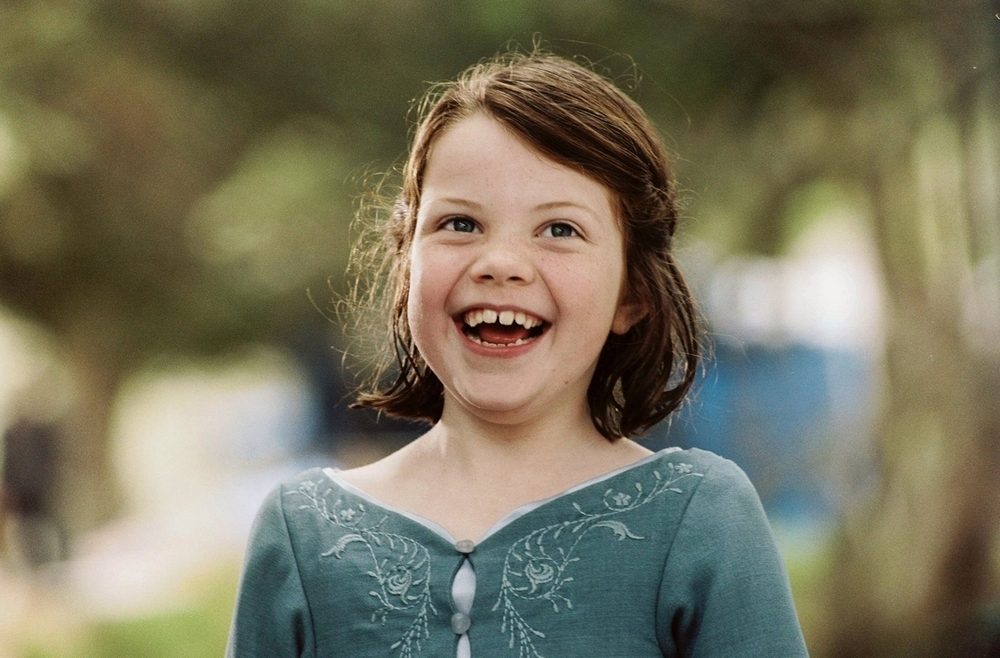
It's a little embarrassing how long it took me to finish reading The Chronicles of Narnia. I started the book so many times before getting to the end a few years ago. The reason why was simple. Whenever I read past the first several chapters and hit the section that was less about Lucy, and more about everyone adventuring together, I mourned a little, because Lucy is the freakin' best.

Thanks to being the youngest of four children, Lucy tends to be cast at the correct age and everyone knows her for what she is - a sweet, adorable, curious, loving little girl. She's the best things about Alice and Dorothy rolled into one - willful and curious like Alice, but kind and gentle like Dorothy. She has a strong sense of both justice and wonder. Those first scenes with Mr. Tumnus, and then when she defends herself and what she saw to her siblings are fantastic and speak to such a full, interesting character.

This is the kind of plucky girl you want to see on an adventure. The one that is ready to face both the wonder and peril of the unknown. She's the perfect person to introduce us to Narnia, and the winner of this, the first battle-of-the-tropes.

BEST PLUCKY GIRL: LUCY PEVENSIE!!!!!

And there you have it! If you enjoyed this feature, let me know what tropes you would like to see analyzed. Rest assured, I won't always be so "nice" to the competing books. But I do think these three characters are all decent portrayals, even if one is stronger than the rest.

I've got a few more "episodes" in mind (I almost did a different one as the starting episode, but then realized I had too much to say about it and this would have been an insanely long blog post) but I'd love to analyze some of your suggestions! So sound off in the comments!

Thursday, December 1, 2016

Harry Potter and the Expanded Universe


Image result for fantastic beasts
Ever since I started this blog, there have been certain books that I've made reference to, expecting my audience to know already. This blog is rife with spoilers for The Hunger Games, features the occasional Twilight related diatribe and - let's not forget - frequently pauses to admire the brilliance of the seven book, eight movie Harry Potter series.

These three series have a lot in common. They're all mega-blockbusters, all aimed at children and all garnered a massive adult fan base despite their intended audience. Up until 2016, they also shared another key feature that made them easy to talk about on this blog:

They were all over.

Were.

But someone got a hold of those Deathly Hallows and flipped the resurrection stone, because the Wizarding World of Harry Potter is back from the grave.

Some Context...

I first came across the Harry Potter books at the start of seventh grade. It took one sentence to hook me. I charged through books one, two and three. Then began the waiting.

Anyone who grew up in the late 90s/early 2000s learned the agony of waiting for each new Harry Potter book.  When the series started, I was a year younger than Harry, Ron and Hermione. By the time it ended, I was three years older. It never took me longer than a few days to read each book and so, by and large, most of my time spent with Harry, I was waiting for more.

In order to fill this Harry Potter sized hole in my heart, I took to the internet. I talked to people on message boards about Harry Potter. I read blog posts on everything from wand lore to inbreeding in the wizarding world. I trawled through countless pages of fan art on Deviant Art. It's safe to say that no series hit my developing writer's soul more than Harry's did.

Online, I wasn't alone. There were countless people just like me, desperate for more Potter. Which is why the inevitable blow-ups that happened whenever a new book was released were - in hindsight - kind of bizarre. But not that bizarre.

Fandom Over Time

Image result for ron and hermione
Ron + Herm 4 EVA!!!!
Between the publication of Book 4 and Book 5 alone, three years passed. Three! For teenage Emily, this was an eternity, and a lot of people felt the same way. So they filled the gap with fan theories, fan fiction and fan art. What resulted were divergent opinions about the true nature of the Harry Potter world. Right up until the sixth book came out, there were ride-or-die supporters of Harry and Hermione falling in love with each other. They could (and did) write essays on the ways JK Rowling clearly intended the couple to be together. They were devastated when they realized that Harry and Hermione were a love that would never be, even more so when Rowling joked that they'd missed some "anvil sized hints" that Hermione had feelings for Ron.


There were people who hated the "teen-angst Harry" that replaced our hero in Book 5; people who loathed Ginny Weasley, the more focus she took in the narrative; people who felt betrayed by the heroic end that Snape got; people who lost their minds when Umbridge didn't die; people who disliked the way Book 7 unraveled Dumbledore's legacy. And there were a lot of people who hated the epilogue. Man, people hated that epilogue.

But as each book settled into reality, resistance died down. Like it or not, this was Rowling's world. And you could either throw the whole series out or accept the changes you didn't like. Most people chose acceptance, though not everyone. I had friends who went from super fans to so disenchanted, they never finished the series.

But once 2007 passed, Harry Potter became fixed. Sure, J.K. Rowling continued to give interviews, but the stuff she spoke about  wasn't important enough to make it into the books. None of it defined the series. And if you weren't the type of fan who hung on every word the great Rowling spoke, you might not even know she was still adding factoids to the series.

The Arrival of 2016

In many ways, the great change began back in 2013, with the announcement of Fantastic Beasts and Where to Find Them. For six years, the series had been over. The movie adaptations stretched the timeline a bit longer, but they weren't adding new lore to the world. And even then, the last movie came out in 2011. Potter was supposed to be done.

Fantastic Beasts would be a movie series, focused not on Harry, but on Newt Scamander, the author of one of Harry's textbooks. It would detail his adventures in 1920s America and function as an independent story, within the same world. On the whole, people loved this announcement. It felt like the perfect balance between getting more Potter without dragging out the corpse of the beloved series we'd already said good-bye to.

But then Harry Potter and the Cursed Child was announced and people kind of collectively said, "what?"

Of all the things I listed above, nothing was as universally reviled as Book 7's epilogue. I, like a lot of people, chose to conveniently "forget" it existed and focus on Harry as a teenager. The idea of a story that took place AFTER that time would make it feel more real. And back when she was writing the original series, Rowling double-triple-quadruple promised she wouldn't write Harry Potter and the Mid-Life Crisis, yet here we were, faced with a stage play that was exactly that.

Optimists (such as yours truly) still bought a copy of the play to read, but Cursed Child also made something else painfully clear. The book had three authors on the title page. Rowling wasn't the only one driving the Harry Potter bus any more.

Rowling is the only person on Fantastic Beasts with a "story by" credit, but even that being the case, you can bet the script was vetted and doctored by a whole team of writers. It's just the way movies are made. Besides which, Rowling is a novelist, and screenplays are a different - ahem - beast. The very fact that she has a "story" credit and not a "screenplay" one speaks to the fact that other people stepped in at some point.

In both cases, it can be argued that we might be getting more Harry Potter, but that doesn't mean we're getting any more *pure* Harry Potter. So what role do these additions play in the over-all universe? And are we expected to accept them the same way we did each book in the series? 

Expanding Universes Across Fandom

It might be useful at this point to address the whole notion of an "expanded universe." The term comes primarily from Star Wars, which after it's initial mega-success back in the 70s and 80s, spawned a whole generation of fans hungry for more.

At the time, George Lucas wasn't interested in making more Star Wars movies, so the task of creating fell to others. These works were meant to satiate super fans, but not necessarily define Star Wars for the general public who couldn't care less about Jabba the Hutt's origin story. And what is the cheapest way of creating new content for super fans?

Books, of course! Books are cheaper to produce than movies or TV shows and you don't need nearly as many people to engage with them to make a profit.

Image result for expanded universe
Not gonna lie. I only recognize Han and Leia.
Star Wars wasn't the only series to make use of a niche fan base in this manner. Star Trek, Indiana Jones, and even My Little Pony have all published books related to their respective worlds, expanding the universe for the fans that care without complicating the overall perception for casual fans. In fact, it's understood that further movies or TV shows can "overwrite" these books, much to the heartache of those who love the Expanded Universe. Still, they tend to take it on the chin. The books were extra. Not the main narrative.

For some people, engaging with this Expanded Universe material is the defining test of if you *are* a super fan. You don't know the name of each of the bounty hunters after Han Solo? Well, THAT GUY read a book about each of them! And you call yourself a fan. For shame!

But now that Harry Potter is expanding, the old fan base is at a cross roads, because not everyone wants to jump on the wagon. And if you look closely, you can kind of understand why.

The Harry Potter Conundrum

All of the series I mentioned above started out as Mass Media. Okay, so books are technically mass media too, but they're different. They're the "smart person's" pass time. We all kind of expect books to be simplified or "dumbed down" when they're adapted to film and television. In fact, we're pleasantly stunned when they don't feel that way.

When Star Wars and the like expanded their universes, they were moving "up" the ladder. By adding books to the world, they were going for smarter, niche content that only the true super fan was meant to engage with. The whole notion that complexity could be added to the Harry Potter world by making more movies feels off for a lot of people.

Add to that, blockbuster movies are not the small side-projects you make for a hyper-devoted fandom. They depend on massive ticket sales and cash returns, which comes from lots and lots of people going to see the movies. These movies are for the average joe, not the fans who spent their teen and college years writing side stories where Luna Lovegood takes center stage.

Cursed Child tripped up fans for different reasons. Though a play, most people will engage it first as a book, since the released script made for the biggest Harry Potter book launch in years. Technically, you can also buy the screenplay for Fantastic Beasts, but c'mon. Let's face it. We're seeing it in theatres. So then what's wrong with Cursed Child? First, it reads differently from the original series. It had to, of course. It's a play. But because it's a play, gone are the vast descriptions of magical objects and locations. Gone are the internal thoughts we're used to from Harry. Neither of those things work well on stage, but both were key to Harry's original success.

On top of that, both recent works have highlighted some deeper problems with the series that some fans would rather not swallow. Cursed Child introduces some plot holes, if it's canon. The Pottermore writings that lead up to Fantastic Beasts, plus the movie itself, highlighted some difficulties Rowling tends to have writing diversity. (Those problems have always been there, of course. Try reading Goblet of Fire and finding one French character who isn't a raging stereotype.) And the casting choices for both the play and the movies have led to some mixed reactions.

To be honest, I'm not even sure how much people (on average) care about these problems or worry about the wider implications of adding more to the series. One of the issues with being a super fan for a series is that my vision tends to be a little myopic. I know what the internet junkies are thinking and saying, but Harry Potter touched a far, far wider swathe of people, many of whom host Harry Potter parties and get Harry Potter tattoos, even if they've never dreamed of posting on a Harry Potter message board or reading fan fiction. It's their story too, and who am I to say their experience and insight into the series is any less important than mine? For all I know, these were the people Rowling created the new play and movies for.

Or did she think she could satisfy all of us in one go? Or did she know she couldn't, but kept writing anyway?

The Future of Potter

So where do these works fit? They're going to be well known, more so than the expanded material from Star Wars or countless other properties. And even if other people are involved now, Rowling's name is there, over and over again, reminding us that on some level, she signed off on this. The chances that future books will come out that "overwrite" the new movies and play are slim to none.

You certainly can't force everyone to like the new material. As someone who eagerly read Cursed Child and watched Fantastic Beasts, I can admit, they aren't perfect. And maybe there is something to be said for holding the books up on a different "tier" than the rest of the new material. The "pure" books that Rowling created without the meddling of big studios and big money.

But at the same time...

I would never want to stop someone from critiquing the Harry Potter series. Man, there is next to NOTHING that I enjoy more than picking apart a story I love. One of the major features of this blog is its book reviews, which always mention at least one thing that could be "improved" in a work of fiction. Sometimes it's craft, sometimes its what it says on a social commentary level. But as we pick apart the new additions to the series, overall, I'm excited that there's a lot of interesting stuff to talk about. Even with their weaknesses, I don't think they're anywhere close to being something you would want to give up on.

Image result for ron and hermione cursed child
RON + HERM 4 EVA!!!!!!
For those who are wondering if they should read Cursed Child or see Fantastic Beasts - especially those who are worried that these stories might tarnish something they loved - I'd really encourage you to give them a shot. There are great, new characters to meet. There are all of Newt's creature friends and, holy crap are they lovable. And Cursed Child finally fixed that frickin' Book 7 epilogue and for that alone, the play deserves an award.

I keep wondering what will happen a year or so from now when the dust has settled and these stories have been around for a while. Will they be seen as normal? Will the fan base swallow them on the whole, just like they did the books? After all, this isn't a new pattern we're seeing. People have rejected aspects of "new Potter" every time another story is added to the canon. All that's changed is the level of social media exposure.

Either way, with more movies on the way and new snippets added to Pottermore regularly, one thing is very clear. Harry Potter fans have more content than ever before to engage with, and what they do with it will only be known in time.

Friday, September 23, 2016

To All the Boys I've Loved Before

Image result for to all the boys i've loved beforeLara Jean is a girl who enjoys the simple, comfortable life. Her best friends are her sisters, Kitty and Margot, and Margot’s boyfriend, Josh. But Margot is off to Scotland for university and – to Lara Jean’s amazement – breaks up with Josh before leaving.

The break-up prompts Lara Jean to admit to herself that she might have feelings for Josh. She thought she got over him when he and Margot started dating, but apparently not. As she finds herself attracted to him again, she tries to force away her feelings the same way she has gotten over every crush she’s ever had – by writing him a letter and hiding it in the hatbox under her bed. Lara Jean’s letters contain all the thoughts and feelings she never dares say to the boys she’s loved, and by writing them, she finds herself able to move on.

Then on the first day of Junior year, her middle school crush, Peter, walks up to her with a few questions. Questions about a letter he claims she mailed him. A letter, Lara Jean realizes, she wrote him back at the end of Eighth Grade.

The hatbox is missing. The letters were mailed, including the one to Josh. And Lara Jean’s simple life is about to get far less comfortable.

What Makes It So Good

I feel like I recommend a lot of dark, gruesome stuff on this blog. Books with flesh-eating horses and mutated dog-men and haunted grave diggers and Hitler. So let’s celebrate something different today!

This book is fluffy and cute and sweet and wonderful. The loveliness starts with Lara Jean herself, who is charming and neurotically teenaged all at once. She’s the kind of girl who does well in school, not because she’s a tortured genius, but because doing well in things matters to her. She’s not in the popular crowd, not because she’s hopelessly uncool or outcast, but because she’s a bit of a homebody and would rather be baking cookies than partying. Watching her step outside her comfort zone and grow up is so satisfying. Her arc is one of a girl who gradually realizes she wants more out of life, but who also hangs on to her goodness and sweetness, knowing those are part of who she essentially is.

Jenny Han is great at making you care about the things Lara Jean cares about – her sisters, her single father, whether or not she should include pictures of Josh in the scrapbook she’s making for Margot. She’s funny in her simple obsessions. And the relationship drama that falls out of her letters getting mailed also feels authentic. More often than not, its humorous rather than overwrought and her reactions are very relatable. I know of a lot of highschoolers that live more in a world of imaginary romances than real ones, and Lara Jean is clearly more comfortable with the imaginary.

But of course, this book wouldn’t be complete without the eponymous “boys she loved before” and here again, the book hits a home run. Most of the drama focuses on two of the boys. Josh, who still belongs to Margot in Lara Jean’s head, and Peter, who can’t help getting involved because he finds this whole fiasco hilarious. Of course there’s a love triangle, but Han doesn’t sink too much angst into it and by the end of the book, you’re pretty firmly steered in favor of Lara Jean’s decision.

It’s been a long time since I enjoyed a romance this much. If you’re looking for a light read, but don’t want to sacrifice characterization or theme, I highly recommend this book.

What Could Make It Better

So… let’s not beat around the bush. The premise is pretty contrived. The letter writing itself seems like something a girl would do, but the letters getting mysteriously mailed out? Lara Jean, this is why you DO NOT write addresses on letters you don’t actually want mailed!

And this isn’t the only contrived, rom-com level trope this book employs. There are quite a few, though I won’t detail them all for fear of giving away the entire plot. What Han excels at is making these tropes seem relatable again, but they are there in full force. If you hate this sort of thing, you may still hate it here, but you might find yourself liking it. Maybe you were just waiting for proper execution.

If you think of this book as a rom-com, most of the tropes are easy to swallow. All romantic comedies have some kind of quirky premise that is meant to make a story stick out from the pack. Maybe there’s a man in a coma. Maybe there’s a woman writing an article about How to Lose a Guy in Ten Days. I’m not one to fault a book for using a catchy, contrived premise. To me, it’s what it does with it. And over all, I was satisfied with how Han told her story.

This book is also what you might call “very highschool.” I can’t imagine encountering the same problems Lara Jean faces in university, let alone during actual adulthood. It appealed more to my inner sixteen-year-old far more than it resonated with my current emotional state. But again, I don’t think that’s a fault. A lot of YA feels written for an older audience, whereas this book definitely focuses on the hopes and dreams of teenagers. But it might be a turn-off to some readers.

Overall, I’d urge you to give this book a try, especially if you’re in the mood for something happy and light. It’s a fantastic pick-me-up.

P.S. There is a poll in the upper right hand corner!!!

Did you know I am obsessed with polls? WELL NOW YOU DO! Right now I'm trying to get an idea of what people like reading on the blog, so that I can hopefully provide more of it. So click all the things you like! Multiple answers are allowed. And if you have any questions/suggestions, sound off in the comments! Love you guys! :)

Monday, September 12, 2016

How Diversity (and Lin Manuel Miranda) Can Make A Story Awesome

Lin Manuel Miranda's musical IN THE HEIGHTS

Lately, there have been a lot of discussions around diversity and inclusivity in my writing community. I say lately, but really, these discussions have been going on for a long time. However, they have their moments where they boil over a little more heated, and the past few weeks, this has seemed to be the case.

This is a topic I have a lot of thoughts on, mostly because that when it comes to increasing diversity in books and in the publishing industry, I am all for it. A lot of the time, I kind of expect people to take this for granted. I'm not one to make a fuss. I'm not one who likes hurting feelings. But I am also someone who hates faulty logic, and lately, there have been some arguments AGAINST increasing diversity in books that have relied on terrible, narrow-sighted premises and that is the kind of thing that I just cannot stand for. So in the name of sense, I am saying some things.

Actually, I am saying a LOT of things. Bear with me. I have a lot of thoughts on this.

Bad Argument #1: There isn't really a lack of diverse books. I read "To Kill a Mockingbird" and that had race issues in it.

A lot of my readers are not writers and are likely unaware of the discussions writers have around diversity. But if you're someone who is concerned with social justice and media, you've probably heard of these discussions in some other venue. Maybe you watch movies and saw some of the discussion around the incredibly white Oscar nominees of the past couple years. Or maybe you like theatre and noticed that everyone is losing their minds over Lin Manuel Miranda's musical, Hamilton (we'll talk more about Miranda in a minute).

Generally, you can drag-and-drop that discussion onto books. Books, like most media, are dominated by white, heterosexual, able-bodied heroes. Oh sure, there are exceptions. There are lots of great books out there about minority characters, but this is more a symptom of there being "lots of great books" than of there being adequate exposure or opportunities for books focused on minorities.

If you need convincing at all, I compiled a list of as many books as I could think of that have been featured in some way on my blog. Most were selected for book reviews of some kind, because I think they're great books. A few came up because you can't discuss Young Adult literature without saying a few things about Harry Potter and Twilight. I think the list provides a decent litmus test of what you'll "happen" to see and read if you are not actively selecting for diversity. Below, I have highlighted all the books that definitively feature a protagonist who isn't white.

True Blue Scouts of Sugar Man Swamp – a white boy and some raccoons
Ship Breaker – a mixed race boy, possibly Latino, but it’s all pretty vague. Could be white
Divergent – a white girl
The Night Gardener – a white girl and a white boy
The Giver Quartet – three white boys and two white girls
The Hunger Games – a girl. Probably white.
Twilight – a white girl
Harry Potter – a white boy
MaddAddam Trilogy – a white girl, a white boy, a white woman and a white man
The Scorpio Races – a white girl and a white boy
The Absolutely True Diary of a Part-Time Indian – a Native American boy
Three Men in a Boat – a white man
Tess of the D’Urbervilles – a white girl
Bone Gap – a white girl and a white boy
Stand Still. Stay Silent. – four white boys and two white girls
Wolf by Wolf – a Jewish girl who *usually* looks white
To All the Boys I've Loved Before - a half Korean girl (spoiler! This review is upcoming!!!)

I included that last one because I actually did write that review already, so it seemed part of the same, pre-post on diversity thought process of mine.

Now, racial diversity isn't the only kind of diversity you can read about, but I hope this gives some idea of why, when people seemingly go on and on and on about inclusivity, it isn't because they are going on about nothing. These are not books I stumbled into accidently. The majority are award winning and highly respected. Others are runaway blockbuster hits. Most are used as benchmarks within the discipline.

So here are some numbers:

Of the 17 books above, only 2 feature definitively non-white protagonists
If we include Nailer from Shipbreaker, that number goes up to 3
Wolf By Wolf features a religiously diverse protagonist. The count goes up to 4
Stand Still. Stay Silent. features linguistic diversity and isn't heteronormative. The count goes up to 5
Bone Gap features a protagonist with a disability. The count goes up to 6

And that's it. 6 out of 17 books feature diverse protagonists. Due to the inclusion of a couple works of classical literature, maybe the number skews a little low, but one of the advantages of being white today is that you have the past to bolster you up. We've been the heroes in the cultural narrative for a long time.

A lot of people may argue that I'm being unfair, only counting books where the protagonist belongs to a diverse group. And yes, I will grant you that it's nice that Katniss is friends with black characters and that Bella has a thing for Jacob. They help, because they show that neither Katniss nor Bella belongs to some sort of strange world where the diverse characters have all been edited away. But these are still stories that are about the experiences of people who don't grapple with issues that exclude them from the mainstream. The diverse characters are appendages to those stories, not the focus themselves.

What I'm saying is that things could be better. There could be more diverse books. I might need to more actively select FOR diversity if I want to feature it on my blog. But you'll notice something else about that list. The bottom of it - which is composed primarily of new releases - is more diverse than the top. I didn't do this intentionally, but the books I am reading and that are promoted to me are changing. Modern writers are getting better at including diversity, and a lot of the best stories today feature diverse protagonists. Which leads me to...

Bad Argument #2: If people are just trying to promote diverse books, then what will happen to "good" literature? This is like affirmative action hiring in books! I don't like it!

I think it goes without saying that books should recommend themselves on their own merits. I've picked up diverse books I haven't liked. I've also picked up books that don't feature diversity that I haven't liked. Just as there are "lots of good books" out there, there are also lots of bad books out there. And because reading is so subjective, it can be hard for us to understand why one book got published and another one didn't. And all too often, people use this as an excuse to blame diversity.

You see the same nervousness around diverse books that you do around affirmative action hiring, particularly from writers. Writers who aren't from diverse groups get antsy when they see an editor or literary agent calling for diversity. It's like a scholarship they can't apply to, and it upsets them, because they're looking for a way into the market too.

But this is the thing: For every editor there is asking for fantasy that features non-European mythology, there is another one turning down a manuscript with a diverse protagonist because there just isn't "broad enough market appeal" for it. And "market appeal" is often seen to equal white, heterosexual, able-bodied etc etc

If you want a good example of this, take a look at the way books are adapted into movies. In The Hunger Games, Suzanne Collins describes Katniss as olive skinned, dark haired and dark eyed. She's racially ambiguous. But most of us don't think of her that way anymore because we've all seen her played by fair skinned, blue eyed Jennifer Lawrence. Lawrence was a logical choice for making the movie more "marketable," a traditional, white beauty who was a star on the rise. Of course she did a good job, and since Katniss's race was ambiguous at best, I wouldn't say she was miscast. But can you see what I mean? When a spot is "neutral" so-called, it's usually filled by a mainstream character.

When people actively call for diverse work, it isn't because they are trying to exclude other writers, but because they're trying to make a space for work that otherwise might struggle to get into the "neutral" slot because nothing is ever neutral. Not really.

And if you find yourself "missing" these opportunities, consider for a moment whether or not your own work really is at it's very best. There might be more diverse work out there now, but there's also still plenty of stories about white people. Don't worry, I went to the book store. I checked. Our faces are still on plenty of covers. Which brings us to...

Bad Argument #3: Diversity is great and all, but not EVERY book should have to be diverse, right? Authors shouldn't feel pressured to include it if they don't want to.

If you are asking this question because you are looking for permission to write a white, able-bodied, heterosexual etc etc mainstream character as your protagonist, then I hereby give you permission. Yes, go ahead. It's your story. You can write your story about whatever you're little heart desires. Similarly, yes, you can enjoy a book about white characters without feeling guilty for liking it. There are great books out there that aren't terribly diverse.

And the reality is that even when we're looking at mainstream protagonists, there are still lots of differences between them . We all love the Avengers and how different they are from each other and yet they're all white, 30-something-year-old dudes. Give or take. (That's starting to change. Marvel is planning on releasing some movies that should broaden the line-up.)

But on the flip side, I will say this: Writers have a responsibility to represent diversity not because it is the buzz phrase du jour, but because writers have a responsibility to represent reality. And the reality is that the world is a diverse place.

If you live in Europe and North America, there was a time when reality did seem less diverse. I don't think Shakespeare had much exposure to cultures other than his own, so when he wrote reality, it was a narrow version of it. And good gosh, we should be grateful he didn't veer too far off of what he knew! *coughshylockchough*

But we don't live in that world anymore. Less than 50% of kindergarteners in America are white. Around a quarter of all Americans live with a disability at some point. If you don't see the need to feature at least SOME non-mainstream characters in your work, then you might just be ignoring reality. And yes, that is something that deserves to be called out. The "mainstream" I've mentioned so many times isn't what it used to be. It's varied in a way that it wasn't before.

There will still be exceptions. There will still be deeply fascinating, genuine books that feature little-known aspects of European history. There will still be stories about small towns in middle-America where everyone attends the same highschool and everyone looks like each other, accept for that one kid who sticks out like a sore thumb. These might be portraying reality in a time or place where it would feel a bit forced to make everyone "diverse for the sake of diversity." But even then, it wouldn't hurt to do a bit of extra research - to make sure we are portraying reality in those places and not just our assumptions about it. Even back in the olden days, there was still more immigration and mixing that went on than people often care to acknowledge.

So with all that said, I want to provide one last argument; one of my own, which I hope strikes people as a good one. In fact, I'm going to go out on a limb and even label it as such.

Good argument #1: Everyone benefits from diversity because it gives us more stories; stories that wouldn't be available to us otherwise.

A few years ago, I went on a trip to New York with my older sister. Being musical theatre enthusiasts, we decided to go attend a show we knew very little about, but had great buzz. It was called In The Heights and told the story of a neighborhood in northern Manhattan primarily made up of Latin American immigrants.

The musical was the first major work by Lin Manuel Miranda, who has since then achieved dizzying acclaim with his more recent work, Hamilton. But it was In The Heights that made me fall in love with Miranda and his hip-hop, rap infused musical theatre stylings. There isn't really anyone else like him on Broadway.

One of the scenes that completely fascinated me was one that involved Benny, a black cab driver who worked for a Puerto Rican ran cab company. He gets involved with his boss's daughter, Nina, and to his shock, is rebuffed by her family. Benny had always enjoyed an easy relationship with his boss. They're both minorities. They're both used to not having their dreams taken seriously, because they're from a "bad" part of Manhattan. But Benny is a cultural outsider, who speaks some Spanish, but isn't fluent. He finds himself viewed as an intruder and this understandably hurts him.

The resolution of this storyline is probably best left to the musical, but I remember this was a real wake-up call for me. I was so excited watching this, because I had literally never seen this story before. I hadn't seen it anywhere. One of the main reasons why was because, in my own life, there is literally ALWAYS a white person present. It can't be helped because guys, I AM that white person! Shocking, I know.

Miranda gave me a peep into a world of race relationships and cultural hierarchy that had very little - almost nothing, really - to do with white experience. The baggage is different. The tensions are different. The assumptions are different. As a result, the stories are different. Having a white character present for that scene would have radically altered the tone, and so I found myself very glad that there weren't any. Not because I'm inherently "uninterested" in the stories of white characters, but because sometimes they need to step out of the way and make room for other people - to make room for the stories that cannot involve them.

And that's what we stand to gain when we open up to diversity in literature. We end up able to empathize with more people and aware of worlds that are beyond our ability to observe. We have so much to gain by letting more stories be told by the people who experience them. So don't fear the future, friends. It's a place with a lot of great stories to tell.

Monday, August 22, 2016

Book Reviews: Wolf By Wolf

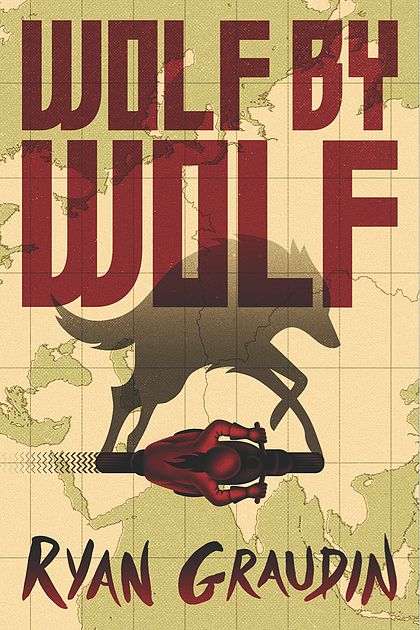
Wolf By Wolf by Ryan Graudin
Ten years have passed since the Axis powers won World War II. To commemorate their victory, each spring, Germany and Japan host a motorcycle race across their controlled lands, the racers drawn from the best of the Hitler Youth and Japan’s elite racing camps.

Only one girl has ever competed in the race, last year’s victor, Adele Wolfe, darling of the Third Reich and particular favorite of Adolf Hitler. But this year, someone else is racing in her place. A survivor of the death camps, Yael can skin shift, thanks to the years of Nazi experimentation performed on her as a child. Using Adele’s face as her own, Yael enters the race, determined to win and kill Hitler at the victor’s ball.

But navigating the road is only one of the dangers she’ll face. Adele has plenty of blood on her hands from last year’s race, and if Yael wants to complete her mission, she’ll need to answer for Adele’s crimes.

What Makes It So Good

Anyone following my blog knows that I’m a huge fan of The Hunger Games trilogy. Those books prompted a huge wave of follow-the-leader novels, all tackling the topic of dystopic futures and life-or-death competitions. The trend was so pervasive, that about three years ago, publishing got so sick of dystopic YA that it’s kind of shocking that this book wiggled through.

But Ryan Graudin hit on a way of writing a dystopia that didn’t feel derivative or played out. Instead of this being some futuristic society that keeps its people in line with laser guns, it’s the most famous dystopia that ever existed – Nazi Germany. Of course, Graudin isn’t the first person to write an alternate history where the Nazis won the war. Anyone who reads comics knows that superheroes can’t get enough of punching Hitler in the face. But her take does feel satisfyingly unique. The inclusion of the race gives the book structure, keeps the pace brisk and – yes – seems like something else Graudin picked up on from the success of The Hunger Games. We YA readers do like our cutthroat competitions.

A lot of people who dislike The Hunger Games do so because they don’t find it plausible. You can’t say that of Wolf By Wolf. The scenario isn’t that far off of what could have happened. Adjust when Hitler planned on launching Operation Sea Lion, and he very well could have won the war. Graudin has done her research, and it shows. From the Zundapp motorcycles to the fragmented remains of the USSR to Yael’s skin shifting ability, the details real and imagined blend together seamlessly.

Yael’s relationships are also fascinating. She comes into the race predisposed to hate all the Hitler Youth boys, but as she’s forced to interact with them, she can’t deny that there’s something more to each. Though none of them have survived the horrors she’s endured, they’re also victims of Hitler’s reign.

The writing itself is sharp, weaving together flashbacks of Yael’s past with the race, allowing the reader to come to know the force that drives her. The prose is at turns heart breaking and brutal, but I never found it so dark I didn’t want to read on. Over all, a fantastic read. Get on the fan wagon while there’s still room, because a sequel is coming out this fall.

What Could Make It Better

I had very few quibbles with this book, but I can think of a couple things that might bother a different reader. One of the strengths of The Hunger Games was that Katniss herself had a very distinct and understandable personality. Within a chapter or two, she made sense to you and even if you hated her, you could still easily describe her personality – sour, withdrawn, but also determined and wily.

You can’t say this of Yael. Yael is a blank slate, a girl who is so wrapped up in her mission, she has very little sense of herself and her own likes or dislikes. For most of the book, she’s impersonating Adele and trying to think of what Adele would do, rather than what she, Yael, would want. This can get frustrating.

Actually, it could have been much worse. A flaw like that would destroy most books. Video games make use of this trope all the time, giving the player a generic, chiseled dude to play who doesn’t interfere with the player’s ability to imagine themselves in the role of hero. If there’s no personality complicating identification, it’s easy to do. But this style of game isn’t typically known for gripping stories. It’s a sacrifice of story quality for immersive experience.

While video games can justify this choice on occasion, it’s harder with books. Yet I’ve read some YA where the author seems to purposely make the heroine as indistinct as possible so that any girl reading can imagine herself into the story without much problem. And yes, they can be immersive, but they can also be shallow. This is where your Bella Swann style heroines come from – girls who seem like shells rather than real people. And Yael is a bit of a shell.

But for this book, it was absolutely the right choice. Yael is a blank slate character because she is LITERALLY a blank slate. One of the saddest and most telling lines of the book comes early on when Yael admits that she can’t remember what her own face looks like. She was too young when the experiments started and took away her original appearance. So yes, Yael doesn’t really know herself and doesn’t seem certain of what she wants. But this bothers her. A lot.

In a certain way, Yael could be any girl out there. We all get to imagine ourselves racing motorcycles and hunting Hitler. That’s her gift and her curse. But by the end of the book, I think Graudin does a decent job of showing that even if her identity has been stripped from her, she isn’t every person who has ever lived.

Young Adult literature is often characterized as being a genre focused on “coming-of-age” and knowing yourself. Yael provides a fascinating entry point into a very universal theme. Most teenagers feel like a blank slate in some sense, one that’s fighting to know itself and grow up. Yael shows just how powerful an identity can be, whether it’s your own or one you stole from someone else. Besides, one of the most enjoyable parts of fiction is getting to imagine ourselves in someone else’s skin, and Yael gives us so many people to be.

Monday, July 4, 2016

SILK SONG: A New Story By Emily Paxman

NEWS NEWS NEWS NEWS NEWS!!!!

So you might have noticed I have news.

The short version of the announcement is that I've finally decided to share some of my own, original fiction with you through my blog - or blogs as the case now happens to be. You can find the new story, called Silk Song, right here! The long version has a few more details.

Blogging and the World of Self-Publishing

For a while now, some of you lovely people who read my blog have asked if you can read some of my REAL writing. You know, that stuff I talk about all the time. In particular, people have wondered why I don't post more fiction on this blog.

There are a few reasons for that, the chief being that anything posted on the internet is - for all intents and purposes - published. It might not be on a bookshelf and it might not be making me any money, but regardless, if it's online and searchable, it's published. And on the whole, my goals have been to get my fiction published more formally with actual presses who can help me distribute, promote and make money off it.

Most people can understand these concerns, so the follow up question tends to be something along the lines of: what about short stories? Wouldn't those work well on a blog? And wouldn't those be easy? There's kind of an assumption that short story writing is easier than novels and so if I published a short story here, it wouldn't be as much of a sacrifice. And on top of that, it might even be worth something to me if I can use free stories to grow my audience, so that there are people interested in my full length novels when they do come out.

I can't say if I agree with these sentiments or not. Back in my Master's program, I certainly had friends who found short story writing easier than novels and a few of them did publish work for little or no pay. But even in these cases, they were typically publishing their short form work with literary magazines - both in print and online - which provides both legitimacy and increased visibility to the work. So it's not as if the people I know who produce good quality short stories are simply blogging those willy-nilly. They place them carefully and use them to build their own careers, which may be commercial fiction or may be more closely tied to academia.

But the more important objection to posting short stories on this blog is this: I don't write them. It's not for any terribly complicated or idealistic reason. I just don't get ideas for them. During my undergrad writing classes, I struggled to come up with pieces short enough to satisfy my professors. I find it much easier to structure a novel than a short story, not because novels are easy, but because they work better for me and the ideas I have.

In fact, the only short form ideas I get tend to be for... essays. Which you'll notice are what I write for this blog.

Beyond Emily's Stories

I've kept this blog for a couple of years now. It's a small, cozy space where I get to talk about stories and why I love them and where, to my delight, I get to hear from all of you too. I started this blog hoping to spark conversations with my friends and strangers about the books I love. And believe me, it's been a joy to do it. When someone asks me what sort of books I think boys might enjoy or when I find out that one of the books I reviewed has become a new favorite for someone, I'm so touched. And the fact that people are now asking to see more of my work is incredibly exciting.

For a while, I've wondered if I couldn't do something more here. I've had an idea for a new project involving my blog since September, but I was hesitant to put it into action. I knew it would be a large undertaking, and before I committed myself to it, I wanted to make sure I was consistently posting at least once every month, preferably a little more. Since then, I've made an effort to be more diligent and I've also branched out in terms of topics I cover. It's been wonderful to be more involved here, and so I finally feel ready to start my next big project...

Introducing Silk Song

When I considered posting my work on-line, I knew it needed to be the right sort of story and in a way that worked for me. These were my main concerns when I considered posting fiction:

1) I don't get short story ideas. It would need to be a novel (in some sense).
2) My favorite thing about blogging is the interaction and conversation with my readers. I didn't want to post something just to get "likes" or "dislikes" on it. That's not very interesting to me.
3) It needed to be something that I could throw my passion behind and that represented my honest work and effort. And yet still somehow be something I didn't feel so proprietary of and attached to that I wanted to save it and try getting it traditionally published.
4) It needed to be fun.

With these things in mind, I began planning SILK SONG. In some ways, it will be very representative of what I write. It's a Young Adult fantasy novel about a girl who must survive exciting things. It will be posted in short chapter/scene length installments on it's own blog. I considered placing it here, but I felt that since it's an independent story, it needed room to breathe. I didn't want the story's feed clogged up with my book reviews and ramblings about the Hunger Games and I didn't want this blog to lose its focus on the more academic side of writing.

But most importantly, it will also be highly interactive!

SILK SONG is what I like to call a vote-your-own-adventure novel. At the end of each installment, readers will be given a chance to vote on what happens next, from a list of options I provide. Whichever option garners the most support, that's the path the story goes down! I'll write it into the next section and let you see the consequences of your decisions! In addition, I will be reading whatever comments people make, so if I *happen* to like a suggestion you've made for the story in the comments, hey! You never know. It might turn up later.

You can always find a link to SILK SONG from the menu at the top of this blog, as well as right here. The first chapter is already posted, so feel free to dive in! If you want more details about the story, explore the story's blog, which has an "about" section and "FAQ" already. For those who are curious, my current definition of "Frequent" for "FAQ" is "my roommate mentioned this when I pitched the idea to her." Thank you, Miranda.

I'm really hopeful you'll all enjoy the new project. If you do, please share it with your friends, especially if they are/are parents of teen-agers. And if you're liking it yourself, you can subscribe to the blog so that your email lets you know when a new installment is up. Your support means a tremendous amount to me and let's face it, the poll will be more fun with more people voting in it.

Once again, thank you for reading and following along with me. And I hope to see you all over at SILK SONG. It's gonna be awesome, guys. I can feel it. :)