Tuesday, February 23, 2016

Stand Still. Stay Silent - A Book/Web Comic Review

Stand Still. Stay Silent by Minna Sundberg.
The Rash illness spread too quickly for anyone to develop a vaccine or learn its true nature. In its wake, nearly all of humanity seems to have been wiped out, most of the known survivors residing in Iceland, which closed its borders at the beginning of the plague. Pockets of civilization exist throughout the other Nordic countries, but for the most part, the world is Silent.

90 years after the initial devastation, a team secures government funding to send a party to mainland Denmark to investigate what remains of the Silent World. Woefully underfunded, the team is staffed only by those desperate enough to work for little pay.

There's Tuuri, a Finnish scholar, mechanic and all around handy-gal who just wants to see the world.
Lalli, the team mage and tracker who let his cousin Tuuri drag him into this.
Emil, a reluctant soldier, this Swedish pretty boy comes from a once wealthy family that fell on hard times.
Mikkel, the Danish cook/medic who has an impressively long resume (mostly because he can't hold down a job).
Sigrun, the bull-headed, thrill seeking Norwegian Captain who can't turn down a challenge, even if might kill her.
And Reynir, an Icelandic farm boy who probably should have never left home.

Oh and there's cats. Lots of cats.

What Makes it So Good

I've been wanting to review a web comic for a long time. They're one of my favorite art forms and one of the primary reasons I'm a total internet junkie. In addition to that, most of my readers are not necessarily web comic aficionados. For those people in particular, I would LOVE to introduce them to the wonders of the medium, because it's incredible what's being made right now and put on the internet for free by these artists.

But up until now, I hadn't found one that met my rather extensive list of criteria. It was as follows:

1) A Long Runner. I wanted to highlight something that had enough story down that I could read through a sizable chunk of material and, therefor, give a fair appraisal of it. With a backlog of just under 500 pages, Stand Still Stay Silent (or SSSS, for short) has a good chunk to get you addicted, but isn't so long it intimidates new viewers.
2) A Frequent Updater. Because most Web comics are self-published, self-directed projects, it really varies how much time their artists have to devote to their work. Since the expectation is that the work is available for free, it can take a while to build a large enough fan base that the creator can derive a living through advertising/ merchandise/ print runs/ kickstarter/ patreon etc. While this is something I don't mind putting up with, for those new to the genre, I wanted their first experience with a web comic to be of one that updates dependably. SSSS keeps a brisk schedule of one new page per week-day which is incredible, given the level of detail on each page. This woman clearly draws faster than I do.
3) Relatively "Clean" Material. For the record, there are some "adult" comics I've really loved, but because I blog primarily about children's books and YA novels, I wasn't interested in highlighting an overly gritty or crude piece. Most web comics are about college-aged characters, and that often leads to raunchy material. SSSS focuses more on friendship, adventure and mystery, even with a cast that falls around the 19-30 age range. I'd rate it somewhere between PG and PG-13.
4) Visually Appealing. All skill levels exist on the internet, and all sorts of people make comics. With some, the art can be pretty rough, but if the story is still good, I'll stick with it. But again, as a "gateway" comic, I hoped to find something with a high level of polish. SSSS is so freakin' gorgeous, I'm kind of worried people will walk away thinking this is the norm. The design is so incredible, it's worth reading just for the art.
5) Story Focused. Web comics run the gamut and I love so many of them. Many people are familiar with things like XKCD or Dinosaur Comics which focus on the short-strip, joke-a-day style of comic. You can *kind of* piece together character descriptions for The Stick Figure With the Top Hat or T-Rex, but with both, the jokes and the words are the primary concern. I'm not as qualified or interested in reviewing those. SSSS excels in it's story telling, and it's that aspect I'll focus on for the rest of the review.

Story telling in web comics works differently from how it does in novels. As a rule, most web comics have more open-ended storylines; the kind that can be added to over the years, as the author gets new ideas. They're a bit like TV, in that the hope is that they can run for a long time and continue to build. So structuring them so that each episode feels satisfying while also leaving the door open for new adventures is a tricky balancing act.

SSSS does this very well. The expedition plot line could, theoretically, go on forever. But at the same time, there's a real sense of progression from one chapter to the next. The world opens up beautifully, and the reveals are well timed. It really is one of the most thoughtful portrayals of world-destroying apocalypse I've ever read.

The cast is also delightful. Every character rings as distinct and their voices all sound very different - often quite literally. One of the joys of this comic is how much of it is about language and culture. The author is half Swedish/half Finnish, and you can see how deeply familiar she is with the intricacies of all the Nordic languages and mythologies. The cast, being multinational, do not all speak the same languages, and so Tuuri often has to translate between group members. It's super fascinating, reading this, because as the fantasy unfolds, you can't help learning things about Scandinavia.

The use of folklore is also fantastic. Again, you can feel how deeply lived and researched this comic is. Monsters of Norse times have been given a futuristic twist and spiritualism of early Finnish peoples guides the mage culture. On top of that, she's added variations in the levels of technology that survived in the various countries, so that the whole world and cast feels wonderfully diverse.

I really can't recommend this enough! And it's FREE TO READ! Click the Link now!!!!

What Could Be Better

While I love the characters, they are (at this point) a little lacking in motivation. Now don't get me wrong, each person has their own reasons for being on the expedition. But with the exception of Emil, who has family and a fallen heritage back in Sweden, we don't really get the sense that anyone has really given anything up. Or even totally understand what each character needs to learn.

That being said, I'm optimistic this stuff will develop over time. A recent flashback helped give some more depth to Lalli, and each of the characters is clearly flawed, so surely they need to learn SOMETHING. The reality is, it's tough in a web comic to foreshadow your cast's ultimate development, because the overall length of the piece is often undefined. But I don't think this gets the comic off the hook entirely. I've read a few comics that do a very good job of at least telling you what to watch out for during the first few chapters.

Right now, the primary concerns of the story are WILL THEY SURVIVE and WILL THEY LEARN THINGS THAT HELP THEIR PEOPLE and for now, these are good goals. I'd just like to see some more character dependent goals mixed in, because I like the characters so much. In particular, I adore Sigrun, who we currently know the least about, backstory wise.

Another potential weakness is the super long prologue, which gets a big solid MAYBE from me about whether or not it was needed. I loved the prologue. I loved the foreshadowing. I loved going back and figuring out which main characters were descended from which prologue people. But it was also really long and it took me a while to figure out that I wasn't reading about the main cast. Oddly enough, the prologue is actually FAR more character driven, as it shows a diversity of reactions that are happening around the region to the news of the Rash illness. All those stories are justified purely in terms of the emotions they convey. Probably why I liked it so much.

Final Verdict

For anyone who has wondered about web comics/graphic novels or for anyone who already loves them and needs something new to read, open up Stand Still Stay Silent NOW! It's beautiful. It's interesting. It's charming. It takes a lot of well known tropes and makes them wonderfully new, through the power of language, culture and research.

And should a Troll happen across your path, remember the best way to survive - Stand Still. Stay Silent.

Thursday, January 21, 2016

Scene VS Chapter: The Units of Pacing Fiction

Recently, I've been swapping chapters as part of a critique group and, along with that, offering feedback on a few pieces of writing. As these things often do, it got the wheels in my head turning, especially in regards to one of the hardest questions any writer has to face:

How long is a chapter?

Some of you might already be thinking. "Emily, that's silly. There's clearly no set length. Some chapters go on for 40+ pages but others I've seen wrap up in a paragraph or two. How can there be a standard measure for how long a chapter is?"

In answer to that, you're right, there isn't a standard. At least not a length based one. Courtesy of Jerry Spinelli's Hokey Pokey, I can think of one book that had a completely effective chapter that was only one word long. But even including these outliers, there are some commonalities. And with that in mind, I am gonna do my darnedest to articulate them, for those who are interested.

Why are Chapters SO HARD?

A lot of the people who read my blog are foremost readers,  so it might surprise some to know that chapter length is a super common problem for writers, especially when starting out. By the time you're writing a novel, you've usually got an idea of where a paragraph ends or how long a sentence should be, but what about things that are larger than that? Or at least, usually larger than that. (Think again of Hokey Pokey)

This was also one of the hardest things for my professors in my Masters program to describe to me. We talked a lot about feeling where there was a natural break in the story, but not everyone has that preternatural feel for pacing. Some people feel the rhythm of paragraphs, or descriptions, but not the ebb and flow of a chapter. The fact that the length varies so much can make them seem especially arbitrary and confusing, and with little advice other than to feel the break, I can see why my classmates struggled.

Being somewhat lucky on this count, I did feel chapters. My writing has many weaknesses, but one thing I was consistently told was that I paced my stories well. On a larger, book level, chapters are the unit of your book's pace. You want, roughly speaking, for your book to read:

In Chapter One, THIS happens, and then that makes it so that in Chapter Two, THIS happens, and that totally forces Chapter Three to be about THIS!!!

A book can't showcase everything, so chapters are the dots on a connect-the-dots picture. They're the points that are enough for you to understand the story - to make the leap from one place to the next.

But enough metaphor. This is practically as bad as telling someone to feel the break, if not worse. (FEEL the dot, my child!)

Why I wanted to write about this is because I think I do know a concrete way of pointing to where (usually) a chapter begins and ends. I've seen people hint at this before, but since I can't think of another article to point someone to in order to back me up, this is largely my own thoughts. Of course, others have probably taken credit for similar ideas, but this is very much the Gospel According to Emily when it comes to writing. Take it as such, and hopefully, enjoy!

I'm going to start by talking about some parts-of-writing that are frequently discussed and agreed upon: Sentences and Paragraphs.


A Sentence is...

A single thought.

This is something frequently repeated by high school teachers and university professors the world over. Just because you CAN write a compound sentence doesn't mean you SHOULD. For example...

"Alison hated waiting for the bus in the rain and her father had a meeting at the bank that day."

...is technically grammatically correct, but it's not a good sentence because those two things have nothing to do with each other. The pieces joined by the word "and" should be relevant to one another, like...

"Alison hated waiting for the bus in the rain and could already picture herself smelling like wet dog for the rest of the day."

I still find this sentence a bit wordy and it could be broken up further, but I think you get the idea. The sentence is essentially about one thing: Alison hates how the rain makes her smelly. Trying to include anything more than that is beyond the scope of a sentence.

A Paragraph is...

A single idea.

Every first year university student has to grapple with this at some point in their education, as they try to make their writing intelligible, and the same principle applies to writing. For example...

"Alison hated waiting for the bus in the rain and could already picture herself smelling like wet dog for the rest of the day. She hoped her dad's meeting at the bank would go well for him, but the alignment of the crystal moon was causing minotaurs to attack banks today, so she was worried. Alison hoped Johnny from fifth period English would like her sweater."

This is a hot mess of, once more, things that have nothing to do with each other. Dad's meeting with the bank (or minotaurs) deserves it's own paragraph, if not more. It's a separate idea. Consider instead something that links together all the little thoughts (sentences) into a single idea...

"Alison hated waiting for the bus in the rain and could already picture herself smelling like wet dog for the rest of the day. She cursed herself for wearing a wool sweater, but it seemed like a good idea when she got dressed in the morning. She liked the way it hugged her curves and hoped Johnny might notice during fifth period English. Water dripped down the back of her neck, soaking her spine. Now the sweater didn't so much hug her chest as suction to it."

Now it's about one idea! There's a girl in the rain and she cares what a boy thinks of her, but oops! Things haven't gone according to her plans to make him like her, all because of the rain. The rain causing Alison discomfort is the underlying idea of the whole paragraph. If she moved on to worrying why the bus was late, that would be another paragraph. If she moved on to worrying about her most recent conversation with Johnny that is, again, another paragraph.

In great news, this approach to sentences and paragraphs also works for scenes and chapters. In both cases, they are single serving units. But of what?

A Scene is...

A single moment at a single location.

The champions of scene are not so much fiction writers, as dramatists. Anyone who writes theatre can tell you that when you change location, you change scene, so the set can be switched up. Also, if significant time passes within your location, you dim the lights to black briefly so that everyone knows you've changed scene. "Alison at the bus stop, Thursday" is a different scene from "Alison at the bus stop, Friday" and that's a different scene from "Alison at school, Friday."

In fiction, a lot of these distinctions blend together, because we're expected to transition. We show our characters board the bus BEFORE we show them at school, so that the movement between scenes isn't jarring. This transitional stuff is typically referred to as "exposition" and every novel needs some, but preferably, includes more scenes than exposition. Striking the right balance between the two is one of the great mountains every novelist must climb, but I'm saving that topic for another day.

The truth is, scene often is not something we point to through formatting. Scene formatting exists in theatre and screenwriting, but not in novels. We have periods to end sentences and line breaks to end paragraphs and page breaks to end chapters. Scenes lurk beneath that, forming a key part of story structure, but not as a function of grammar.

I describe all of this because I want to make one thing very clear: A chapter is not a scene. The opening chapter of the Hunger Games takes the reader first to the woods with Katniss, then back home to wash up, then finally to the reaping. Those are three separate scenes.

But a chapter also isn't a collection of scenes. Some chapters are only one scene long and yes, some scenes are multiple chapters long. In Harry Potter and the Prisoner of Azkaban, the Shrieking Shack scene starts halfway through Chapter 17, spans the entirety of Chapter 18 and finally finishes at the end of Chapter 19. Throughout that section, various people come "on" and "off set" but the time and location never change. It's all continuous action.

So if there is no correlation between scene length/scene density and chapter length, WHAT IS A CHAPTER?????

A Chapter is...

A single plot event.

Only one pivotal, plot driving thing happens per chapter. Plenty of "actions" might be taken by the characters to drive the plot forward, but the chapter is about one event. One choice that really matters. One revelation that rocks the world. One key thing you need the reader to remember. One event.

I talk about The Hunger Games a lot, and defend it as a great book. The reason why isn't because it's poetic or deep (though I like the writing and the themes resonate with me) but because it is a master class in pacing. Consider the first several chapters of the book and the "events" they are about (spoilers, of course):

Chapter One: Prim's name is drawn at the Reaping.
Chapter Two: Peeta's name is drawn at the Reaping.
Chapter Three: Katniss says goodbye to her family and Gale.
Chapter Four: Katniss travels to the Capital.
Chapter Five: Katniss is in the tribute parade
Chapter Six: Katniss meets an avox she recognizes in the Capital
Chapter Seven: Katniss goes through training and shoots at the judges during her evaluation
Chapter Eight: Katniss scores a high rating from her evaluation
Chapter Nine: At the tribute interview, Peeta drops the bomb that he likes Katniss
Chapter Ten: Katniss and Peeta share a tender moment right before the Hunger Games begin...

Do you see how it goes? There's only one really important thing to glean from each chapter, and each of these things move the plot forward. On top of that, each chapter typically ends with something that hints towards the next major event of the next. If you want to be taught something about pacing and chapter rhythm, I am not kidding when I tell you to reread The Hunger Games.

You'll notice that some of those "events" are very self contained, like the tribute parade, but others are more nebulous, like "travelling on a train" and "sharing a tender moment," but they are separate events for Katniss. Peeta isn't even finished his interview when he professes his love for Katniss, but that's such a bombshell revelation, it's separated out as it's own event.

Think of an event like a newspaper headline, rather than an "occurrence," like a parade. Often in the newspaper, you'll see the same story covered from multiple angles, because they all are relevant to understanding the overall story. You could almost think of these like chapters. Consider these potential headlines and what type of chapters they might be hinting at in their news story:

NEW SAFETY POLICY COULD IMPACT FARMERS ( the "sizing up the situation" event chapter, like the one we get when Katniss is on the train)
MODEL BETTY McPRETTY REVEALS ACTOR JOHNNY McHANDSOME AS BABY DADDY (revelation event chapter, like when the names are drawn at the Reaping or Peeta drops his truth bomb)
OLYMPIC GAMES COMMENCE IN VANCOUVER (actual "event" event chapter, like the tribute parade)
MOUNT VESUVIUS EXPLODES AGAIN (dramatic, plot event chapter, like Katniss shooting at the judges)

All of these things are "news" events and all get their own headlines in order to catch attention. A chapter works the same way, highlighting the most important events you need your reader to remember. Once you've moved on to a new, critically important thing, move on to another chapter.

The trick of implementing all of this is, of course, figuring out what your events are. What are the major things you can't have your reader missing out on? For everything they MUST know, give it it's own chapter. But don't cheat either. Remember that it's not enough to say "but they MUST know Alison's hair color!"  Chapter events need to advance the plot. That's largely what makes them events. Some might be more low-key, like the time Katniss spends with everyone on the train, but it's still essential for conveying her from one world to the next.

Scene VS Chapter

Let's consider the story of Alison and the bus stop. If we were organizing her story by scene, it might go a little like this...

  1. Alison waits for the bus
  2. Alison rides the bus to school but it is attacked by minotaurs but then her bus is saved by the Moste Handsome Boy with Eyes of Fire, who then disappears
  3. Alison and her busmates are sent to the school guidance counsellor to talk about the minotaur attack
  4. At lunch, Alison sees the Moste Handsome Boy with Eyes of Fire, but when she confronts him, he doesn't know who she is
This might look like an okay organization to the story, but would it actually break down into a smooth chapter guideline? I don't really think so. Chapter 1, Alison at the bus, would feel ridiculous separated out on it's own, but perhaps less obviously, Chapter 3 would also be a bit thin. The school guidance counsellor might prove an important character later on but there are more important things going on in this story than just a counselling session. Things that are getting a bit squished in Scene 2.

So what would this look like organized as plot events? I think it would go...

  1. On the bus ride to school, Alison is attacked by minotaurs!
  2. She is saved by the mysterious, Moste Handsome Boy with Eyes of Fire
  3. Alison discovers that the Moste Handsome Boy with Eyes of Fire attends her school!
  4. She confronts him, but he doesn't know who she is...
So what's changed? First off, Chapter 1 transitions into Scene 2 for the shocking minotaur attack. Then Chapter 2 concludes the confrontation, with the focus framed around the rescue by the Moste Handsome Boy with Eyes of Fire. Chapter 3 would pick up in the same place as Scene 3, but instead of focusing on the counselling, it builds towards another revelation. It also gives you an idea of what that counselling session might be ABOUT. Alison's guidance counsellor could be repeating that minotaurs aren't real to her, which she almost believes... until she sees Moste Handsome Boy with Eyes of Fire. Once again, we would be partly through scene 4 before the end of Chapter 3. That allows Chapter 4 to be about the confrontation and Alison's paranoia that Nothing Is What It Seems.

One last note - you'll notice that each chapter tends to end right as the main "event" occurs. This is not an accident. Chapters should read like a mini story in and of themselves. They have a beginning that sets up the ending, and that ending is where the impact goes. This both makes them satisfying, single servings of your book and gives the story a "page turning" quality. How can you not read Chapter 4 after you've just discovered Moste Handsome Boy with Eyes of Fire is RIGHT HERE at her school????

Of course, this story isn't real. Yet. But you can do this with a real story too. Sitting down and separating out your plot events from your scenes will help you sculpt your story into a more complete narrative, one where each thing really does build towards the next.

So go find your events. Get them in order like dots on a page, and you might just find you can connect them to build a whole picture.

Tuesday, December 15, 2015

Book Reviews - Bone Gap


Bone Gap
Seventeen-year-old Finn O'Sullivan is used to losing people. Two years ago, his mother picked up with an orthodontist and moved to Oregon, leaving him and his older brother Sean alone in the sleepy town of Bone Gap, Illinois. So when beautiful, enigmatic Roza disappears on the O'Sullivan boys too, people assume its nothing more than her turn to move on and leave the boys to their lonely lives.

Only Finn knows that isn't what happened. Roza was kidnapped, right in front of him, but when he can't provide the police with a helpful description, her captor gets away. When the searches turn up nothing, everyone decides this is just some delusion of his. Hasn't he always been the town nut-job? The kid who won't look other people in the eye? Worst of all, Sean seems to believe them. With his older brother retreating deeper and deeper into anger and depression over Roza's disappearance, Finn's at risk of losing the only person who has stuck by him his whole life - Sean.

Meanwhile, in a strange suburban house where the lamps are fused to the floors, Roza wakes up. And she's trying to figure out why Sean hasn't come to save her.

What Makes it So Good:

You might have noticed it's been a while since I did a straight up book review. There have been a couple of reasons for that, but probably one of the biggest is that I tend to read and write in cycles. Good books turn me into an anti-social zombie who won't emerge from my room or sleep until I have consumed the very brains of the book. I don't get anything done on a reading binge, other than reading.

Similarly, when I'm writing heavily, I don't do much reading. I usually try to stay focused on the task at hand, instead of letting other author's characters compete with mine for attention in my brain. So since the past fall has been pretty heavily writing based for me, there hasn't been a lot of reading going on. (Don't worry, I read a lot in the spring. Just didn't find much I wanted to review). But with the end of the year comes end of year best book lists, and those are just plastered with tempting covers and blurbs. One that I saw on a few already was Bone Gap, and with it's intriguingly minimalist bee themed cover, I was curious about it. The other day I went to the swimming pool and while there, popped in at the adjacent library. And wouldn't ya know it? Bone Gap was sitting right on the shelf in the YA section. So even though I was leaving for Christmas holidays in only a week, I picked it up. And wow, am I glad I did!

Bone Gap has all the markers of an award winning, best book. It's a coming of age story with a hint of magical realism, an unreliable narrator and beautiful, evocative writing. This pretty much describes 90% of the books that make it onto the Printz award lists.

Most importantly, the characters in this book are amazing, especially Finn. The book is told through alternating third-person points of view, and I was always excited when the narrative circled back to Finn's life in Bone Gap, where he was odd but oh, so endearing. Along with him, there was his over principled, always angry, self-sacrificing brother Sean. Sean treads the line between obnoxious-twat-who-won't-listen-to-the-main-character and broken-nice-guy-you-just-want-to-give-a-hug really well. One step too far in either direction would have unbalanced the story, either by making him unlikable or making him outshine Finn, who rightfully leads this story. But there's also the lovely Roza, the bizarre Old Charlie Valentine and, my other favorite, the crabby girl who tends bees who tries to convince everyone to call her "Petey" instead of "Priscilla" (they won't).

The mystery elements of the story are also handled well, as Finn gradually reveals the circumstances of Roza's arrival and departure. This is one of those books where once you know what's going on, you suddenly realize how well the previous chapters reflected the central mystery.

I also have to give this books props for deconstructing the fairy tale myth of the helpless woman who waits to be rescued rather well. Roza wants to be saved (what rational person wouldn't hope someone was looking for them after they are kidnapped?) but the people of Bone Gap seem to be too broken to find her. So desperately, she tries to find her own way out of the mess she's in.

The book is also fascinating in it's treatment of beauty and what it means to truly see a person for who they are. Roza has been quantified by her outward appearance her whole life. Petey is a girl that the local bullies all tease about being a butterface. And Finn, clueless as he is, doesn't seem to understand why he's an object of affection for half the girls in school, while his best friend Miguel can only look on in envy.

With all these different elements at play, it's easy to see why Bone Gap is such a layered, textured, satisfying read. This book has something for everyone, performing one wicked balancing act to keep all the threads going. This couldn't have been an easy book to map out and write, so I salute Laura Ruby for her incredible work here.

What Might Make it Better:

My last compliment to the book is actually going to lead into my one criticism of it. There is a LOT going on here. Like, a LOT. And it's arguable if every thread is necessary or if every element is executed equally well. Nothing is done badly, but I'm not sure that's the same as saying that every scene earns it's place, considering the strength of the other elements.

In particular, I do have to pick on Roza a little. She's a fun deconstruction of the helpless heroine, but in being that, she occasionally sticks her toes into the camp of "Mary Sue." For those who are unfamiliar with the term, a "Mary Sue" it used in fiction to describe two related, though slightly different types of characters. The term was first used in a very old Star Trek fanfic, that was purposely making fun of bad fan fiction that existed as nothing but a wish fulfillment strategy. It featured a character known as Ensign Mary Sue, who was unbelievably amazing at her job, was beautiful beyond reason and had both Kirk and Spock in love with her as a result. These types of characters are common in fanfic, but also creep up in regular fiction. For instance...

1) Mary Sue can exists as an author insert character, there to play out the fantasies of the author. Especially common in fanfic (ie; the character gets to have a romance with the target of the author's choosing). How does this manifest in regular fiction? Many would say you need not look further than Bella Swan from Twilight. It's been noted that Bella's physical description, from her brown hair and eyes to her widow's peak, mirrors the appearance of Stephanie Meyer in suspicious detail. But on the whole, these kinds of obvious "author inserts" are uncommon. I don't think this was at play with Roza.

2) But a Mary Sue can also refer to a character who is too perfect and is created to be adored by everyone else. Their flaws, when inspected, don't really seem like flaws. And Roza kind of fell on her face here. I struggled for a while to think of ANY flaws Roza has. She's kind. She's feisty. She's clever. She'd never be vain, no matter how beautiful she is. In fact, about her only flaw is that she isn't very trusting... except that flaw is a direct result of how beautiful she is. She doesn't trust, because people have done her dirty in the past and refused to treat her like a normal human being because she is SO beautiful! Like, c'mon, man. I'm not saying that isn't an interesting characterization, but it doesn't count towards your "character flaw" tally. But Roza pretty much never says or does the wrong thing. She's morally untouchable.

I generally liked the character, and I liked what Laura Ruby was trying to say with her, but she never seemed as real as Finn or the other citizens of Bone Gap. On the whole, I would have found her story line more compelling and her thematic relevance more stirring if she felt a bit more realistic. In a lesser novel, this could have seriously impacted the overall book, as her part is by no means small. But strong prose can make up for a lot, and so on the whole, I swallowed her. There were worse sins than trying to get away with someone as magical and wonderful as Roza, especially when Ruby was feeding you an extra dollop of honey to make the story go down easy.

Overall, I highly recommend the book. The weaknesses aren't too weak and the good stuff is just so good, that it wouldn't be worth missing out on. It definitely earned its place as one of the best books of 2015

Tuesday, December 8, 2015

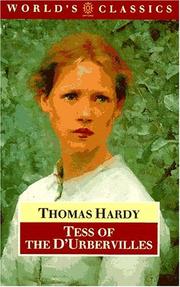
The Greatest Book I Ever Hated: Tess of the D'Urbervilles


A few weeks ago, I talked a little about the two basic functions of art, at least how I see them. Broadly stated, art (and by extension, literature) can be viewed as having two primary and often conflicting goals:

1. To entertain us and provide an escape
2. To unsettle us and prod us to action

If you want to read more of the initial discussion, go here. In that post, I talked about how most books straddle the line between escapism and unsettling content,  but then promised to talk about two books that had a profound impact on me, largely because they didn't bother walking the tight rope. 

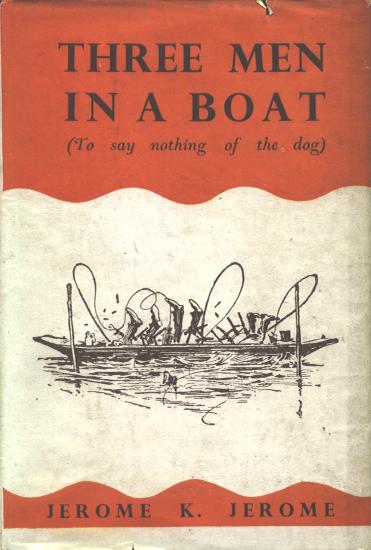
Following that, I posted about one of my favorite escapist reads ever, Three Men in a Boat (To Say Nothing of the Dog). This book helped me through one of the worst reading slumps of my life and taught me a great deal about how to make reading an enjoyable, lively experience.

Today, we are not discussing that book. Instead...

Gotta admit though. Love this cover.
THE CONTEXT:

I can't think of a book I liked less than Tess of the D'Urbervilles. While Three Men in a Boat is largely silliness to the exclusion of any kind of hard-hitting content, Tess is hard-hitting content to the exclusion of anything that reminds you of happiness or why life is worth living. I read this book in my final year of high-school, because no one gets through high school without reading at least one novel they loathe. I loved The Great Gatsby and so Tess seems to have been where I paid my dues.

When I started this blog, I made myself a promise. This blog would be about celebrating good literature, rather than ripping on the stuff I dislike. Of course novels are still open to literary criticism here, but one thing I learned in grad school was that my own opinion really was just that. An opinion. Books I hated were loved by other people. My taste was not the definitive measure of quality. So why am I devoting an entire post to a book that, frankly, I cannot stand?

Reason #1: The author of this book is long dead and so I'm not terribly worried about how Thomas Hardy will feel because I did not like his book. No one will @ this post to him on Twitter. He can go on blissfully decomposing without ever knowing I hated his work.

Reason #2: In fairness to Thomas Hardy, his poetry wasn't half bad. 

Reason #3: I dunno. Maybe I'm not as much of a happy, positive, person as I'd like to think. Maybe I have some bile in my mouth that I need to spit out. 

Reason #4: I don't actually contest that Hardy was a great writer or even that Tess is a good book. I couldn't have hated a book this much unless it had some kind of power behind it. One of my professors once told us that she chose books for her classes that she knew, at the least, would incite a response. She couldn't guarantee that we'd like everything we read, but she could stoke the fires of discussion. Tess is a perfect example of that philosophy. Hardy himself clearly wanted his reader to respond and in that he was very successful. I'm not sure "enjoyment" was even on his radar.

Reason #5: A couple months ago I had a terrible realization: The novel I am working on right now was at least, subconsciously, inspired by how scarred I am from reading this book.

Let's delve a little deeper into those last two points, shall we?

AN INTENTIONALLY HORRIBLE STORY - SPOILERS!!!!!! I DON'T CARE IF I SPOIL THIS BOOK!!!!!

While not often repeated, the full title of the book is actually Tess of the D'Urbervilles: A Pure Woman Faithfully Presented. That in itself is an incredibly bold assertion, especially when it's publication date, 1891, is considered. The Victorian Era is not well known for leniency when it came to who could be called a "pure woman" and Tess's life is filled with instances that would have spoken to impurity. 

As a young girl, she's sent off by her family to live with a rich, distant "relative" who sexually assaults and eventually rapes her. (Note: Hardy never uses the word rape, which isn't surprising, since definitions were shady at best back then. Consent wasn't a Victorian Era strong suit, but to modern audiences, she's asleep and a dude comes at her. It's pretty hard to mistake.) She gives birth to a child out of wedlock, whom she names "Sorrow." The baby dies without baptism and when Tess begs the parson about the state of her son's soul, he pityingly informs her that the child cannot enter Heaven.

This shakes her faith, and when she meets a young, handsome intellectual by the name of Angel Clare, she decides to embrace a life of skepticism. She works on a dairy farm and this is the closest Hardy gets to letting her be happy. She and Angel fall in love, but it's not until their wedding night that Tess has the nerve to tell him about everything that happened to her. And like the upstanding gent Angel is, he promptly abandons her. 

Look, I could go on. Suffice it to say, this story amounts to Angel coming back, Tess finally getting revenge on the man who ruined her and death for our heroine beneath the pagan monuments of Stonehenge. I gotta say, if you have to die, Stonehenge is the most rock n' roll place to do it, so we can give the book that.

Actually, I can give the book it's most important element, and that's Tess herself. Start to finish, I liked her. She's smart and fiery and ultimately, a very principled person. That wasn't to say she lacked flaws either. Hardy never cheapened the story by making her perfect. But she was a pure woman, faithfully presented. We were very different people, but I empathized with her tremendously. I wished the world had been kinder to her, yet at the same time, I admired Hardy's unflinching portrayal of her life. It was like Hardy took a look at the way poor women were treated and abused around him and went, "wow, that sucks. I should write a book about this." Not many men of his time would have seen the world so sympathetically through the eyes of a girl like Tess.

SO... WHY DID THE BOOK ACTUALLY FAIL?

The problem is, there is another main character in this novel who is not Tess and his name is Angel Clare and he is the biggest nose wipe in the history of literature. Like, I just opened the Wikipedia page to double check a few details in this post and went "For the love of milk! WHY IS ANGEL SO HORRIBLE????" I'd forgotten about the part where, on their wedding night, he confessed to also not being a virgin. And yes, he still proceeds with the abandonment because he's not going to tolerate this non-virgin nonsense in his wife. (Remember, too. Because rape.) HA! WOW! What an upstanding citizen!!! No wonder our heroine loves him!!!!!

Maybe he was sympathetic back in 1891. I don't know. Maybe his hypocrisy and self-righteousness didn't sting so badly. But the truth is that the ruin of Tess belongs not just to the novel's villain, but also to Angel Clare. I don't know if I would have minded this if Hardy hadn't expected me to forgive him at the end. (Did he? Did Hardy want me to cheer for Angel consoling Tess's younger, still living sister? GROSS MAN!!!!) I've heard many people say that Delores Umbridge might just be the most awful, hateful person in literature and while they may be right, it still stands to reason that Angel Clare is worse to read. Why? Well, because there's a kind of pleasure in hating a villain. Hating a hero, I find, just makes you hate the book. 

The novel, however, is a classic, and despite what high school reading might make you believe, most classics are considered to be what they are because someone liked them. So maybe Angel didn't ruin the novel for every reader like he did me. Maybe for some people, he was part of the underlying "truth" of the work. I'm not here to argue that he isn't a realistic character. He's so banally realistic, you'll find yourself seeing him everywhere you look. But he's unlikable. Coupled with that, the book is also very bereft of hope. The closest it gets to a glimmer at the end is Angel walking off into the sunset with Tess's sister which, I'm sorry, DOES. NOT. CUT. IT.

I mentioned in an earlier post that I found Jimmy, the protagonist of Margaret Atwood's Oryx and Crake, to be unlikable, but the book itself somehow managed to portray the end of the world, yet still gave the reader a taste of hope. I'm not convinced you can have it both ways. Hamlet is a somewhat hopeless tragedy, but I love it because I love Hamlet the character. You get one or the other:

Hopeless ending? Better give us someone we want to grieve!
Unlikable central protagonist? Better be something positive that justifies our effort spent reading this book!

Uggghhhhhhhh.... Angel Clare. I feel like I need to wash my hands just from typing about the guy.

THE BOOK THAT NEVER LEFT ME

I'm writing a book right now about a girl struggling to navigate through a world dominated by men. It's a historical fantasy and takes place in a time period just a little before the Victorian Era. She's a quiet, fast thinking girl who is largely underestimated by the world around her. Eventually, she meets a pompous, self-important man that provides her a great deal of trouble when he begins to pursue her romantically. 

For a long time, I felt like my heroine's name was too derivative of something, but I couldn't put my finger on what. I kept flipping through other Young Adult novels, trying to figure out whose name I'd stolen. I wanted to change it if it seemed too closely tied to some fad out and about right now.

I've been working on and off on this project for a couple of years. It's been my primary work-in-progress since September. Only a month ago it hit me.

Her name is Tessa. I'm not changing it.

Now, don't get your knickers in a twist just yet. No, I am NOT rewriting Tess of the D'Urbervilles. I would not put the world through that again. But some deep seated part of me can't handle Tess dying under Stonehenge. Some part of me needs to see that girl get a happy ending. Or... at least a happier ending.

So I'm going to write her one. 

With grudging humility, I guess I have to say thank you. Thank you, Thomas Hardy. Thank you for writing TessYou upset me. 

But you also inspired me.

Wednesday, November 25, 2015

Emily and the Chapters Christmas Flyer: A Holiday Tale

Guys... Do you realize what day it is?

IT IS EXACTLY ONE MONTH UNTIL CHRISTMAS DAY!!! 


It's no secret that I am a big into Christmas. I love everything about it, even stuff many people can't stand. I love the stores playing Christmas music on loop! I love the over abundance of sweets and chocolate! I love the mess of wrapping paper on Christmas morning! I love how busy the malls get right before the holiday! I love the billions of flyers that show up in your mailbox, advertising STUFF STUFF STUFF to BUY BUY BUY for all the people in your life!

This year, I got especially giddy when I saw that the Chapters/Indigo flyer had arrived, and was even happier when I realized this one was aimed at kids. It even included stickers. STICKERS! Oh, how I envied these children who got to select their favorite books using stickers with tantalizing phrases like "I WANT THAT" and "TOP PICK" printed on them! I opened the flyer, eager to see what books were being promoted to kids and teens this holiday season.

And then...

The Chapters flyer was about twenty pages long. Six pages were devoted to books. Six. SIX!!!! That's one spread for picture books, one for middle grade, one for teens. Everything else was LEGO, American Girl Dolls, Star Wars merchandise and bug-eyed animals. (Serious question: why do all stuffed toys have grapefruit eyes? Man, I hated this toy design as a kid and I STILL hate it!) I closed the flyer feeling a little betrayed that the one major bookstore chain still standing in Canada had put out a Christmas flyer that was only 30% books. (For those of you playing along in the USA, Chapters/Indigo is almost the exact same as Barnes and Noble. It even partners with Starbucks.)

First off, I did expect some toys. It's no secret that Chapters has diversified. When you enter the store these days, you have to wade through a sea of brick-a-brack and monogrammed towels before you reach any actual books. The kids department is no less, um, conflicted? There are games and puzzles and Star Wars (sooooo much Star Wars) and scented erasers and light-up bouncy balls and guys, this piece will go on forever if I list everything that is NOT books that is present in Chapters.

And on the whole... I'm okay with that.

This might seem kind of odd given my previous rant, but hear me out: I love bookstores. I love them so much, that if they have to meet their margins by selling other stuff, I am okay with that. Online book purchasing is eating the traditional brick-and-mortar bookstores alive, and most of the ones that are still standing are there because they have a selection of coffee mugs. If Betty Buysalot picking up a laughing Buddha statue while she waits in line at the check out keeps them in business, then by all means let Chapters keep their Not-Books sections. 

But of course, my comfort with them doing this is somewhat dependent on books being their primary purpose, and the Christmas flyer shook my faith a little. When I'm in the actual store, I still feel okay. There are shelves full of great books, including smaller time authors who want to have a fighting chance to sell their stuff. So don't count Chapters out. In fact, don't count out pretty much anyone who sells books!

In light of all this, I have decided, for the Holiday Season, to compile a few "Emily Rules" for buying books and supporting bookstores this year! Above all, make books a part of your Christmas this year, especially if you've got kids and teens on your list. With this in mind, I give you.....


The Emily Paxman Rules For Having A Splendiforous Christmas Season! 

1. Buy Books
Hooray for books! If you need incentive to buy more books, remember that books are relatively cheap presents that pull your kids eyes away from screens, make them more empathetic, and improve their comprehension and critical thinking skills. They will also do this to you if you are an adult.

The average paperback isn't gonna cost you much more than $15 and kid's paperbacks are often as cheap as $8 or $9. Hardcovers are a bit pricier, but still a pretty good bang for buck. These prices go even further down if you purchase gently used books.

Also, square packages with ribbons around them are sleek, sexy presents on Christmas day. 

2. When Possible, Buy your Books at Actual Living Breathing Bookstores Rather than Online
Turning aside the debate about whether or not you should buy ebooks or physical copies, I'm going to make a much less contentious statement and go from there: Whether you're an advocate for eReaders or print books, the reality is that the majority of books sold are STILL physical books. This is especially true for children and teens, who are less likely to own their own eReaders than their parents.

So with that in mind, I'm going to make my pitch for why you should support a bookstore rather than Amazon when you buy physical copies. Yes, this is largely a rule about a specific company. Amazon currently sells about 60% of all print books in North America. That is a massive share of the industry, and frankly, it has resulted in a lot of the problems you can imagine rising up from a monopoly.

Amazon has surpassed Walmart as the largest North American retailer. They play dirty with contracts, are at war with publishers over book pricing and yes, this does have a pretty brutal impact on authors. In 2014, when they were renegotiating their deal with Hatchette Book Group, they pulled a number of Hatchette's books from their site, delayed shipping them to consumers, and generally made them unavailable to try to scare the publisher into signing a sucky deal. For any traditional, non-self published author, this means that while Amazon is a necessary evil for sustaining their careers, they also make pitiful margins off the books you buy through them. 

All this being said, some books are flippin' hard to find, because they're rare or out of print, and Amazon can be a miracle worker in these instances. They're also the go-to source for self-published books, so if there is a self-published author you want to support, go ahead and use them. They also can save you a pretty penny sometimes too, but you'd be surprised how often you'll do just as well at a regular bookstore, and without shipping fees! If convenience is a concern, know that Chapters and many local bookstores allow you to order through their online stores. 

Most importantly, prioritize the first rule above the second. Buy books, then think about where you are getting them from.

3. Get to Know Your Local Bookstores!
I love Chapters, largely because they have an awesome Science Fiction and Fantasy section. I can also count on them to carry an up-to-date selection of books on the craft of writing.

But they are far from being my favorite bookstore. Unsurprisingly, that honor goes to the store with the best Children's book section, and that store is Bolen Books.

Bolen is local to Victoria, British Columbia and has been a staple of Hillside Mall for decades. Everything that Chapters is trying to do with their Children's section, Bolen does better. They've also diversified their holdings, but instead of carrying a bunch of generic toys you could find at Toys R Us or Walmart, they've focused on "brainy" and local toys. They have a gorgeous wall of puzzles, including the largest selection of local brand Cobble Hill I've ever seen in one place. They stock the high-end, European designed board games that all nerds love, as well as an interesting mix of children's and party games. Every Not-Book item they have seems carefully selected, and is kept in one, moderate sized section of the store, instead of overwhelming the actual books.

Then there's the Children's Section! Not only is it one of the largest in the city, but it carries an impressive mix of local and bestselling authors. It also stocks a fantastic array of coloring, puzzle, and paper doll books that make it truly unique. If you're shopping for a child, I can't recommend a better place.

The staff are always lovely to deal with and willing to offer a suggestion if you need help finding something. I'd also recommend taking your kids here to explore the store on their own. Just as it's important for kids to visit the library, I think it's important for kids to experience bookstores, where often the selection is a little more robust (at least at first glance - libraries of course have networks they can make use of, but let's face it. The most popular books can be hard to get a hold of at the library.) 

Of course, not every city has a Bolen Books. It is, by definition, a local bookstore. But there is probably some equivalent store in your own town. Check them all out until you find one that meets your needs.

4. Don't Forget the Used Bookstores!
Here in Victoria, my favorite is Russell Books. It's one of the best organized used bookstores I've been to, with the shelves reliably alphabetized and the variety on display always changing. They also stock new books, so if something is difficult to find, they can order it in for you, and often at a discount too! For students, they're a huge win, because they offer additional savings when you show them a valid student card.

5. Buy your Children some Star Wars Toys at Chapters
I might add that they also have Star Wars books here.

In all seriousness though, you'd be surprised how many major toy brands are stocked by bookstores. They've got Disney, Paw Patrol, Webkinz and everything else. It may seem like a weird way of supporting reading, but if you buy a few toys along with your books, you're helping keep bookstores open. 

We all know kids want toys for Christmas and I support them in their efforts to play. Brand recognition is also important to them. A couple weeks ago I watched one of my nephews go through that Chapters magazine and joyously affix stickers to the following: 

Star Wars Battleship
Star Wars Monopoly
Star Wars Chess
Some sort of whirly-gig puzzle ma-jigger

Kids want what they want.

But I have to admit... his Mean Old Auntie bought him a book instead. 

Thursday, November 19, 2015

The Book that Saved Me: Three Men in a Boat

Last time I posted, I talked a little about the two basic functions of art, at least how I see them. Broadly stated, art (and by extension, literature) can be viewed as having two primary and often conflicting goals:

1. To entertain us and provide an escape
2. To unsettle us and prod us to action

If you want to read more of the initial discussion, go here. In that post, I talked about how most books straddle the line between escapism and unsettling content,  but then promised to talk about two books that had a profound impact on me, largely because they didn't bother walking the tight rope. Today, we're dealing with one of the most escapist novels I have ever read, and one that I deeply needed.

THE CONTEXT:

When I graduated from my undergraduate degree, I was burnt out. I`d spent the last five years reading anthropology and philosophy textbooks and squeezing in writing on the side. I knew I wanted to write fiction. The only problem was that I wasn`t reading it. In fact, once my undergrad wrapped up, I wasn`t reading anything.

This went on for a year and a half. I just couldn`t get excited about books like I used to. Nothing I read woke me up. Gradually, I got into such a rut I worried I`d never find that spark again.

Plenty of people tried to help. If you write at all, people LOVE to suggest books to you. For example, my sister was desperate to get me to read Wuthering Heights, but I never made it through the first ten chapters. A friend lent me Darkwing, the next book in a series I loved, but I never opened it. I got Oliver Twist as a Christmas present around this time and it looks very pretty on my shelf. My sister-in-law recommended The Hunger Games, but I never picked it up. Yes, you read that right. I, Emily Paxman, declined to read the Hunger Games once upon a time.

And for every recommended novel I failed to get through, I became more and more discouraged. Books had been a part of my life since my earliest childhood. What did it say about me that I couldn't seem to connect with them any more? How could I expect to be a decent writer when I was a terrible reader?

So what did I need to get me out of my existential funk? What would rock me to the core and make me want to read again? Surely that book would be one of profound meaning and message! Or perhaps timeless characters and jaw dropping moral quandaries! WHAT COULD IT BE????

THE BOOK: Three Men in a Boat (To Say Nothing of the Dog) by Jerome K. Jerome


This is a book about three men. They decide to go camping along the Thames by rowing a boat up it. They bring their dog. At some point they eat beef pie and at another they give up on camping and rent rooms at an inn. Harris cannot sing a comic song.

If Seinfeld was the original TV comedy about absolutely nothing, it was still drawing from a legacy that included British humorists like Jerome K. Jerome. This is not a book to turn to if you're looking for deep, character driven, soul wrenching narrative. But it's sly and it's witty and, most importantly, it's enjoyable.

I was introduced to Three Men in a Boat by one of my roommates. She was sitting on her bed reading, and laughing out loud. She shared a quick passage aloud and then went back to giggling. It seemed to me to have been ages since I saw someone react to a book that way. I had to read it and it soon became the first book I finished in a year and a half.

WHAT MADE IT SO PERFECT

When I look back on that time, one quality united the books people recommended to me that I couldn't bring myself to read: Every last one of them was depressing. These books came with endorsements like, "The Time Traveler's Wife is so good! It absolutely DESTROYED me!"

Sometimes we want to be destroyed by a book. Sometimes we need to be. Heavy, topic-driven, important books are... well, important. But in the haste we have to read in order to become better people, sometimes I think we forget the need to read because we enjoy doing it. What about reading because we're in need of a good laugh? Laughter is, in my mind, one of the major hallmarks of escapism. It drives both children's fantasy films and those cat videos on youtube. Laughter is also profoundly comforting, which is why it's often used to sugar-coat difficult truths. And yet a work of fiction that endorses laughter above all else is generally treated as less than something that doesn't.

Art criticism in our culture is overwhelmingly in favor of tragedy. Comedies don't win the Oscars. Hamlet, Romeo and Juliet and Macbeth are treated with more reverence than Twelfth Night or Midsummer Night's Dream. Who wants to give accolades to a play that admits it is Much Ado About Nothing?

Books can be trickier to define as comedy or tragedy. By virtue of being longer, they often contain both humor and drama. Still, there's clearly a difference between Confessions of a Shopaholic and Bleak House. (Hint: One has the word "Bleak" in the title!)

I don't pretend to know how comedy and drama stack up against each other as competing forms of "art." Personally, I think TV land might be the one place where the two genres are handled properly. The Emmy's make a point of awarding both types of shows separately, as do the Golden Globes. But the moment someone hands out an award for "best" movie or "best" book, you can bet that tragedy is going to take a flying leap to the head of the pack. And it's such a shame because frankly, good comedy is very hard to write. We'll watch soldiers die on a battlefield over and over again, but we don't like hearing the same jokes twice. There's intense pressure to be innovative in comedy, often more so than in drama.

Now truthfully, I agree that there is a LOT of not-funny comedy out there, which is why books and films that actually make me laugh are such a treasure. Laughter stirs my soul in a way that is totally different from drama, and often far more poignant. For me to really like a drama, it tends to need a good sense of humor. It's no coincidence that my favorite musical, Into the Woods, builds towards its emotional climax with some of the funniest songs Stephen Sondheim ever wrote.

And even though it often claims to be about nothing, good comedy requires a keen understanding of human nature. Three Men is in turn both very realistic and very escapist. Jerome perfectly captures what it's like to do the most mundane of things, like set up a tent, or bump into lovers at a party. His comedy is shrewd and barbed. The book doesn't exactly have a message, but it has anecdotes that make you reflect on the ego and hypocrisy of ordinary people. This might not seem like much, but it means a great deal to me.

Most importantly, I want to point out that I am not alone. There are lots of people who want to laugh more than anything else. And like me, they are probably shorter than you. This link (link!!!) leads to a study conducted by Scholastic into what children want most from books. While it does change somewhat over time, across all age groups, kids are looking first and foremost for "books that make them laugh." Yes, whether your child is 6 or 16, they want a funny book.

Also of note: Parents do not rate the ability of a book to make their child laugh as highly. The stat is not rock bottom low, but it doesn't reflect the interest kids have in laughing. To add to that, 73% of boys and girls state they would read more if they could find more books they liked. I take that to mean that kids would read more if they could find more funny books. Wouldn't it be great if we made it easier for them to find some? If maybe we handed out Newberry Awards to silly books, and not just issue drive ones? I'm not saying we ditch the issue books, but reading as a whole might benefit if we made it more fun.

Three Men in a Boat helped me get over a tremendous mental block in my life, and it did it mostly by being hilarious. When I finished, I felt intense relief that I was reading again. And with that, I reached for more.

Maybe you have someone in your life who you is looking for a good book. Maybe it's your child, and you desperately want to encourage them to read, but it just doesn't seem to take. Well, if it's true in showbiz, it's true in print. Make 'em laugh. You might just find them coming back for more.


Wednesday, November 11, 2015

The Unsettling: When Books Become Bothersome (Part One)

Sweet cover too, I might add
Towards the end of one of my university classes, we read Sherman Alexie's The Absolutely True Diary of a Part-Time Indian. The book is something of a classic within the Young Adult literary canon, in as much as the discipline has one. YA is still very young as a distinct category, but if there are "foundation" works, Alexie's is surely one of them. The book is semi-autobiographical and deals with issues of race and poverty in the life of a young boy growing up in the Pacific Northwest on the Spokane Indian Reservation.

I knew from the moment I finished the book that I'd read something powerful and wonderful, but when I got to class, I still couldn't shake the feeling of being deeply rattled by it. I piped into the discussion a few times, but the bulk of my thoughts about the book waited until after class when I was talking to one of my friends.  I asked her one thing in particular that was really bothering me.

"Where's the closest reserve to Pittsburgh?"

She paused and thought for a moment. "You know, I'm not sure," she said at last. "I think probably upstate New York. There aren't any nearby."

At that point it clicked as to why, though I enjoyed the book, it hurt in a more personal way than it seemed to strike my East Coast classmates. I knew where Spokane was. I could point to it on a map. And further to that, I had friends and family who had lived through situations similar to the ones portrayed by the book. Of course I had other friends of First Nations decent who lead very different lives, but those who had experienced similar trials to Alexie's autobiographical main character weighed on my mind that night. It had been, for a moment, too close for comfort.

It wasn't until after talking through the book with my friend that I really came to an opinion on it. I love the book now. It's both profoundly tragic and hopeful. It's funny and serious. It's also deeply unsettling.

I don't think that was an accident. Alexie's story was not only something intensely personal, but also one that a lot of people in North America have the luxury of ignoring. There are very few reserves in the Eastern United States compared to the West, and so - tragically, but understandably - First Nations issues are rarely top of mind for a lot of city slickers (and believe me, I can be guilty of this too).

I certainly don't think I had the market cornered on being unsettled by the book. A number of my classmates were. They expressed how glad they were that the book existed, because even though the story took place in America, it was so beyond their experience.  Perhaps the best thing about it is that it's a book that prompts questions, which I think is exactly what Alexie wanted. It's the kind of book that demands to be talked about. I'm not sure you could read it and then go "aw, ain't that nice?" and move on to make a cup of tea.

There are often two competing horses trying to pull your chariot in art. One is trying to point out what's wrong with the world and the other just wants to have fun. I've seen them characterized as escapism versus realism, but that has never seemed right to me. Cat videos on youtube are highly escapist, but their humor completely depends on their realism. (SEE? Cats really ARE that dumb!) To me, the real dichotomy is whether or not a book is escapism or... unsettlism. (Can that be a thing now? I want to coin a phrase. Let's make that a thing.)

Art can either comfort and entertain you or prod you to DO something. Maybe think or empathize or vote or something! Just something! An unsettling book is one that does not want you to "relax" but to wake up. An escapist one wants to entertain you and make you happy. It doesn't care what you do next. Granted, most art tries to achieve a mixture of both. Something that offers no call to action can seem trifling and unimportant while something that gives us no entertaining escape can become so unpleasant, we want nothing more than to toss it across the room.

Alexie accomplishes a fair degree of balance in his novel. The story falls more on the "unsettling" side of the spectrum, but it's offset by a bunch of funny pictures and a humorous narrative voice. He offers the reader that "spoonful of sugar" to go with the medicine.

Still, I've been thinking lately about a pair of other books that did not walk the line so neatly as the The Absolutely True Diary of a Part-Time Indian did. (I mean, just look at the title. It screams non-committal!) They're both older books, and they both firmly planted their feet on either side of the dichotomy.

They are:

Three Men in a Boat (To Say Nothing of the Dog) by Jerome K. Jerome
Tess of the D'Urbervilles by Thomas Hardy

One of these books I love. One of these books I hate. But I'm (grudgingly) starting to admit to myself that both have been incredibly important in my development as both a reader and a writer.

So the next post I put out is going to deal with Jerome and his rampant silliness. Following that, I'll tackle Hardy and the depress-fest that is Tess. Maybe by the time I talk this one through, my opinion of it will improve.

So stay tuned, readers! And in case you were waiting for the final word, yes! Consider The Absolutely True Diary of a Part-Time Indian heartily recommended.