Showing posts with label Survivor. Show all posts

Wednesday, February 6, 2019

Momentum and the Art of the Ending

Growing up, one of my favorite things to do was play video games (she said, as if this phase had passed at all). I was particularly into RPGs and like any good 90's kid with a Playstation, this meant a lot of Final Fantasy. Little surprise, I was largely into these games "for the stories," but my favorite part of the games usually came when the gaming mechanism and the storytelling were the most at odds. My delight was the late game side-quest.

I really wanted that dress made of belts, I tell ya.

Side-quests are like the subplots of video games - not strictly necessary for the wider narrative, but very important in that they add richness and depth to the world. In genres like science fiction and fantasy, which numerous video games and all Final Fantasy games fall into, side-quests and subplots are essential for giving the epic scope to the world building that a too tightly hemmed story could not.

But there is a time and place for all things in fiction, and video games often fall into a trap of going off the rails thanks to the inclusion of the side-quest. In every Final Fantasy game, all the best side-quests opened up right at the end of the game, when you finally had an airship to fly around the map and enough weapons to blow up whatever might be at the end of your little diversion from the plot. Often, the end of a game played out like this:

Girl in dress made of belts: Oh no! Thousands have been murdered by Lord Eveelus and his laser drill! If only we'd beaten him to the cave of Ger'blath and the mystic jewel inside!
Spikey-haired dude: BROODING
Guy with guns even though everyone else has swords: We must go to the government facilities at Rindondonk and stop Eveelus from activating the drill again!
Spikey-haired dude: Now that my amnesia is gone and I know Lord Eveelus is my father, I must kill him. This war cannot wait.
*COLLECTIVE BROODING*
Girl with glasses: I'll fire up the engines and we'll go to Rindo-
Me, the Player: Nope. Please head to the northeast corner of the map.
Glasses girl: But Lord Eveelus-
Me: Nope, definitely not. We finally have an airship and there's an island in the northeast corner we haven't explored yet and what if there's a really big sword on it? Don't worry, it can wait.

And it could! It was never essential that you actually head to Rindondonk right away. Lord Eveelus would wait. By the time I got around to the main plot line again, I'd generally forgotten half the details of the final conflict and all sense of urgency was gone.

In books, the author controls the pacing of the plot and inclusion of subplots, so this kind of thing is rarer, but it does still happen. I've heard a few people comment that the end of the first Hunger Games book can be a bit rough for this. Right as Katniss is starting to get confident in her position in the games, she spends a few chapters getting Peeta's health back in order. It serves the narrative well in many ways, but as my sister once put it, for some reason it feels like she's stuck in that cave with Peeta for forever. All the momentum the book built up to that point screeches to a halt.

Even Katniss is so done with this cave.

Pacing refers to the speed at which the reader is pulled through the plot, and is one of the trickier things to master in writing. Both the romance with Peeta and even that quest to the north east corner of the video game world are necessary parts of their stories, even if they are subplots. But included in the wrong place or dragged on too long, they reduce the impact of later scenes that are maybe more important for the resolution of the overarching story.

For endings in particular, good pacing usually means preserving momentum. By the time the climax arrives, readers generally don't want diversions. They want to feel the urgency of the characters carry them through to the end. Achieving this means that all the set-up for the ending needs to come earlier - those subplots need to be woven in before the crush of the final conflict squeezes out space for them. Yes, parts of the subplot can come back. Take the end of the Harry Potter franchise where, right before the final battle with Voldemort in the seventh book, Percy Weasley turns up, begging his family to forgive him for being a butt and let him fight alongside them. There's a tense family moment, but very quickly, that resolution happens, because that subplot was set up a long, long time ago. Not much is needed by the time Percy bursts onto the scene. His character growth feels like a part of the climax, rather than a diversion from it.

So while the problem with Katniss and Peeta might happen in the cave, the root cause was probably earlier. Suzanne Collins showcases the pair together plenty in the first half, but Katniss doesn't demonstrate much vulnerability to Peeta until the cave scene. If Collins had let them be a little more tender together earlier, she might not have needed to spend so long in the final third of the book trying to earn all those "feels" she needed for the final climax to work. Maybe that story Katniss told about Prim's goat should have been back on their pre-games train ride. Then there could have been a quick allusion to it, then immediate kissing and behold! The cave scene is a chapter shorter and my sister is a chapter less antsy for the action to pick up.

As is the case in most things in life, one of the best examples of pacing endings properly comes to us from the TV show Survivor. I've mentioned before on this blog that I find the show a fascinating lesson in editing, and often what I'm meaning by that is editing for pacing. Survivor pioneered a lot of tropes in reality TV, but it's fascinating what particular tropes they carefully avoided from the beginning of the show, and one was the late episode commercial cut.

MUAHAHAHAHA! I'm talking about Survivor again!!!

From American Idol to Cutthroat Kitchen, almost every other elimination style reality show relies on a cheap form of cliffhanger to keep viewers around past commercial breaks. Right as the host is about to announce the eliminated contestant, the camera cuts away and you're suddenly watching a woman dance around her kitchen with Mr. Clean. But not on Survivor. This was a conscious decision on the part of the producers, who didn't want to compromise the momentum of these important moments or cheapen them with content they didn't control. It paid off, and eighteen years after it aired, the show is still going strong, while scores of imitators have fallen. I'm of the opinion that people get tired of being manipulated. Those pre-elimination commercial breaks serve as reminders that producers see their audiences as potential customers, and their own shows as gimmicks that get you to watch advertisements. Obviously this isn't the only reason most of these shows turn-over and get replaced by other, similar reality shows, but it speaks to a lack of care from the show runners. If the climax of a story isn't sacred, then nothing is.

In contrast, on Survivor, from the start of tribal council to the eliminated contestant getting their torch snuffed, there are no commercials, no artificial breaks and no outside-the-moment confessionals from other players. For writers, the lack of confessionals is particularly important. Throughout the rest of the episode, confessionals are used to provide narration alongside the scenes of camp and give the viewer a glimpse into what the contestants are *really* thinking. During tribal council, however, the emphasis is on the moment at hand. All the set-up that gets the viewer into the players heads has to be already done.

In a particularly well crafted episode, the viewers know enough about the inner workings of camp-life to have a sense of who is vulnerable to elimination each night, but not enough to know for certain who it will be. Tribal then unfolds in a manner that makes it feel more "live," even though the whole show is pre-recorded and edited. Still, it tricks the brain into feeling the urgency of the moment and the show doesn't relinquish that urgency until after the votes are read. It's solid, good storytelling.

Survivor isn't perfect from a storytelling perspective. Believe me, I have examples. But I find some of the choices they make interesting and instructive because for how silly the show is, it's edited extremely well. Meandering, unfocused endings are very easy to write, and I've seen a few of them editing unpublished works. Truthfully, I've written them as well.

Luckily, I've got reality TV to correct all the things I learned from video games.

Sunday, April 19, 2015

Reality TV and the Modern Murder Mystery

First, a few observations:

Sometimes people ask me about creative writing. Sometimes people ask me about Survivor. They almost never ask me about both these things at the same time. In fact, they almost never care about both of these things. In other words, I have no clue what niche audience I am hoping to appeal to with this post  but, by Grabthar's Hammer, I have wanted to write this for a while and I will.

This post might also be motivated by my
unrestrained grief for the loss of Joe.
If you are interested in only one of these topics, then perhaps I can frame this in a way to make it more interesting to you. The question I plan on answering today is this:

For someone who values art and stories, what role can reality TV play in legitimately filling that need? And more specifically, why does Emily, a dedicated, serious children's author, who values things like story, plot, character and pacing, love Survivor, a reality TV show that seemingly stands in direct opposition to all those things?

To begin with, I didn't always. When Survivor first hit television, I was a jaded thirteen-year-old and convinced that it, as one of the great grand-daddy's of all reality TV, signaled the end of a cultural era. It was proof that television was dying, but before it did, it would mutate into it's most horrific incarnation yet. 

I could offer no explanation for why someone would want to watch it. It was a distortion of reality. It was contrived and phony. It purported to know something about the human condition while demonstrating that it had no clue how to showcase ordinary people without forcing them to play with jigsaw puzzles in bathing suits.

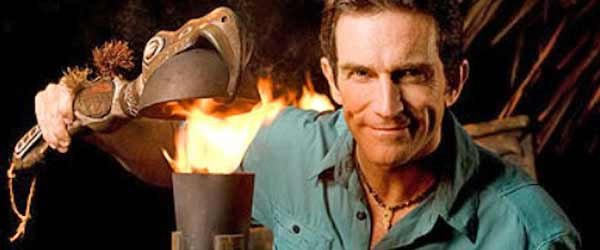
What I didn't know was that His Mightiness, the Great Jeff Probst... sort of kind of was already aware of this. Yes, Survivor isn't real life. This gets said once an episode. And yet (and yet) it exposes something terrifyingly real about the human condition - namely, what we might be willing to do in order to win a million dollars. Probst and everyone who has ever been on Survivor know that what they're selling is a fiction. And they sell that fiction very very well.

The host of Survivor, Jeff Probst discusses the Philippines and the future of the franchise.
Behold His Probstiness!
A couple of years ago I was reading up on Charles Dickens and came across some literary criticism that made a very interesting comparison. It pointed out how in Dickens's day, books often came out in serialized chunks of about four or five chapters at a time. When we say that Dickens was "paid by the word" what we actually mean is he was paid in installments for each of these five chapter segments that came out  in magazines. Eventually, he would republish the whole cycle as a single book. As a result, there's a bit of a four-five chapter rotation in most Dickens novels. They say that in nature your no more than ever three feet from a spider. In Dickens, you're never more than four chapters from a cliff hanger.

Some of these are real doozies too. People spontaneously combust. They see ghosts. Their wedding dresses catch on fire. They find their long-lost mothers. All of this was to leave readers hungry for the next issue and to keep subscriptions up. Comparing Dickens to visual media, he was not writing "movies" with his books, but rather sensationalist, serial TV. Dickens's novels are socially aware soap operas, where someone is always discovering a new orphan or that their uncle has drank himself to an early grave.

It's my argument that just as Dickens is the classy soap opera, Survivor (and the numerous elimination style reality TV game shows that followed it) is visual media's answer to the mystery novel. The reason why is because both are predicated on one simple question: Who done it?

In my second semester of my Master's, I took a class on writing mystery novels. One thing we stressed over and over again was that in a mystery, it's hugely important for the author to know the end result of their story. Once they know that, the art of the mystery novel is direction and misdirection. They simultaneously have to lead the reader toward and away from the ultimate conclusion of the story, so that once the reader finishes, they are both satisfied and surprised.

Ideally, Survivor does the same. Each season starts with a cast of suspects and with the viewer knowing that only one is going to be responsible for the mayhem that goes down on the beach. Everyone else will be their victims. They will be outwitted, outplayed and outlasted. The question is, who? There will be direction and misdirection. There will be shocking twists where the prime suspect is eliminated. There will be days when the villain triumphs and others when the heroes strike back. But once all is said and done, like in so many mystery novels, even the heroes will have blood on their hands. 

Some might argue that Survivor lacks the unpredictability of most fiction. There's a set timeline by which tribes are formed, swapped and merged. There's a reliable vote-out every episode. You will hear Jeff yell "Dig deep!" and "Wanna know what you're playing for?" over and over and over again. But all fiction has it's tricks and conventions, especially mystery novels. And just because there is a rhythm to a story doesn't mean that the way the elements play out won't surprise you. It can be hard to guess when that next blindside vote is coming, or when an alliance is going to crumble over petty manners at camp. And like long running mystery novel series, each additional season adds to the lore of what can or can't be done by the players. In previous seasons, iconic pairs like Amber and Rob, Stephen and JT, Denise and Malcolm, and Amanda and Todd ran the games they played. This current season, appearing to be in a tight pair with someone has been the most reliable way for one member of the duo to get voted out. Everyone knows how dangerous those close friendships are and so they aren't permitted to form. This evolution in strategy is exactly what mystery authors also have to learn. How do they keep readers guessing after they've seen over and over and over again how this author unpacks the tale of a deadly crime? 
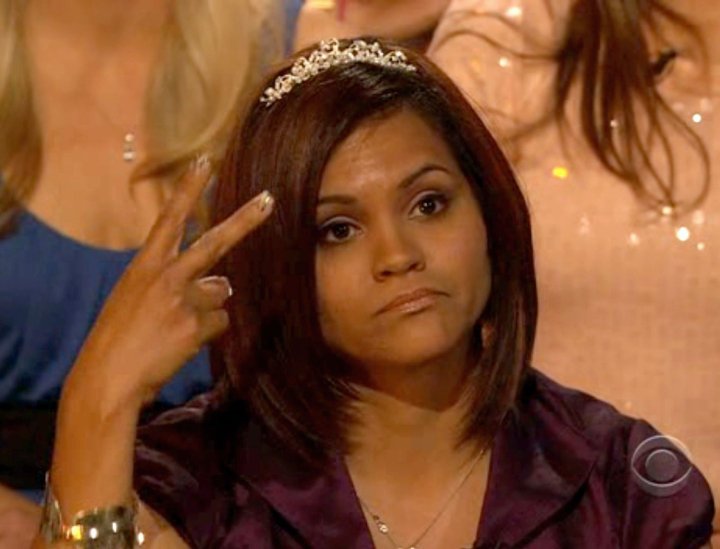
All Hail the Queen!

For those of us who love Survivor, I believe we love it the same way other people love a good mystery novel. It gives us something to solve and makes us question how we're being manipulated into believing one thing, when another might be true. The All-Star seasons give us reoccurring characters. And like all good fiction, it straddles the line between the real and the unreal. One of the most iconic and long lasting relationships to come out of reality TV came not from a dating show, but from Survivor. And how many other major works of fiction can boast that their most terrifying reoccurring villain, the only one to slay all their enemies not once, but twice, is an unassuming Latin American army wife? Survivor knows something about the messiness and unpredictability of real life that many works of fiction, with their familiar, WASP casts, are still striving to figure out.

Returning to the beginning of my post, I stated that I thought as a teenager that Survivor was contrived. Frankly, it is. But by definition, so is fiction. Authors contrive the circumstances and then let them play out. What sets any work of fiction apart from the rest is when it can master both its contrived premise, and yet hold onto its belief that it can still say something true about real life. Perhaps it will only answer one question, like, what does it take to make someone commit murder? Or what does it take for someone to win a million dollars? But those questions are worth answering. And if there's one way that I think such questions are best answered, it's with a good story.

Monday, February 23, 2015

MaddAddam and why the first book is (almost) always the best

Welcome to my series on speculative fiction! For it, I will be focusing on three different series of books, highlighting three different lessons that readers (and writers) can learn from some of the best science fiction writers in the business. Since whole series are taken into account, I won’t be focusing much on plots, but rather on what unique lesson we can learn from each series as a whole. This time we’re rather spoiler free, since this is a series I don’t want to ruin for anyone.

Oryx and Crake
MaddAddam, otherwise known as Orxy and Crake

Confession: One of my favorite TV shows is CBS’s Survivor. It wasn’t always. I am not a reality TV aficionado and I was not someone who watched the earliest seasons of the series. But when I realized that it combined three of my greatest passions - tropical locations, tight editing and people taking strategy games SUPER seriously - a new obsession was born.

But since I’m a bit of a Johnny-come-lately fan of the series, some of the discussions about it have the tendency to baffle me, particularly ones about which season was the series’ best. For a large number of people, there is no topping the first season. It was too important. Too revolutionary. It set the groundwork for all subsequent seasons and all that follow have merely been echoes of it. Holding any other season up next to it just undervalues how important and shocking the first season was.

Even if I don’t understand these arguments vis a vis Survivor, I do get where they’re coming from in relation to books. The first book of a series has a kind of magic to it. It introduces the main characters, the elements the story is governed by and, most importantly, the setting. It’s undeniably true that many people read sci-fi and fantasy for the world building. And when you’re just scratching the surface of the world, there’s a sense of a new adventure around every corner.

Consider a few examples: The Hunger Games is at its most compelling when we don’t yet know the rules of the arena and are experiencing the horror along with Katniss for the first time. The Giver is extra potent because we don’t know what the next thing Jonas reveals about his world will be. They’re very much like that first season of Survivor - startling, revolutionary, instantly memorable. And in both cases, they’re the strongest novels in their respective series.

I’ll quickly list a few more series I consider to be examples of this phenomenon: Redwall by Brian Jaques, The Thief by Megan Whalen Turner, Wicked by Gregory Maguire. Even series in contemporary settings fall victim to this. Think of L.M. Montgomery’s Anne of Green Gables or Judy Blume’s Tales of a Fourth Grade Nothing.

Now, don’t get me wrong. All of these series followed up their first books with strong material. Some people may even pick some other book as their personal favorite, but my point is that sequels in a series have to work extra hard in order to equal their starting books.

So when I say that Orxy and Crake is brilliant, but its sequel, The Year of the Flood is still better, you know just how hard Margaret Atwood worked on that second book. She beat the odds. The following is my list of rules Margaret Atwood taught me for “how to improve on a first book.”

1) What fell flat in Book 1, ditch for Book 2
In Oryx and Crake, you’re stuck looking at Atwood’s post-apocalyptic world through the eyes of a strange outcast, known as Snowman. Through introspection, Snowman reveals to the reader “how the world went wrong” and we learn that once upon a time, he was known as Jimmy, an ordinary boy born to privilege who let himself be lulled into a false sense of security, even as the world was crumbling.

I say you’re stuck with him because Jimmy isn’t an entirely pleasant person to be with. He wins your sympathy, but I don’t think I’ve ever met a reader who actually liked him. But the world and the tragedy of his life is fascinating enough that it’s still a great book.

Then The Year of the Flood starts, Jimmy is nowhere to be seen and hallelujah! Though everyone in the series is damaged and filled with shades of darkness, by The Year of the Flood, there is someone worth rooting for. When Toby enters the story, wearing a pink spa jumpsuit and carrying a shotgun, there’s such a strong sense that this is someone who deserves to survive. And in that moment, the fate of humanity feels more real. If Toby dies, what’s the hope for any other half-decent person?

And as the series shapes up to be her story, it’s pretty clear that going forward, Atwood knew to focus on the character who had the gravitas to carry the plot. Jimmy is still there. He does stuff. But since he doesn’t have Toby’s power as a character, his role is diminished.

In this particular case, the weakness was a character, but this could be true of other elements too. Leave a boring setting. Axe a metaphor that isn’t working. There’s no need to repeat the same mistakes twice.

2) But for goodness sake, don’t get rid of what DOES work!

Just as Jimmy’s story is told alternating between the present and the past, so too is The Year of the Flood. In fact, this book expands on the strange story telling devises, working in sermons and hymns around the characters' memories and real-time struggles. It’s part of what makes this series so layered and beautiful.

For me, this is one of the reasons the later books in The Thief series are a bit more hit and miss. Whalen Turner very bravely switches up her view point during the series. Sometimes it pays off. But when she got to the fourth book and, for the first time since Book 1 returned to a first person narrator, I couldn’t help feeling that first person perspective is her ace. The first and fourth books share that perspective in common, and that sharpened focus made her stories far more potent. When she wrote in third person in Books 2 and 3, the story felt flatter.

It’s a delicate balance, choosing between what should stay in a book and what needs to grow. There’s not a cookie cutter solution for every series and author, but both questions - what should change, what shouldn’t - need to be considered during the creative process.

3) Give people that “explorer” of a new world feeling all over again

Even with the improved character conflicts of The Year of the Flood, Atwood might never have topped her first book if she hadn’t found some unique ways of developing the world she’d set out in the first book. As it turns out, there is much we missed from Jimmy’s perspective. The books almost feel part of different worlds, the characters come from such different spheres. As a result, that adventurous sense of discovery that makes first books so irresistible is still on offer for Book 2.

Another series that excels at this are the Harry Potter books, the evidence for which is in the titles. There is never a book title that directly references anything that came before it in the series. Even by the time of Book 7, no one has ever heard of a “Deathly Hallow.” Rowling kept her series chugging by making sure she had something new to tell us each book.

On a smaller scale, Divergent also checks this box. In Book 1, we meet the Abnegation and Dauntless factions, with just a few scenes involving Erudite. Book 2 takes Tris through both Amity and Candor and fleshes out the rest of the Erudite section. It’s really well balanced and one of the reasons that, for me personally, Insurgent is the best of the series.


In theory, if you can do these things - rework what doesn’t ring true, play up the elements of your book that people love and give the reader more world to explore, you should be well on your way to surpassing your first book.

Just good luck doing any of this in practice!