Showing posts with label Harry Potter. Show all posts

Wednesday, February 6, 2019

Momentum and the Art of the Ending

Growing up, one of my favorite things to do was play video games (she said, as if this phase had passed at all). I was particularly into RPGs and like any good 90's kid with a Playstation, this meant a lot of Final Fantasy. Little surprise, I was largely into these games "for the stories," but my favorite part of the games usually came when the gaming mechanism and the storytelling were the most at odds. My delight was the late game side-quest.

I really wanted that dress made of belts, I tell ya.

Side-quests are like the subplots of video games - not strictly necessary for the wider narrative, but very important in that they add richness and depth to the world. In genres like science fiction and fantasy, which numerous video games and all Final Fantasy games fall into, side-quests and subplots are essential for giving the epic scope to the world building that a too tightly hemmed story could not.

But there is a time and place for all things in fiction, and video games often fall into a trap of going off the rails thanks to the inclusion of the side-quest. In every Final Fantasy game, all the best side-quests opened up right at the end of the game, when you finally had an airship to fly around the map and enough weapons to blow up whatever might be at the end of your little diversion from the plot. Often, the end of a game played out like this:

Girl in dress made of belts: Oh no! Thousands have been murdered by Lord Eveelus and his laser drill! If only we'd beaten him to the cave of Ger'blath and the mystic jewel inside!
Spikey-haired dude: BROODING
Guy with guns even though everyone else has swords: We must go to the government facilities at Rindondonk and stop Eveelus from activating the drill again!
Spikey-haired dude: Now that my amnesia is gone and I know Lord Eveelus is my father, I must kill him. This war cannot wait.
*COLLECTIVE BROODING*
Girl with glasses: I'll fire up the engines and we'll go to Rindo-
Me, the Player: Nope. Please head to the northeast corner of the map.
Glasses girl: But Lord Eveelus-
Me: Nope, definitely not. We finally have an airship and there's an island in the northeast corner we haven't explored yet and what if there's a really big sword on it? Don't worry, it can wait.

And it could! It was never essential that you actually head to Rindondonk right away. Lord Eveelus would wait. By the time I got around to the main plot line again, I'd generally forgotten half the details of the final conflict and all sense of urgency was gone.

In books, the author controls the pacing of the plot and inclusion of subplots, so this kind of thing is rarer, but it does still happen. I've heard a few people comment that the end of the first Hunger Games book can be a bit rough for this. Right as Katniss is starting to get confident in her position in the games, she spends a few chapters getting Peeta's health back in order. It serves the narrative well in many ways, but as my sister once put it, for some reason it feels like she's stuck in that cave with Peeta for forever. All the momentum the book built up to that point screeches to a halt.

Even Katniss is so done with this cave.

Pacing refers to the speed at which the reader is pulled through the plot, and is one of the trickier things to master in writing. Both the romance with Peeta and even that quest to the north east corner of the video game world are necessary parts of their stories, even if they are subplots. But included in the wrong place or dragged on too long, they reduce the impact of later scenes that are maybe more important for the resolution of the overarching story.

For endings in particular, good pacing usually means preserving momentum. By the time the climax arrives, readers generally don't want diversions. They want to feel the urgency of the characters carry them through to the end. Achieving this means that all the set-up for the ending needs to come earlier - those subplots need to be woven in before the crush of the final conflict squeezes out space for them. Yes, parts of the subplot can come back. Take the end of the Harry Potter franchise where, right before the final battle with Voldemort in the seventh book, Percy Weasley turns up, begging his family to forgive him for being a butt and let him fight alongside them. There's a tense family moment, but very quickly, that resolution happens, because that subplot was set up a long, long time ago. Not much is needed by the time Percy bursts onto the scene. His character growth feels like a part of the climax, rather than a diversion from it.

So while the problem with Katniss and Peeta might happen in the cave, the root cause was probably earlier. Suzanne Collins showcases the pair together plenty in the first half, but Katniss doesn't demonstrate much vulnerability to Peeta until the cave scene. If Collins had let them be a little more tender together earlier, she might not have needed to spend so long in the final third of the book trying to earn all those "feels" she needed for the final climax to work. Maybe that story Katniss told about Prim's goat should have been back on their pre-games train ride. Then there could have been a quick allusion to it, then immediate kissing and behold! The cave scene is a chapter shorter and my sister is a chapter less antsy for the action to pick up.

As is the case in most things in life, one of the best examples of pacing endings properly comes to us from the TV show Survivor. I've mentioned before on this blog that I find the show a fascinating lesson in editing, and often what I'm meaning by that is editing for pacing. Survivor pioneered a lot of tropes in reality TV, but it's fascinating what particular tropes they carefully avoided from the beginning of the show, and one was the late episode commercial cut.

MUAHAHAHAHA! I'm talking about Survivor again!!!

From American Idol to Cutthroat Kitchen, almost every other elimination style reality show relies on a cheap form of cliffhanger to keep viewers around past commercial breaks. Right as the host is about to announce the eliminated contestant, the camera cuts away and you're suddenly watching a woman dance around her kitchen with Mr. Clean. But not on Survivor. This was a conscious decision on the part of the producers, who didn't want to compromise the momentum of these important moments or cheapen them with content they didn't control. It paid off, and eighteen years after it aired, the show is still going strong, while scores of imitators have fallen. I'm of the opinion that people get tired of being manipulated. Those pre-elimination commercial breaks serve as reminders that producers see their audiences as potential customers, and their own shows as gimmicks that get you to watch advertisements. Obviously this isn't the only reason most of these shows turn-over and get replaced by other, similar reality shows, but it speaks to a lack of care from the show runners. If the climax of a story isn't sacred, then nothing is.

In contrast, on Survivor, from the start of tribal council to the eliminated contestant getting their torch snuffed, there are no commercials, no artificial breaks and no outside-the-moment confessionals from other players. For writers, the lack of confessionals is particularly important. Throughout the rest of the episode, confessionals are used to provide narration alongside the scenes of camp and give the viewer a glimpse into what the contestants are *really* thinking. During tribal council, however, the emphasis is on the moment at hand. All the set-up that gets the viewer into the players heads has to be already done.

In a particularly well crafted episode, the viewers know enough about the inner workings of camp-life to have a sense of who is vulnerable to elimination each night, but not enough to know for certain who it will be. Tribal then unfolds in a manner that makes it feel more "live," even though the whole show is pre-recorded and edited. Still, it tricks the brain into feeling the urgency of the moment and the show doesn't relinquish that urgency until after the votes are read. It's solid, good storytelling.

Survivor isn't perfect from a storytelling perspective. Believe me, I have examples. But I find some of the choices they make interesting and instructive because for how silly the show is, it's edited extremely well. Meandering, unfocused endings are very easy to write, and I've seen a few of them editing unpublished works. Truthfully, I've written them as well.

Luckily, I've got reality TV to correct all the things I learned from video games.

Friday, November 23, 2018

Harry Potter and the Preservation of the Status Quo

In 1996, one year before the release of the first Harry Potter book, another YA fantasy series got its start. Critically acclaimed at the time, and borderline obscure now, The Thief, by Megan Whalen Turner, takes place in a world inspired by Renaissance Era Greece and Turkey. It's one of my favorite on-going series (she just released the most recent one in 2017) and it's about...

Um...

Well...

The first one is about a thief, but that was probably self-explanatory. And I already mentioned the Greece/Turkey thing. Other than that? Weeeeeelllllll........

Seriously though, great book.
One of the strengths and weaknesses of the series is that Turner plays fast and loose with the rules of good series writing. Her books are rarely from the point of view of the same character twice, she flip flops between third and first person perspective with abandon (arguably even using second person perspective at one point), and the tone and structure of the plots range wildly across the five books. When you pick up a novel in this series, you don't really know what you're going to get.

While it's something I love and respect about her writing now, this almost killed the series for me in the second book. The first is still my favorite, and I went into book two expecting something similar. But they weren't the same types of stories. I almost didn't read the third, but my best friend was so insistent that the third one was wonderful, I eventually gave in. I'm glad I did, because (again) the third was nothing like the second OR first, but at least I liked it and at this point, knew better than to expect consistency.

Now don't get me wrong; you still need to read them in order for the story to come together fully. And there are common elements between them, like the general setting and an emphasis on story-telling and mythology. But between the drawn out release schedule (book five was released last year, twenty-one years after the first book came out) and the lack of a status quo, I get why this series never blew up in the public conscience the way Harry Potter did a year later. Frankly, it's hard to pitch a series that doesn't stick to it's own rules.

Harry Potter and the Mystery of the Magical Thingy

Quick question: What are the Harry Potter books about?

Almost anyone can list the basic components off the top of their heads: Boy wizard attends magic school, makes friends and goes on adventures trying to solve what wacky hijinks Voldemort has in store for this edition!

In addition to the basic premise pitched above, here are a few other stalwarts that showed up in every (or almost every) Harry Potter book:
- a new spell/magical object, which would be key to solving the book's central mystery
- a new Defense Against the Dark Arts teacher
- Quidditch matches
- a pivotal scene at Christmas time
- a conversation with Dumbledore at the end of the book
- Hogwarts itself figures almost like a character
- most scenes written in third person, limited point of view, from Harry's perspective
- thoroughly described British food
- Harry, Ron and Hermione operating as a trio, despite their differences

A Deathly Hallow, given at Christmas. I know what I'm talking about, man!

The book that strayed the most from this formula was, of course, the final one, Harry Potter and the Deathly Hallows. I mentioned in my ranking of the seven Harry Potter books that I think the books lost something by abandoning Hogwarts, but I know plenty of people who feel differently. Part of me agrees. Rowling spent a long time at Hogwarts and was clearly sick of writing Quidditch and frankly, Quidditch matches would have seemed so superfluous in the final installment, I'm glad she didn't hem too strictly to her previous models. Overall, while Deathly Hallows might be missing some of the fun and magic of earlier books, the changes feel justified.

But there are still a remarkable number of ways Deathly Hallows doesn't rock the boat. The central heroes don't change. The final battle still is at Hogwarts. The quality of British food has gone down in the camping sequences. There's an emotional Christmas at Godric's Hollow. And not even death can stop Dumbledore from giving an end of book pep-talk to Harry.

Arguably, the Harry Potter books are rather stagnant sequel to sequel, but I'd argue that's one of their strengths. They changed just enough each time, but never the core of what people enjoyed. Rowling wisely built into her model things we could expect to change book to book - new teachers, new spells - so that she could get away with adding new material that didn't feel as though it broke the rules of the previously established world/books.

The best series establish a status quo readers want to return to, but build some flexibility into their structure to allow for innovation. You read Redwall because you want adorable mice defending an abbey full of food, but the evil abbey attackers of the week can change. You read The Hunger Games because you want to see Katniss fire some arrows and stress over boys, but her allies and who dies in the arena can change.

Assuming a series starts on a strong foot, the problems creep in when the creators don't seem to know what elements can safely change and what can't. It's all very well to say that a "flexible status quo" is important, but how do you pick out the elements readers want to see again and again and what is ripe for rewriting? Sadly, this is one of those areas that's probably easier to learn from by examining failures than those that did get the balance right.

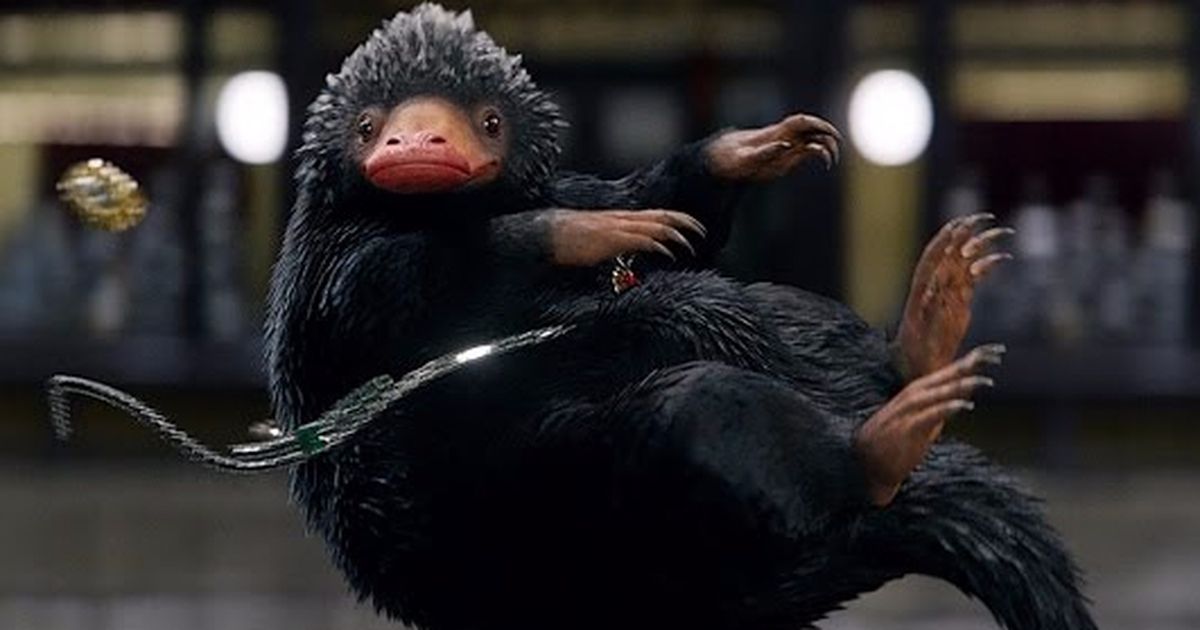
Fantastic Beasts and Where on Earth is This Going?


D'awwwwwwwwwwww

Woof, these movies.

Since the second movie is newly out, I'll try not to spoil too much, but be warned. There are criticisms ahead.

I want to love them. I do love aspects of them, particularly Newt Scamander himself, who is a darling cinnamon roll of a human being. Over two films, there are some real strengths and some real weaknesses. Bothering me at this present moment, is one central concern: this series does not know what it's about.

The first film started out well. I'm not a purist, so the idea of more films exploring the same world appealed to me. I didn't much care when they had to rewrite some of Newt and Dumbledore's history, so as to allow for the new world and stories to exist. Most of those details hemmed the world in such that it would have made for boring movies. Early writing by Rowling portrayed Newt as a low-level ministry worker who gradually rose through the ranks by doing exceptional work and never rocking the boat. That character is markedly less interesting than the "new" Newt.

More importantly, the first film seemed to strike the balance "right" when it came to sequels and choosing what to change and what not to. Because this movie was taking place in a new time period, with a new cast of characters, most fans I spoke to were willing to give the movies a chance. They weren't messing too hard with beloved characters, like the original power trio. Superficially, they were starting over. But just because these movies aren't about Harry Potter doesn't mean they aren't sequels. Realistically, they're still being marketed to the same demographic who read and loved Potter, and so long as that's the target audience, certain expectations are going to come into play.

So what are those expectations? And how well do the Fantastic Beast movies follow along with them?

The first movie featured a couple key ways they matched the original Potterverse. One, the first movie was still a mystery about a particular magical element, in this case, Obscurials. There were ways the mystery format felt a bit weaker, with the villain actually doing more of the investigating than Newt himself, but from the first scenes of a giant shadowy thing ripping up New York, we knew what the central mystery was.

Second, much of the appeal of the Harry Potter books came from fun characters who loved each other, running around together, trying to solve problems. The first movie mostly succeeded here too. Watching BFFs Jacob and Newt go on adventures, and gradually pick up Queenie and Tina was a hoot. I wish Tina got a chance to act out an emotion other than "worried" more often, but hey. The rest of the cast was great, and I didn't dislike her, so it was a solid start. In fact, of everyone in the second film, Tina wins the award for "most improved." It turns out, she does have something beyond resting-worried face to offer the world.

Even when flirting, so very very worried.

Third, elaborate world building. While Hogwarts is far more iconic than 1920s New York, or any of the locations used in the sequel, other aspects off the world design really have paid off in both films. The original Fantastic Beasts was actually the first film in the entire series to win an Oscar, because the design team was freed up a bit, and they really knocked it out of the park on costuming.

Visually, the sparkle is still there in the second film. But aside from a better version of Tina, categories one and two took major hits in the sequel. The plot suffers from a syndrome where everything is explained at the eleventh hour, in the final act, and up until then, it feels like characters are just running around, communicating poorly for the sake of maintaining "tension." What this means is that what the central mystery is doesn't become clear until the very moment it's solved. Or possibly never. YouTube is littered with videos right now "explaining" that "crazy ending" in the second movie because, unfortunately, it needs either an encyclopedic knowledge of previous Potter material to follow along, or someone who has that knowledge to excitedly wave their arms at you and talk you through for an hour after the film. (For those in need of services, I charge a reasonable fee for my Harry Potter frantic arm waving)

Second, they botched the friend group dynamic way too soon. Some might rightly point out that the Harry Potter books weren't afraid to let the characters fight and have drama. But there was still a status quo they got back to by the end of each book. Come end of term, Ron and Hermione were no longer sniping at each other and Harry was no longer morosely avoiding one of them. Their friendship was always a power they could rely on when things got bad. Even when she was frozen by a basilisk, Hermione still gave the boys the final clue to defeat Voldemort. In the interest of going "darker," the second movie denied us the entire dynamic that made the first movie and every Harry Potter book fun. And that sucks.

What follows is an incoherent, messy plot where you're not sure who you're rooting for and you can't tell why you're being led into each scene. And why does the camera keep cutting away right before newcomer Lita Lestrange can just SAY what the deal is? Poor Lita. A few more minutes screen time, and this whole movie could have fallen into place an hour earlier.

Fantastic Beasts: The Crimes of Breaking Viewer Expectations

The second film briefly returns to Hogwarts, where Dumbledore is teaching Defense Against the Dark Arts. I loved all the scenes that took us back to the place I fell in love with as a child. I couldn't help thinking, "man... I wish we were watching the movie taking place here."

You could sense what the story going on in the background was about. McClaggen coming to Dumbeldore's defense brought back wiffs of Harry himself. Lita Lestrange, misunderstood Slytherin girl with a weakness for gentle Hufflepuff boys, spoke to the odd-duck friendships we loved in the original. The first series knew what it was about, and when these films echo that sense of purpose, they're at their best. Unfortunately, they aren't willing to embrace the past.

The warning signs were there from the beginning. Those involved with making the films said years ago that the second would be very different from the first. They made good on that promise, but likely went too different too soon.

Right now, as I try to find the essential qualities of the franchise, my list is an abbreviated mess of both good and bad qualities, none of which I feel certain will last until the next movie. The friend group didn't, so what else is up for grabs? If I had to guess, based on the first two films, here is my recipe for what stays consistent in a Fantastic Beasts movie:

A most important movie element

- Newt Scamander introduces us to a new dangerous animal, that is secretly very sweet. This will always be the best scene in the movie.
- Nifflers!
- Let's visit a new swanky city in the 1920s! Hurray for costumes!
- Newt runs around town in a sequence of not very plot-centric adventures
- Tina is worried.
- Grindlewald is the villain... he's a completely different kind of villain between two movies, but he's still the villain.
- There is a central mystery but who - if anyone - is solving it is even more mysterious.
- Everything is navy blue and probably taking place in an alley, where silhouettes converse
- One of Newt's beasts helps save the day.

I really hope that last one remains true. By far, the most compelling aspect of the series is that Newt sees humanity in the inhuman. He and his creatures are underestimated, but he knows how to use them to get the upper hand.

If the series doesn't end with an acromantula eating Gridlewald, I'll be very disappointed.

Tuesday, April 24, 2018

Ranking The Harry Potter Books from Worst To Best

Ah, Harry Potter!

Whenever I'm fumbling around for topics to write on, there is no source more reliable than that great, cultural juggernaut, the mighty wizard himself, Mr. Potter! (our new celebrity)

I have enough opinions about the Harry Potter series I could probably write seven books of my own simply analyzing them and the profound impact they had on children's literature, the cultural conscience, and my own life. I come from the generation raised on Potter - the one that went to book launches in costumes and scoured message boards for theories about what would happen in the next sequel.

Overall, the series is a benchmark for children's literature and I have no doubt it will go on to be part of the "canon," both for Middle Grade fiction and Young Adult. If I had to pick one thing Rowling did consistently well in every book, it would be her worldbuilding. It amazed me how good she was at introducing something new in EVERY BOOK that still felt natural to the rest of the world that came before. She was a master of never over-playing her hand, holding onto good plot twists for years. As a result, each book really feels necessary to the overall series. If you skip out on one, you skip out on an essential part of the mythos she created.

Even so, some of the books are distinctly better than the others. Some are better paced, some have deeper theme resonance, some have better side characters.

Picking a favorite Potter book isn't an easy task. It's not as though any one book is a trash fire, and whether or not you share the same opinions as me will depend on certain factors - like if you're super into Voldemort as a villain or if you really loved reading about Quidditch matches. As a result, I can't help but rank these by how I appreciate the novels, and as you read my brief review of each, you'll start to pick up on exactly what did and did not work for me in the series.

Each book will be ranked on the following list of factors, which I recommend all people use for evaluating Harry Potter books:

Title Element:


Harry Potter titles serve as a tip off towards the MYSTERY! of the book. They rarely made sense pre-release, teasing some element we hadn't been introduced to yet. In this way, they serve as a decent way of evaluating the worldbuilding of each novel.

Defense Against the Dark Arts Teacher:


Voldemort cursed the position and so there was always a new one each year! And not everyone can be Lupin. This ranking indicates how strong the side characters were, often a top feature of Potter books.

Ron Weasley:


Ron was my favorite character. Most of the time. He fluctuates between selfish, oafish phases and the wise-cracking loveable side-kick that we - well, loved. My biggest beef with the movies was that they only got that first side. He played the buffoon 99% of the time, never giving us what made him engaging in the books. I get why some people found him annoying. So did I, on occasion. How strong the "Ron factor" was often speaks to how well the dynamic between the main three characters was working. Seriously, when Ron is at his best, so are Harry and Hermione.

Pacing and Theme and Actual Relevant Stuff and, let's face it, where 90% of the ranking is - Yeah, this is the only category that matters. But I you need to hear my Ron related thoughts too.

So, without further ado...

#7 - HARRY POTTER AND THE DEATHLY HALLOWS


Fact: This list would be in a totally different order if it was
ranking the movies because Emily LOVES wizard battles!

Title: 4

This title let us know the series was going to wrap up on a wild note. And the Deathly Hallows ended up being totally rock and roll.

Teacher: 7
Some random death eater we hardly see, since the books don't take place at the school. In general, there is a dearth of relatable side characters.

Ron: 6
Ron emerges from the cocoon of his obnoxious phase back in Book 6! He's a little annoying at times here, but it's building towards redemption, so over all, pretty good.

Actual Ranking: 7
Ugh. This book. I love it. I love every Potter book. But I've always been aware that I distinctly love it less than all the others. It ditches the traditional school setting, to it's detriment. It's missing most of the lovable side characters, only to wantonly kill a lot of them in the last act. It ends with that horrific epilogue.

That being said, it has some real strengths. The Deathly Hallows was a fun level of mystery to sew into the series at a point when the world felt known. Ron's betrayal and eventual reuniting with Harry have a lot of emotional resonance and kind of encapsulate how the whole series has evolved between the three leads. Dumbledore's philosophy about death - a philosophy that's been building up since the first book, finally comes full circle. Molly Weasley blasts some serious witch-hiney and Harry finally takes out old Voldy. And Snape. Oh my gosh, Snape. The "feels" with him are complicated. Whether or not you see him as a hero or still inherently abusive, I like him for the fact that he's always at least interesting.

Overall, Book 7 is a beautiful send off to a great series. So why is it so low?

Partially because a lot of the book is unpleasant. Getting through the camping in the woods section is a slog. Books 4-7 are all too long. Period. They ramble in a LOT of places, but whereas that was mostly bearable in the previous books, here it's unpleasant and boring. There aren't any jokes to break that meandering pacing up. Everyone is too depressed. I get that the book isn't supposed to be happy, but if your children's book is dark, it can't waste time being boring. (did we need to see Lupin have a midlife crisis? Or the Godric's Hollow sequence where they literally learn nothing helpful for their quest?) Honestly, the darkest parts of the book are often the best. It's great when they're in mortal peril. It means SOMETHING IS HAPPENING!!!

The book also does a weird thing that none of the other books do with regards to the central mystery. In the other books, the reader learns what Harry learns with Harry, but in Book 7, for the sake of dramatic tension, Rowling holds information back that Harry knows so that reader doesn't - namely that he controls the Elder Wand. I get why she did this, and I'm not sure I have any kind of work around for it, but it did feel a bit disingenuous. Much of the appeal of these books hinges on the reader discovering the wizarding world WITH Harry, but the very conclusion relies on Harry hiding information from the reader. And I don't like that.

#6 - HARRY POTTER AND THE HALF-BLOOD PRINCE


Felix Felicis, providing much needed humor.

Title: 7
Despite being primarily about the history of Voldemort and Horcruxes, the title is essentially Harry Potter and the Snape Snape Snape. It's more Books 5 and 7 that strike me as the Snape books - the ones that show his relationships with James and Lily. Overall, bit of a disconnect.

Teacher: 5
We don't get a new teacher here, since Snape is a known entity, but he's compelling, and we DO get Slughorn over at Potions. Still pretty darn good, but there are stronger entries.

Ron: 7
This is the book that all Ron haters go to in order to justify their poor thinking. The trio is at it's angstiest here, with no one really getting along, but no one having a proper, outright argument either. It's just obnoxious. His relationship with Lavender is weird, and I think squandered time that could have been better spent delving into his relationship with Harry and Hermione, especially since he abandons them briefly in Book 7. More on this unfulfilled potential later.

Actual Ranking: 6
In this book, the villain's development matters more than what any of the heroes are doing. We spend a lot of time in the pensieve - most of our more interesting scenes, in fact. Voldemort is a good villain, but I've never been a huge apologist for him. He's evil because love potion. Kinda sad. Kinda lackluster as an explanation. I'm not sure what origin story would have satisfied me, but the interesting evil in the books - the kind that is textured and complex - comes from other villains, like Umbridge and the Malfoys. And Snape. But again, this is a false Snape book. A book that sets you up for Snapeness and fails to deliver.

He is, of course, the title element, but that reveal feels anticlimactic. Also, there's some weird gender politicking over his old textbook where Harry's like "I sense the DUDENESS of the Snape who wrote notes in this" and Hermione is like "OMGosh, please shut up" and what the crap did this subplot add?

The poor pacing is on grand display here, with Harry at odd times stalking Draco, or observing Ron's terrible love-life, in between jumping in the pensieve with Dumbledore. The Ron/Lavender relationship is a low-point for the series, which the book seems to know, yet it plows ahead into it. Harry also gets his own terrible romance, complete with chest monster, and the series Moste Boring Character, Ginny Weasley.

Ginny, who is so pretty even the Slytherin's notice. Ginny, who can play every Quidditch position, then call out that annoying, shrill Hermione. Ginny, who is perfectly understanding when Harry breaks-up with her to go on an epic quest to stop Voldemort. In a series filled with fully realized characters,  with flaws and strengths, Ginny is shockingly flat. All her flaws are conveniently locked away in Tom Riddle's diary, back in Book 2. It stuns me, because there is so much potential for an actual character arc here. Ginny should have so many trust issues from getting possessed by the boy in her diary who claimed to care about her. Or she should be driven to her Goddess-like levels of perfection BECAUSE she screwed up so badly in her first year. But instead of exploring the obvious depth Rowling set up, instead she is nothing but pitch-perfect girlfriend material for Harry. She never challenges him or asks anything of him. She's just super understanding and really cool. A fantasy girlfriend. Their relationship is completely unbalanced, unrealistic and uninteresting. I could say more, but this isn't meant to be a total Ginny hate fest. She doesn't deserve that much abuse. She's boring, not morally objectionable. But man, do I hate boring.

By now, you're probably wondering why this is ranked above Book 7 and I will admit, it came close. If not for the Epilogue where Harry is shown married to freakin' Ginny and all his children inherited her obnoxious genes, things could have been different. But there are some good moments in Book 6. Since they're at school, there are still funny scenes and quirky side-characters breaking the flow up. Harry goes to the Slug Club party with Luna! Yay! Slughorn is fabulous and repping for all the non-evil Slytherins! The felix felicis scene is divine. Moral of the story: Slughorn is great.

Also, I think over the years, we've forgotten how powerful the death of Dumbledore was. I remember after the book came out, we were reeling. There were news articles about people hanging banners off of overpasses that read DUMBLEDORE IS DEAD because no one knew how to process the revelation. This was a moment so huge, it made everyone debate for YEARS whether or not Snape was evil, something that, in hindsight, seems kinda obvious. But it didn't back then.

And even if I got bored of Harry chasing Draco, watching young Malfoy's desperate attempt to redeem his family paid dividends. Heck, it set up the best elements of the most recent Harry Potter book, Cursed Child (otherwise known as Sir-Not-Appearing on this List. For spoiler reasons. And because, c'mon. Even the weakest of the original series is miles better.)

The book had lots of good parts, even if it ran around in circles chasing it's own tail at times. And I can't overstate how much the jokes were needed to keep the lumbering pacing from falling apart. So it gets a spot above the bottom. Hurray for it.

#5 - HARRY POTTER AND THE CHAMBER OF SECRETS


That time we learned evil is a fan of anagrams

Title: 6
I'm a firm believer that if you have to call it a "secret," you're veering into telling rather than showing. The sequence in the Chamber itself is pretty good, but I never was crazy about the title itself. This ranking is probably the most impacted by the way the title made me "feel" rather than how strong of a role the title element played in the story, but much of the middle of this list comes out close to each other, so it's hard to rank any other way.

Teacher: 3
I have mixed feelings on the movies, but I will forever be grateful for the greatest casting match-up of all time, when Kenneth Brannagh played himse- I mean, Gilderoy Lockhart. I love him so much, and he might just be my favorite thing about this book.

Ron: 4
Ron is a solid best friend here and adorable confronting his fear of spiders. Yay, Ron!

Actual Ranking: 5
Of the early books, this is my least favorite. It doesn't do much terribly wrong, BUT... I don't like Colin Creevy. And I don't like Dobby. I'm sorry, I just don't. At the end of Book 4, during the three-year hiatus between book releases, I did a lot of theorizing. I was particularly concerned with which characters might die and I started making a list of people I could handle dying without caring much. Top of that list were Colin and Dobby and then they DID both die and I felt like a terrible person, not least of all because even after he died, I STILL DIDN'T CARE ABOUT COLIN CREEVY!!! Dobby sorta won me over in later books. Sorta.

If these characters didn't annoy me, I might have rated the book more highly. It does introduce us to the Burrow, Lucius Malfoy and the House Founders. Some of my favorite aspects of the series have roots in Book 2. I really respect it for everything it sets up in later books, but I think too much of the plot revolved around the set-up of "Harry is annoyed by his adoring fans." Because, you see, I also found many of those adoring fans annoying.

Still, the final battle in the Chamber is amazing, Gilderoy Lockhart is a fantastic flim-flam man and the basilisk in the pipes is super creepy. This book also gives us the best iteration of Ginny, since it's the one where she's sweet and human and fallible. She's a great character to be used by Riddle too, since she's so innocent and inherently valuable to Ron and I value what Ron values.

I know plenty of people love this one, and I've had it pointed out before that this book might be the most plot-heavy. There isn't an inch of fat in this book, with pretty much every scene proving important to the central mystery. It's also the shortest book. While I accuse the later books of being too long, this one might be too short for my taste. There aren't enough character moments. The ones we do get are pretty great, especially those involving the polyjuice potion and Lockhart. But many of the other character moments involve Dobby and Colin. For me, much of my love of the Harry Potter series comes from the character moments, so without these firing on full, it adds up to a lesser whole. Of all the books, this is the one I'm the most indifferent about. It doesn't inspire the sense of frustration that Book 7 does or the wallowing of "what could have been" that I feel for Book 6. It's a good book, just one I found less engaging than the others.

#4 - HARRY POTTER AND THE GOBLET OF FIRE


Warner Brothers went to great lengths to ensure that Harry and Ron
sported hair as truly awful as high school feels at 14.

Title: 5
I remember being kind of underwhelmed by this title, especially when we found out what the Goblet was right away. I was like, "whatever, it's just a trophy" and then the end came and "OH MY HECK IT'S A PORTKEY TO VOLDEMORT!!! DANGER!!! DANGER!!!" Man, Harry Potter has the best titles.

Teacher: 6
Mad-Eye Moody/Barty Crouch Jr. is one of Rowling's great villains hiding in plain sight. I flip-flopped on where to place him compared to Quirrell, because as a character, he is more enjoyable, but Quirrell was a more shocking reveal. By the time Moody is revealed as the villain, I think you're kind of on to him, but it's a nice twist that it's not even the real Moody. The scene where he preaches CONSTANT VIGILANCE is one of the low-key funniest scenes in the entire series, though it's tempered by the heartbreaking realization at the end that he's taunting Neville, possibly on purpose. Still, it's my favorite piece of Potter to read out loud.

Ron: 3
I may be alone in thinking this, but this is annoying Ron done RIGHT. The Yule Ball sequence is a showcase of Ron's potential for pettiness, meanness and insecurity, but it's done in a way that I think adds to his humanity and shows how awkward and wrong-headed young love can be. His fight with Harry is also well done, and helps confront the inherent imbalances in their relationship. And despite being a bit of a boob for the whole book, Ron is still funny. Some of his best lines are in this book, from jokes dancing naked in Dobby's tea-cozy, to his claim he got a Yule Ball date out of "sheer animal magnetism." He's rough-edged and hilarious here. Lots to love.

Actual Ranking: 4
The middle book! Right in the middle! This was definitely not intentional, but it feels right, doesn't it? This book, to me, is where the problems of the later books began. The pacing fell off the rails, for the sake of stuffing the book to the gills with character moments. For those who don't love the moody teens era of Potter, this is also where the moodiness takes a decidedly "teen-aged" turn.

But it's also one of the funniest books in the series, between the Yule Ball, "Mad-Eye Moody" turning Draco into a ferret, Hagrid falling in love, Dudley going on a diet and Harry bathing with Moaning Myrtle. It's a trip.

I've called out the later books as too long, and I stand by that, though I want to temper that statement here. I believe that we, the fans, are partially to blame for the ballooning length of the Harry Potter books, because all we wanted was more. More funny scenes! More character moments! Rowling was so good at writing side-characters, and once she reached Book 4, she leaned into that, giving us a plethora of extraneous character scenes. Most of Book 4's funny sequences wouldn't exist if it had been as tightly written as the first three. So while we get detours from here on out, they do at least expand the world and let us relish the characters a little longer. There are worse things to destroy pacing for. Man, I remember being disappointed when I learned Book 6 WASN'T going to be longer than Book 5!

Also, this book gets a few things completely right. Voldemort's rise is given lots of room to torment us with the horror of what is happening. Rowling clearly knew this book needed to act as a transition between the Middle Grade aspects of the early books and the mature themes of the more Young Adult inclined later series. She pulls that transition off with the rise of Voldemort brilliantly, setting up the action of the rest of the series in the process.

#3 - HARRY POTTER AND THE ORDER OF THE PHEONIX


What's gonna work? TEAMWORK!

Title: 3
Leading up to the book's release, I was excited, because it just sounded so rad. And even though the mystery of WHAT the Order is gets resolved quickly, I still love the way it plays out over the book. This book really expanded the adult wizarding world, letting us in on how the first war was fought and how the Ministry of Magic worked. The book ends with the first wizard war of the series, and it's such a worthwhile build to the shoot-out in the Ministry between Death Eaters and Order members.

Teacher: 2
Yes. The second best Defense Against the Dark Arts teacher is Umbridge. You hate her. You wanted her dead more than Voldemort. And it's for those reasons she's so fabulous. The main villains of the Harry Potter series - Voldemort, the Dursleys, Draco and Snape - are all introduced in Book 1. They represent separate areas Harry has to confront growing up. His past (the Dursleys), his peers (Draco), his assumptions (Snape) and evil itself (Voldemort). Most of the supporting villains are appendages to these .

But another villain is added when Harry reaches the time that most teenagers find themselves confronting "society" for the first time, and it is personified in Delores Umbridge. She represents the sheer unfairness of the world, and does so perfectly. Her lack of comeuppance is infuriating, and yet also the right fate for a villain of her ilk. Because "society" never goes away. You just have to live with it, even though some days, you hate it more than evil itself.

Ron: 5
Ron is so lovely in this book. He and Hermione realize that Harry is going through a rough time and so they step-up to support him. Ron feels like he's grown up considerably since Book 4, actually complimenting Hermione and thanking her for the things she does for them, something that tends to unnerve her. It's adorable.

One of my biggest problems with Book 6 is it undoes a lot of what feels like genuine character development that Ron underwent in Book 5, for the sake of laughs at his stupid relationship with Lavender Brown. Personally, I think Book 6 would have been stronger if the plot had involved Hermione and Ron ACTUALLY DATING and breaking-up, and letting that fuel Ron's despair in Book 7. And I hate to say it, but I think the reason it didn't happen is that I don't get the impression Rowling is great at writing romance (see commentary on Ginny). But can you imagine how great the Book 7 ending would have been if that big kiss came out of them deciding it was worth being together, despite the hurt of a previous relationship? Ugh! In a better world, that is the arc we would have had.

So yes. This lovely version of Book 5 Ron is getting marked down, because I have a fanfic version of where Book 6 SHOULD have gone in my head, that the actual Book 6 ruined for me. Sue me.

Actual Ranking: 3
Of all the Harry Potter books, this is the one that has moved upwards in my rankings the most over time. When I first read it, right after it came out, I was not prepared for Wizard Angst. Up until Book 5, Harry seemed infallible to me, and I didn't like realizing that he wasn't.

But the more I thought about it, especially as later books came out, the more I respected this book and came to like it, then love it. Harry finally processes the anger and resentment he feels for all the loss he's suffered in life. I wanted him to be too noble to let this stuff get to him, but looking back, I'm glad he wasn't. His hurt and anger made him more real.

But this book also shows the roots of the Harry who will one day stop Voldemort. In the previous books, he's primarily reacting to circumstances that come to him. Here, he's trying to figure out how to act for himself, but he doesn't have the tools to do that yet. So he mouths off to Umbridge. He tries dating Cho Chang. He begins leading Dumbledore's Army. He defies the training in Legilimens Snape gives him, believing his connection to Voldemort to be valuable.

And that last action ends up spelling the death of his beloved Godfather, Sirius. It's a heartbreaking consequence to his unwillingness to cut himself off from Voldemort, but if Harry had followed his training, he might not have been tempted out of the school and into harm's way. Then again, maybe that confrontation would have come in another place. The war was on it's way, and there's something beautifully tragic about that inevitability.

Book 5 is the book where Harry grows up. One part I love is the long denouement after the battle at the Ministry of Magic, where Harry struggles to come to terms with with the loss of Sirius. He's in enough denial that he even asks Nearly-Headless Nick if his Godfather might come back as a ghost, but gradually, he learns to accept that this won't happen.

Rowling has gone on the record several times saying that the series is largely about death - accepting it, processing it. It's there in the first book, when Dumbledore calls it the next adventure to the well-organized mind. And of course, it's there all the way until Harry's mind is well enough organized, that he's willing to take on that adventure in order to stop Voldemort in Book 7. Book 5 is where Harry first confronts death personified, in the form of the thestrals, and then gradually begins to accept it, as he learns to move on after Sirius.

Overall, I think Book 5 has some of the most profound emotional resonance. It's tough to read at times for that reason, but over all, I think that speaks to why it's so good.

#2 - HARRY POTTER AND THE PHILOSOPHER'S STONE

The precious babies!

Title: 1

The one that started it all. Note that this ranking is based on the original title, and not the abomination that they made of it in the US versions. When I read this book as a smug little twelve-year-old, I relished the fact that I knew what a philosopher's stone was, even though Harry didn't. But then it turns out to be the key to everything in a wonderful, twisty, mysterious plot for immortality, where self-sacrifice is the key to obtaining it.

Teacher: 4
Quirrell isn't the most interesting character, right up until it turns out he's been trying to kill Harry the whole book, then he's kinda fabulous. Plus, he's got an undead, zombie Voldemort on the back of his head. It's creepy and weird and marvelous. A great kick-off to the books.

Ron: 2
In which we meet Ron, and he is wonderful. He is the best friend we all wanted. He insults, then saves Hermione, and it is love. He sacrifices himself on a chessboard. Blessed, lovely Ron.

Actual Ranking: 2
Mr and Mrs Dursley, of number four, Privet Drive, were proud to say that they were perfectly normal, thank you very much.

I will never get over what a great opening line that is. Or what a great opening book to an amazing series this book is. I have a slight bias towards the first books in series that I've talked about elsewhere on this blog. It's my opinion that first books have an advantage over all others, in that they get to introduce the world. Everything is new and exciting, and isn't that just the truth with Harry Potter? Everything we would go on to love about the books starts here. Magic, Quidditch, the Hogwarts express, classes, the trio, owl post, the Forbidden Forest, Diagon Alley, Hogwarts castle. The list goes on and on and on and on and on.

Aside from the setting being new, so are the characters. The Harry Potter books are filled with people worth loving, and one of my favorite parts of the book is watching the central relationships form. There are few groups of friends I've rooted for more in literature than Harry, Ron and Hermione. Each one feels so essential to the balance of the group. This is proven when they enter the trapdoor together, and each one has a unique sacrifice to make for the good of their quest.

The central mystery introduces us to all the fun of a Potter book, and here, the characters are trying to solve it for the same reason we are - not because the world depends on them solving it, but because solving puzzles is fun. Why is there a troll in the dungeons? Why is there a three-headed dog in the third floor corridor? Why does Snape hate Harry? What is the Philosopher's Stone?

At first, they're driven by sheer curiosity, until they realize that an actual plot is in motion, then things get serious. It mirrors the reader experience that would eventually happen across the entire series. What starts off as light-hearted fun, eventually comes to mean much more as Rowling unfurls her stories of loss and triumph.

Altogether, a brilliant start to a brilliant series.

#1 - HARRY POTTER AND THE PRISONER OF AZKABAN

I still feel annoyed that they ditched the wizard robes for most of
Movie 3, but this scene still rocks.

Title: 2
Otherwise known as Harry Potter and the Hottie McHotterson.

Teacher: 1
After two terrible teachers, the students were due for someone who excelled in his position. Enter Remus Lupin, the teacher everyone dreamed they could have. And like so many good things, he's ripped away too soon. When I finished reading this book, I was shook, because I no longer knew if I planned on marrying Ron or Lupin. WHO WOULD IT BE?????

Ron: 1
Is it weird that I love the Ron and Hermione that fight with each other so much? This book is Hermione's rough year - the one where she takes too much on and suffers for it, disappointing both herself and her friends. And Ron really doesn't let her off the hook, harder on her than almost anyone else. Right up until he realizes that they've also let her down, and she deserves his help too. I've always loved how natural the relationships between the main trio feel, and the fighting between Ron and Hermione here isn't caused shallowly. Ron had good reason to think Hermione's cat ate his rat and in his place, I'd have wanted to kill her for denying it.

And yet Harry's role in the trio here is also fascinating. Back when people used to argue over who would end up with Hermione - Harry or Ron - this book to me served as strong evidence for why Harry and Hermione just wouldn't work, because when she and Ron are fighting, it's consistently Ron's side he takes. Ron is the emotional glue of the trio. He dictates when they're "fighting" and when they aren't. The books where Harry struggles with outright loneliness aren't the ones where Hermione is gone, but Ron. Here, he's given a chance to choose between them and picks Ron. This sucks for Hermione, but I think there's some realism in the relationships here, and what it often feels like being a girl whose best friends are boys. Like, man, have I lived this myself.

This book hits me in a very personal place because of how much I relate to Hermione's falling apart from Ron, and their eventual reconcile. The moment where he promises to help with Buckbeak's trial and she starts sobbing in his arms is so cathartic for me, I just can't deny the personal punch of this book when making my rankings.

Also, Hermione slaps Draco and I'm pretty sure we can pinpoint that moment as the sexual awakening of Ronald Weasley.

Actual Ranking: 1
Rowling has gone on record saying that the Dementors represent depression. This metaphor comes from a deeply personal place for her. They are the death of her mother. They are the failure of her first marriage. They are her struggle to raise a child while living on welfare. They are also Harry's greatest fear.

I didn't know that when I read this book, but I don't think it's an accident that reading it, my heart ached for Harry. Of all the books, this one is the most tender. Harry is vulnerable to the Dementors because of the tragedy he has faced, and he is at times both desperate to escape their influence and tempted to wallow in the memories they bring - memories of his parents' voices, which he can't hear any other way.

Lupin tries to teach him how to face one, emphasizing happy memories as the most powerful means of projecting a Patronus charm. But in the end, he finally succeeds by projecting not a memory, but a hope for his future, that he's going to live with Sirius and finally have a real family again. In the end, it isn't a hope that comes true, but it's enough to get him a little farther.

That message meant so much to me as a young girl. Even though my heart ached when he lost both Sirius and Lupin, his first real connections to his parents, I felt sure things would be all right. Of all the Harry Potter books, this one strikes me the most as being about the inherent value of hope. When Harry expresses his frustration that all he's tried to do hasn't amounted to anything, Dumbledore reminds him that by helping Sirius escape, he's saved two lives, and those two lives have value. The previous two years, Harry was able to fix everything, but this time he must learn to look forward with hope, even when things are difficult.

That theme is also well personified in Lupin, who is kind and decent, even though he's been dealt a hard hand, much like Harry. I love Lupin so much. He exuded goodness, even with his frailties, and while I got annoyed with him a little in Book 7, I do think his issues with commitment were well set-up by his backstory. In the end, he is good and kind and maybe wants people to like him a bit too much, since he's been handed so much hatred. Overall, a wonderful character.

The emotional resonance has always been what I come back to with this book, but it also has my favorite mystery. I love how the story of Harry's parents is revealed. This was also the first book to make liberal use of clues that were sewn several books in advance. Sirius is mentioned in the very first chapter of Book 1. The Whomping Willow is a fun set piece in Book 2, but plays a much larger role here. And most importantly...

TIME TRAVEL!!!!!!!!

I have mixed feelings on Harry Potter and the Cursed Child, and one of the main reasons why is because the books complicate how time travel works in Harry Potter, and not for the better. What I love about how it's used here, is that time travel can't alter the fact that time is a fixed loop. Harry sees himself stop the dementors, and then he stops the dementors. I love time travel when it's used this way, and it's a fun ending to the mini-mystery that Ron kept trying to solve (but rarely bothered Harry) of how Hermione was attending all her classes.

I struggle to find any weaknesses in this book, though for those who don't like Book 3, I'll admit it can be quite dark. That's kind of what you get when half the plot is a metaphor for battling depression. Plus, there is the sheer weirdness of, um... Ron's rat being the man who betrayed Harry's parents. I had to reread that line the first time I read the book. But, hey! It was a twist I didn't see coming.

CONCLUSIONS!!!

The longer I write, the more pessimistic I get about certain things. I often find myself looking at long series and thinking "man, what are the odds all of those are equally good?" Even with Harry Potter, I don't think Rowling got it all right. I know I have my favorites.

But so do you.

And that's the thing I keep coming back to. Even with the variations between them, I don't think the series has a particularly "weak link." I've looked at enough fan polls to know that favorites tend to follow two patterns. First, that Prisoner of Azkaban usually takes the largest chunk of votes, but never an outright majority. Second, that all the books have their defenders. The series gave all of us something we needed at some point.

And by all of us, I mean all of us who read them. For those who didn't... what on earth did you read this giant list of spoilers for? Go read the books!

Saturday, January 13, 2018

Two Out of Three Ain't Bad: The Meatloaf Method of Character Development

Since finishing my latest book, I've been taking some time to beef up on my craft of writing study. Due to my limited free time, I decided that what I was looking for was a quality writing podcast, that I could have on while walking home or completing routine stuff at work. All of this preamble is to say that I am now officially addicted to Writing Excuses.

Brandon, Mary, Dan and Howard are offering up some of the best advice on crafting stories available on the internet. They get an A+ for me, both for depth and accessibility. I find myself reminded of things I learned in school, but restated or filtered through new eyes.

One thing I've enjoyed has been Brandon Sanderson's theory on character. Character is arguably the most essential part of any story. Give people an engaging character to follow, and the rest of the story often writes itself. Strong characters are so essential, that the entirety of this year's Writing Excuses is going to be dedicated to the study of character. Yet, when Sanderson teaches about character, he tells his students that there're only three qualities that matter.

This sounds insane, especially coming from a guy like Sanderson, who has written dozens of books with massive casts. And in fairness, Sanderson knows he isn't covering every permutation of character with this theory. What he's covering instead is how an audience engages with a character. And if you ask me, he's bang on. You see, I can tell Writing Excuses is a brilliant podcast because it happens to align with my own pre-conceptions of how good writing works. And if you don't think I'm authoritative on this topic, then I turn you to none other than the great Loaf himself.

This is not a face you argue with

I am, of course, talking about the classic rock song, "Two Out of Three Ain't Bad." It's not quite a love song. Not quite a break-up song. It's more about a "good enough for now" that is somehow more depressing than outright ending the romance would ever be. I love the whole, glorious, bombastic thing, but for our purposes today, we're looking most closely at the iconic chorus.

I want you
I need you
But there ain't no way I'm ever gonna love you
Now don't be sad
'Cuz two out of three ain't bad

For a romance, this is awful. But it makes for a fantastic character and a great story, and story-telling was always what a Meatloaf song excelled at. But how do you apply it? I'll admit, that the rhyming stanzas don't necessarily expose the recipe for reader/character engagement, but with a little help from Brandon Sanderson, I think I can break it down for you.

If you want a reader to engage with your character, they need to be at least one of the following, probably two, but almost NEVER all three...

1. I Want You

One way to get a reader invested in a character is to give them a compelling desire and then to have them chase that desire. Sanderson likes to call this "pro-activity." A pro-active character will drive the plot forward by making choices of their own accord. They're easy to compel to action and rarely reluctant. It's the difference between Captain America, who desperately tries to join the army, and the Hulk, who is so afraid of his powers, he strives to be as inactive as possible. Cap is pro-active. Hulk is not. (At least in the MCU - Marvel Cinematic Universe - all these things get hazier once you factor in years of different comic book writers interpreting the characters)

Interestingly, the thing the character wants doesn't necessarily have to be terribly noble in order for the reader to engage with them. Cinderella wants to go to a ball, but man, do we care! Edmund Dantes wants revenge. Indiana Jones wants to know what's inside that temple. Derek Zoolander wants to build a center for kids who can't read good. Characters who excel at pro-activity simply try harder than everyone else. They might not be the most qualified. They might not even have the right objective. But they pursue it with passion, and that kind of gumption sucks a reader in.

But what if you're writing about a lazy slob? Someone who wants things but doesn't follow through on that? Well, if that's the case, they better...

2. I Need You

Once you know what a character wants, the next important thing is how they are going to achieve it. Some characters have the skills they need. Some don't. Sanderson would refer to this as character "competence." This is super sleuth Sherlock Holmes, who can solve any puzzle. Katniss Everdeen has a freaky ability to snipe her way through the Hunger Games. Or it's Tony Stark, weapons expert and over-the-top cool guy. Readers enjoy stories about people who are exceptional, because they're the type of people who are equipped to live through exceptional circumstances. Within the MCU, Hawkeye fills the role as the "incompetent" team member. He's fighting space aliens with a bow and arrow.

Competence is an interesting thing to measure, however, because it's situational. Tony and Sherlock are obvious examples, but what about Dolly Levi, the matchmaker who always knows exactly who to introduce someone to? In her story, that's the only measure of competence that matters. One of my favorite movies that plays with this situational aspect is Legally Blonde. Elle Woods spends the movie struggling to prove that she's just as smart as her classmates. It's not until the end of the movie, when the court room drama turns to hair care, that she reveals to everyone that brilliance can sneak up on you in the most unlikely of places.

If the pro-active characters try harder, the competent ones try better. Of course, neither of these factors suggest that the character is trying to do the RIGHT thing.

3. I Love You

There is one final way you can make a reader like your characters which is, you know, by simply making them likable. When Sanderson talks about character "likability" I don't think he's talking about if the reader likes the character. Think of it more like, would you like this character if they were a real person you had to put up with daily? Are they a half-way decent person?

Katniss, for instance, is a likable character, but not a very likable person. She's prickly and angry and unpleasant. Readers like her for her other qualities. In contrast, Samwise Gamgee blunders through much of the Lord of the Rings, but no one is better at loving their friends than Sam. It doesn't seem like a very important skill, but it rockets him in reader's hearts, because who wouldn't want a friend like Sam? For the fans of Stranger Things out there, Will Byers isn't very competent or pro-active. But he's sweet and gentle and lovable, so you keep hoping that the characters will save him. Or there's Groot, who is adorable and makes us laugh, even if he's a killer tree monster.  Or Luna Lovegood, who has us by the hearts the moment she reads her Quibbler upside-down.


But Two Out of Three Ain't Bad...

It might seem after reading this list that the answer would be to make a pro-active, competent, lovable hero and readers will be hooked on your story, right? RIGHT? Interestingly, no. There are very few characters who manage to tick all three boxes and get away with it. Classic portrayals of Superman probably come the closest to making a perfect hero interesting, but it does speak to why Supes can be such a tricky character to write.

The problem with a character who scores highly in all three categories is that it usually means they don't have room to grow, and traditionally, stories are about growth and character change. Almost any genuine character flaw will take a person down a peg in one of these categories. If they're a slob, they probably aren't very pro-active. If they're impulsive, they probably make a lot of mistakes and wreck their competence. If they're sharp tongued and emotionally detached, they damage their in-universe lovability.

Especially with main characters, you tend to need two out of three. They need enough good qualities to propel the story forward, but enough weaknesses that they have something to learn. Combine the three basic qualities into pairs, and you get three basic types of heroes.

Pro-Active/Competent: The Classic Anti-Hero
Strengths: Motivated, skilled, can and does do all the awesome things.
Weaknesses: Mean, unconcerned with others, self-interested.
Growth arc: Learning to be better/value others/sacrifices for others
Examples: Sherlock Holmes, Gregory House, Katniss Everdeen, Tony Stark, Elphaba

Competent/Likable: The Reluctant Hero
Strengths: Capable and uses their strength for good, understanding others, empathy
Weaknesses: Wishy-washy, nervous, uncertain of their place in the world, victim of circumstance
Growth arc: Taking control of own life/destiny/accepting their role
Examples: Harry Potter, The Hulk, Peter Quill, Spiderman, Eleven, Belle

Likable/Pro-Active: The Everyman Hero
Strengths: Highly motivated to save the day, seeks adventure
Weaknesses: Frequently fails, out of their depth, self-doubt
Growth arc: Becoming the hero they are in their hearts/completing their "quest"
Examples: Captain America, Elle Woods, Derek Zoolander, Mulan, Moana

Of course, some of these are characters who have been written and rewritten so many times, it's difficult to point to any portrayal as definitive. And often, a series will transition a character from one category to another. Luke Skywalker starts Star Wars as something of an unskilled Jedi, who must learn to master his abilities. Once he has, his arc becomes about sacrificing for others and whether he can save those he loves, much more in line with the first category. Similarly, Tony Stark is a better person by Iron Man 3, so much of the movie involves stripping him of his super suit, and rendering him an Everyman.

Naturally, you can argue that these categories aren't anywhere close to describing all the possible variations on character, and I would agree that they're generalizations.

Still, if Meatloaf knows that two out of three ain't bad, who are we to argue?

Thursday, June 8, 2017

World Building, Observation and Crackers

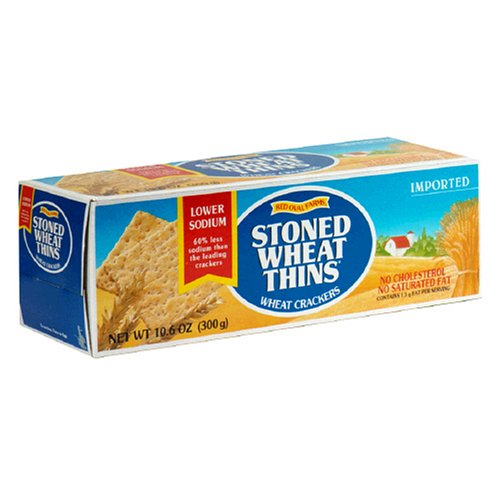
I'm eating crackers tonight. Crackers I purchased yesterday from Walmart because I'm classy like that. To be precise, I am eating Stoned Wheat Thins which I would lovingly describe as the very best boring cracker out there. They're like the big sister of soda crackers - a little wider, a little heftier and substantially more crunchy. When I want to eat some cheese or a spread but I don't have the time or resources to properly pair toppings and cracker, I shrug my shoulders and say, "well, a Stoned Wheat Thin won't taste WRONG with that" and off I go. A well-paired Triscuit might taste superior to a stoned wheat thin, but you can get a Triscuit wrong. That's a lot of pressure.

Stoned Wheat Thins also happen to be my personal favorite metaphor for perspective shifting, which I think is one of the most underrated skills when it comes to world-building.

The Pittsburgh Cracker Caper

Image result for stoned wheat thins

It all comes down to a night where I was in a Giant Eagle grocery store in Pittsburgh, Pennsylvannia. I had some fancy goat cheese I'd never tried before and needed a good, solid cracker to pair it with. The problem was, I wasn't confident I knew what that cheese tasted like well enough to pick out a truly sophisticated cracker. Plus, I'd already blown my wad on the cheese. (Like most MFA students, my desire to eat overpriced, fancy food was not proportional to my ability to purchase it).

But no matter. I knew that in a pinch, a box of Stoned Wheat Thins would do the trick, plus they would go fine with hummus and whatever else I picked up after the cheese was gone. I entered the cracker aisle, scanning for a nice big box only to be greeted with a wall of Triscuits and Pepperidge Farm and hundred other crackers I couldn't afford.

I honestly can't remember another time I've ever been so confused in a grocery store. Maybe the first time I went shopping in the UK and there was only one type of peanut butter on the shelf, but I expect cultural dissonance when it comes to the British. America, I figured, must have Stoned Wheat Thins, because what on earth did they do when they wanted a cheap cracker that didn't instantly dissolve under the weight of dip? You can buy massive boxes of Stoned Wheat Thins in Canada, yet in America, the very land of large boxes of carbs, there was nothing.

I scanned the Triscuit section, hoping some equivalent would appear. By now, I was deeply worried for myself and my cheese. Was I going to have to develop a taste for Melba toasts?

Luckily, this story has a happy ending. After about ten minutes of pacing the aisle, I spotted a tiny box that held a single sleeve of crackers, packaged in a box that wasn't blue, which was weird for Stoned Wheat Thins, let me tell you. I laughed, relieved as I realized that some idiot had put them in the International section, next to all the fancy Italian and French crackers.

Then I looked at the box again and saw it stamped to high-heaven with REAL CANADIAN WHEAT labels. And bam, there it was. The paradigm shift.

In America, Stoned Wheat Thins are a very fancy cracker and they are priced accordingly. It was, like, $3.50 for a sleeve of crackers but I'd just spent ten minutes looking for them and I was an MFA student, and it's always a little exciting when you over spend on food if you're an MFA student.

On Paradigms and World Building

One of the things that experience reminded me of was that Canadian things are almost always much more exotic to Americans than American things are to Canadians. The exception to this might be those American cities that hug the Canadian border, where the people are often from smaller towns than the cities just north of them in Canada and they're likely to visit and shop up there frequently. But drive just a few hours south of Canada, and the reactions to meeting a "Canadian" start piling up.

People in Washington never comment on my accent, but people in Utah and Pennsylvania absolutely do. Sometimes it's annoying, sometimes I enjoy the attention, but in the back of my mind is always this sense of wonder that they find me interesting at all. They are so ordinary to me. I'd never put their crackers in the International section.

Intellectually, I get why this is the case. We live in a globalized world where unequal distributions of wealth and power impact the rate of cultural exchange, but what catches me off guard are the small, personal ways that impacts life. Since that instance in the cracker aisle, I've had a few more of these, like when I realized I'd never seen a gas station in the States with open bins of loose, five-cent candy. Those exist at bulk food stores and a couple other small enclaves. But on the whole, kids in the US are not going to 7/11 so they  can hand select a bag of gummy frogs and coke bottles with a hard earned Toonie.

In writing, I tend to be the most impressed with world building when it documents these small moments. Any writer can tell you "the Queen sits on a throne of carbuncles" or that "the council is made up of yeomen from all the villages round about" but the ones who can capture the inner lives of different people are the ones worth paying attention to. Those are the ones that have the ability to bring you down to a character at eye level.

Here are just a couple of examples of fabulous authors who have found ways to strike that balance:

- In the first chapter of Six of Crows by Leigh Bardugo, the narrator is struggling to grow a proper mustache and very self-conscious about it, because he's trying to impress a girl from another culture and is convinced she'll be into good facial hair.
- Early in The Absolutely True Diary of a Part-Time Indian by Sherman Alexie, Junior takes a few paragraphs to rhapsodize about why he loves fried chicken so much and why it's such a treat for his family, making every time chicken shows up in the rest of the book unexpectedly poignant.
- In the Oryx and Crake series by Margaret Atwood, fictitious brand names litter the pages and provide a good indicator of how off the rails society is going. Jimmy's evolving acceptance of ChickieNobs (chicken parts grown in a lab without an actual chicken. What is it with books and chicken, exactly?) is a particularly good example.
- During the scene in the second Harry Potter book where Draco first calls Hermione a Mudblood, she and Harry have no clue why Ron reacts so intensely to the insult.

Aside from being about the small details of life, the other thing all these examples have in common is that they're really well filtered through the viewpoint of the characters. They show a personal relationship to the worlds the books take place in, whether those worlds are fantastical or real. If those moments were told through someone else's eyes, they'd read completely different and perhaps wouldn't have any impact on a story at all.

Not everyone is going to relate to crackers the same way I do. I've come to accept that over the years, as I've retold my cracker tale to anyone who has the nerve to open a box of Stoned Wheat Thins around me. But it still strikes me as an example of how our world is built up of small things and even smaller moments. Switch the country a box of crackers is in, and it becomes something fancy and exotic. But even if it is sitting next to a selection of French and Italian crackers, it can still be the most boring, ordinary, glorious cracker out there to a homesick Canadian.

It all depends on whose story you're telling.

Friday, March 3, 2017

Tropes VS Tropes: Best Fantasy Feast


Welcome to the new Tropes VS Tropes series, where we celebrate the tools of fiction and ask ourselves, "who did it best?" As discussed earlier, a trope is a commonly used literary device or plot element that an author uses to call up a quick set of associations in the reader, so that they can build a story more quickly/easily.

Last time I discussed The Plucky Girl Goes on an Adventure (a surprisingly common trope in early children's literature) and then solicited my readers for suggestions for future articles. I got some great ones, which I hope to dive into soon, but one thing I noticed was that all the suggestions tended to be character related, possibly because the examples I gave in that first post were character tropes. But tropes can extend far further, and to give an example, I'm doing one that isn't a character trope at all. Today, we're talking about what (after elaborate clothing) is probably the most favorite thing of every long-winded fantasy writer on the planet. FOOD!!!!

The Fantasy Feast


Image result for game of thrones feastsFull disclosure: I have never read the Song of Fire and Ice books, probably because I am a terrible person, but you know what I DID know? Without ever having read the books or watched the shows, I knew if you Googled "Game of Thrones" and "Feast" the internet would throw down with some awesome photos because in fantasy novels, feasts are serious business.

In speculative fiction, food is one of the main ways that authors worldbuild. You can learn a lot about a culture by what and how they eat. Feasts also provide a chance to see what your fantasy culture is like when it celebrates, plus they provide opportunities for the characters to mingle and have intrigues. They rank right below "the prince is holding a ball and invited all young maidens" for socially crucial events. One does not miss the Feast.

But if you had to attend a feast in a marvelous world, what one should you pick? With so many to choose from, I have narrowed the list down to four, all coming from children's lit, since that's my area. But I'd love to see someone better versed in the feasting of adults do something similar!

AND THE CANDIDATES ARE!!!!!

Peter Pan: A Special Award for Worst/Most Hilarious Feast

The feast scene isn't one of the more familiar parts of Peter Pan, and I can only think of one adaptation that features it at all - Hook. In it, a now adult Peter joins the lost boys for a feast only to see that there is literally NOTHING adorning the silver platters. As the boys reach for this pile of "nothing" Peter grows more and more frustrated, since they keep insisting there's food in there. This spirals into an argument with their leader, Rufio, and finally, playfully, Peter pretends to dig his spoon into his empty bowl and "throw" some of the nothing at Rufio.

And right at that moment, as he chooses to pretend the food is real, a real glob of florescent whipped cream hits Rufio in the face.

Image result for hook feast
Only a child would find this many shades
of Cool-Whip appetizing.

It's so magical. It's so lovely. It's such a perfect example of how fantasy feasting can paint a world just right. The power of imagination is so potent in Neverland, it literally makes food appear. It's possibly the best fantasy feast ever because it's practically a post-modern fantasy feast where one actually feasts on fantasy.

Except in the book, that isn't how it works at all. In the book, Peter Pan is much more Fey and he actually CAN'T TELL THE DIFFERENCE between when he's only pretending to eat and when he's actually eating. And because they're the same to him, he expects the Lost Boys to treat make-believe food the same as real food and if they don't, he get's angry, because in the book, Peter is a fabulous, tyrannical dictator and Thou Dost Not Tell the Peter there is No Food. Instead, the Lost Boys just go to bed hungry because Peter is insane and oh my gosh, do I love that book.

But I'd much rather go to a feast that I was confident would actually exist.

The Hunger Games

Being about hunger, it's not surprising that food plays a key role in Suzanne's Collins books. When Katniss arrives at the decadent capital, the shallow populace is constantly eating. They eat so much, they make themselves throw-up so they can eat more. Famously, during her audition in front of the judges, they grow bored of watching her and start feasting and she gets so annoyed, she shoots an arrow through the apple of the suckling pig.

Image result for hunger games arrow pig
What is a feast without suckling pig?

The Hunger Games provides a decent example of using feasts to further the plot, whether Katniss is shooting apples or dancing with Plutarch Heavensbee. But overall, Katniss is so judgey of all the feasting, the reader never really wants to attend one . For some reason she finds feasting a bit uncouth when everyone's starving. Really harshes on the awesomeness of feasting.

It's not all bad, though. Katniss does rave about the lamb stew, but I think I'd rather feast somewhere that I don't have to feel terrible about myself for enjoying the food or where an angry rebel might try to shoot me while I eat.

Harry Potter

When Harry arrives at Hogwarts and has his first feast in the Great Hall, I think it's fair to say that all of us go veritably INSANE with joy at the thought of joining in. Everything is either British or magic or both and I think it's fair to say that British food never sounds so good as when J. K. Rowling describes a neglected orphan feasting on it.

Potter is one of those series that has spawned legions of recipes for fans to imitate - from pumpkin pasties, to butterbeer, everyone wants to replicate the Great Hall feasts. Who doesn't want house elves prepping their food and making it appear as if no one needed to order it?

Of course, the underlying house elf tensions that fuel the feasts are a bit uncomfortable come book four, but c'mon. Look at that feast! LOOK AT IT!!!!

Image result for great hall feast
Also: Feasting changes seasonally!
But... I must admit, I don't think this is the best feast out there. It's probably the best location. And it's got some cool foods added from the magic of the world. But most of it is sweets. Where are the main courses that you can only eat in the Potterverse? After you've sampled all the sweets and drank you're Butterbeer, you're going to be kind of jittery and buzzed at the same time, but what about a proper meal? You know, the HEART of a FEAST?????

Redwall


Image result for redwall feastWe all have books from childhood that we can't entirely explain our obsession with. Books that we loved so dearly as kids, but then we start to notice some of the flaws of as we get older. For those who aren't familiar with them, the Redwall books are about mice and moles and otters and hares and badgers and other nice, English animals living in an abbey and... they're sort of monks, maybe?

Every book, they get attacked by evil English animals, like rats and weasels and voles and stouts. Sometimes even cats show up. One character got attacked by a nasty pike. And then they must save Redwall Abbey!

One of my toughest realizations in adolescence was when I came to terms with the fact that every book in the series had essentially the same plot and characters, going through the same motions. But one of the most important repeated elements of these books is that Redwall is not only under attack, it's under siege. Supplies must be managed carefully, because running out of food is not an option. You see, running out of food is the worst thing that could happen to a Redwall mouse, because those animals LIVE for nothing but hardcore FEASTING!!!!

I can't tell you how many times I have wanted to eat the shrimp gumbo that the otters always make so hot, they're crying after. Or Abbot Durral's Seventh Season Cake, which is always shown in meticulous preparation. Or the shrewbread or the salads or EVERYTHING. Redwall food is so vast, there is a Redwall cookbook now, with seasonal recipes, and I cannot tell you how much I want it.

The feasts in Redwall took several chapters - from a character suggesting one, to the preparation, to everyone finally eating, to everyone lounging around in a food coma after. It was amazing! AMAZING!!!! There was a small chance a group of stouts or rats would attack while you were feasting, but this is a small price to pay if it means you get to sample the spring trout.

In many ways, Redwall genuinely was about the feasts. You want to see the mice and their allies save the abbey over and over, because you want them to protect the homey, good feeling about the place. A feeling that is best personified by their intense love of food and sharing it with others. So yes, I genuinely believe that the feasts were a major part of why I loved those books so much.

I might want to live in Hogwarts castle more than I do Redwall Abbey, but even the Potterverse could learn a few things about feasting from these mice. They know what's going on.

BEST FANTASY FEAST GOES TO:

REDWAAAAAAAAAAAAAAAAAAAAALL!!!!